
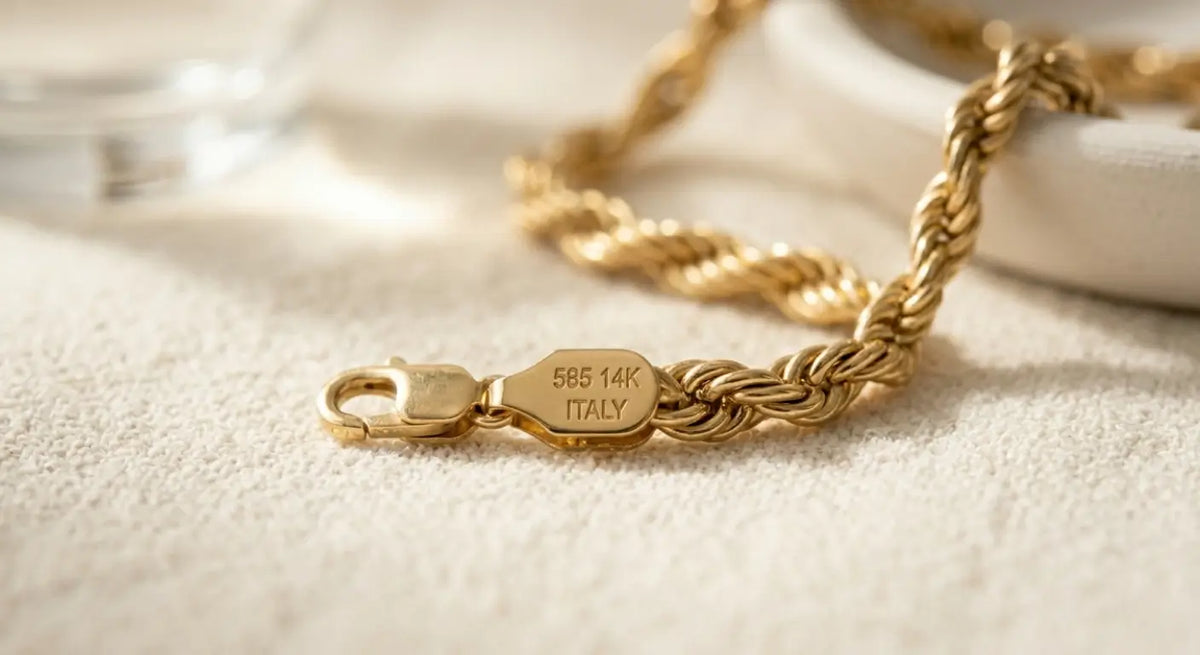
You're examining a gold chain or bracelet and you spot a stamp that reads "14K Italy." Two pieces of information packed into one tiny mark — and both matter. The "14K" tells you the gold purity, and "Italy" tells you something about where and how it was made. Together, they often signal a particular kind of quality. But like any stamp, it's worth understanding exactly what it claims (and what it doesn't).
Here's what "14K Italy" really means, why Italian gold carries a reputation, and how to make sure a piece marked this way is the real thing.
Article Contents
Breaking Down the Stamp
A "14K Italy" mark is really two separate pieces of information stamped together:
- 14K → the purity: 58.3% pure gold, the everyday-wear standard
- Italy → the country of origin: the piece was manufactured in Italy
So the stamp is saying "this is 14-karat gold, made in Italy." Each half is a distinct claim, and understanding both is the key to reading it correctly.
What the "14K" Part Means
The 14K mark indicates the gold content: 58.3% pure gold, with the rest a durable alloy of metals like copper, silver, and zinc. The European three-digit version of the same mark is 585 (the metric fineness mark — at least 58.5% gold; 14K itself is 14 parts in 24, or 58.3%). It's the sweet spot for everyday jewelry — hard enough to resist scratches and dents, rich enough to look unmistakably gold, and valuable as a true precious-metal piece.

What the "Italy" Part Tells You
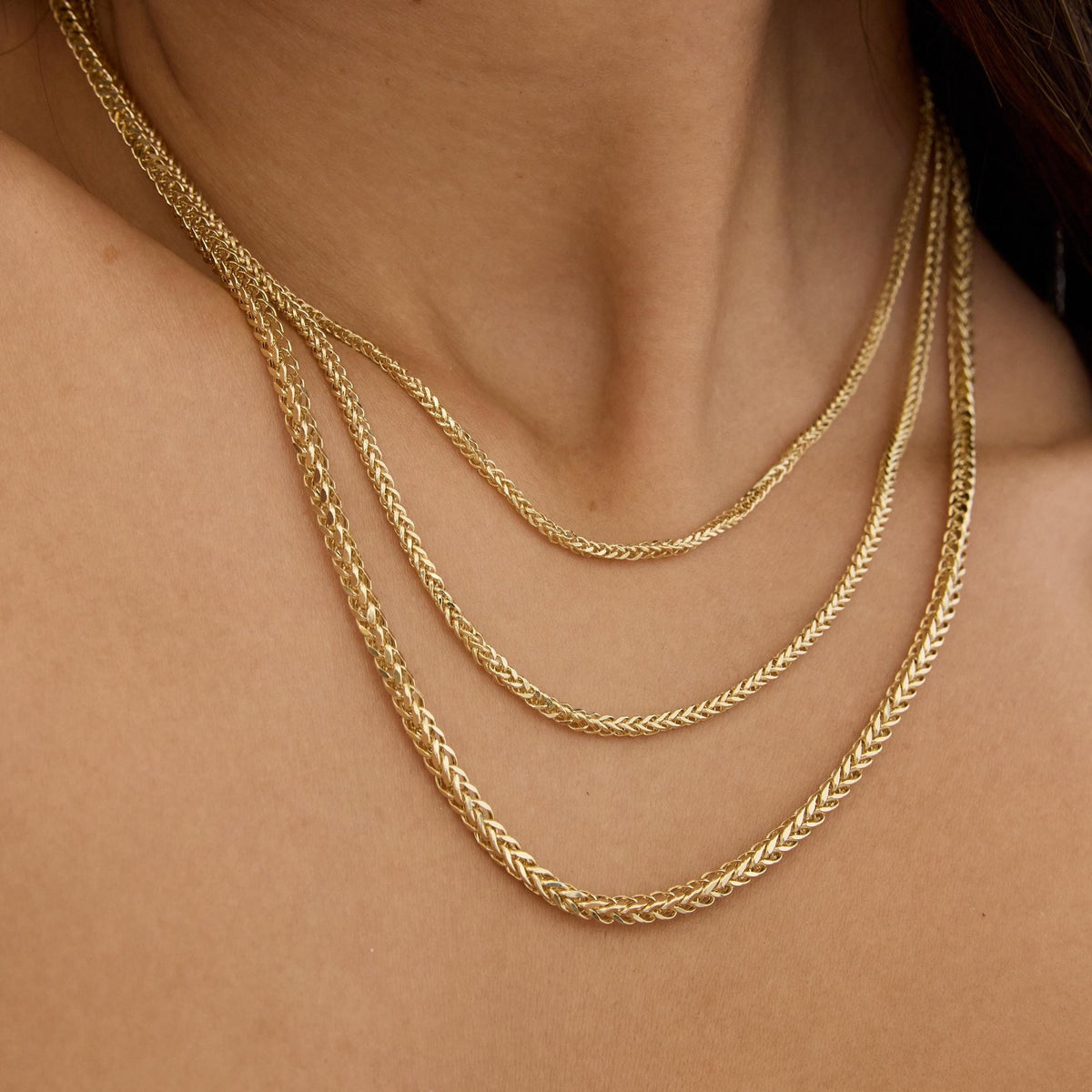
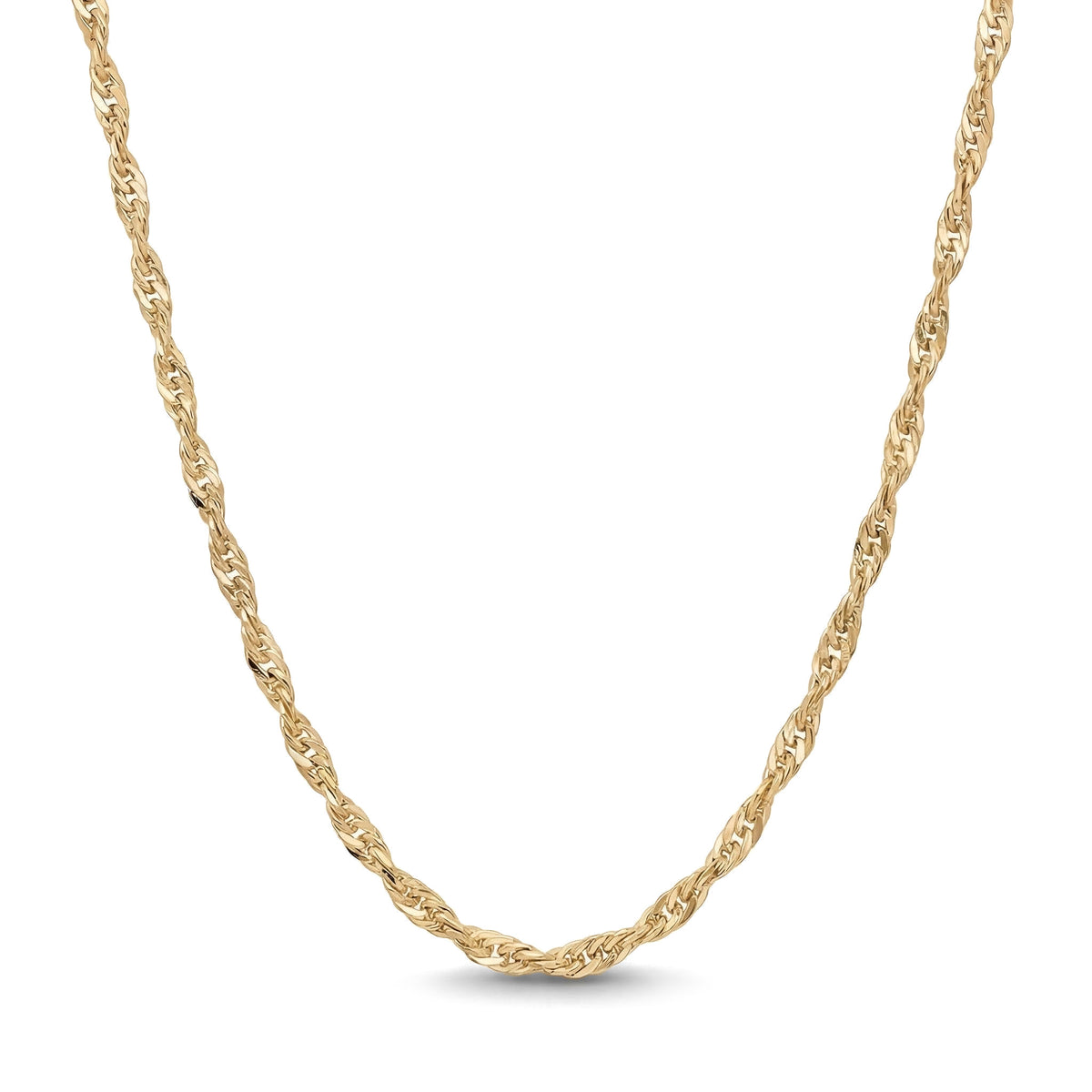
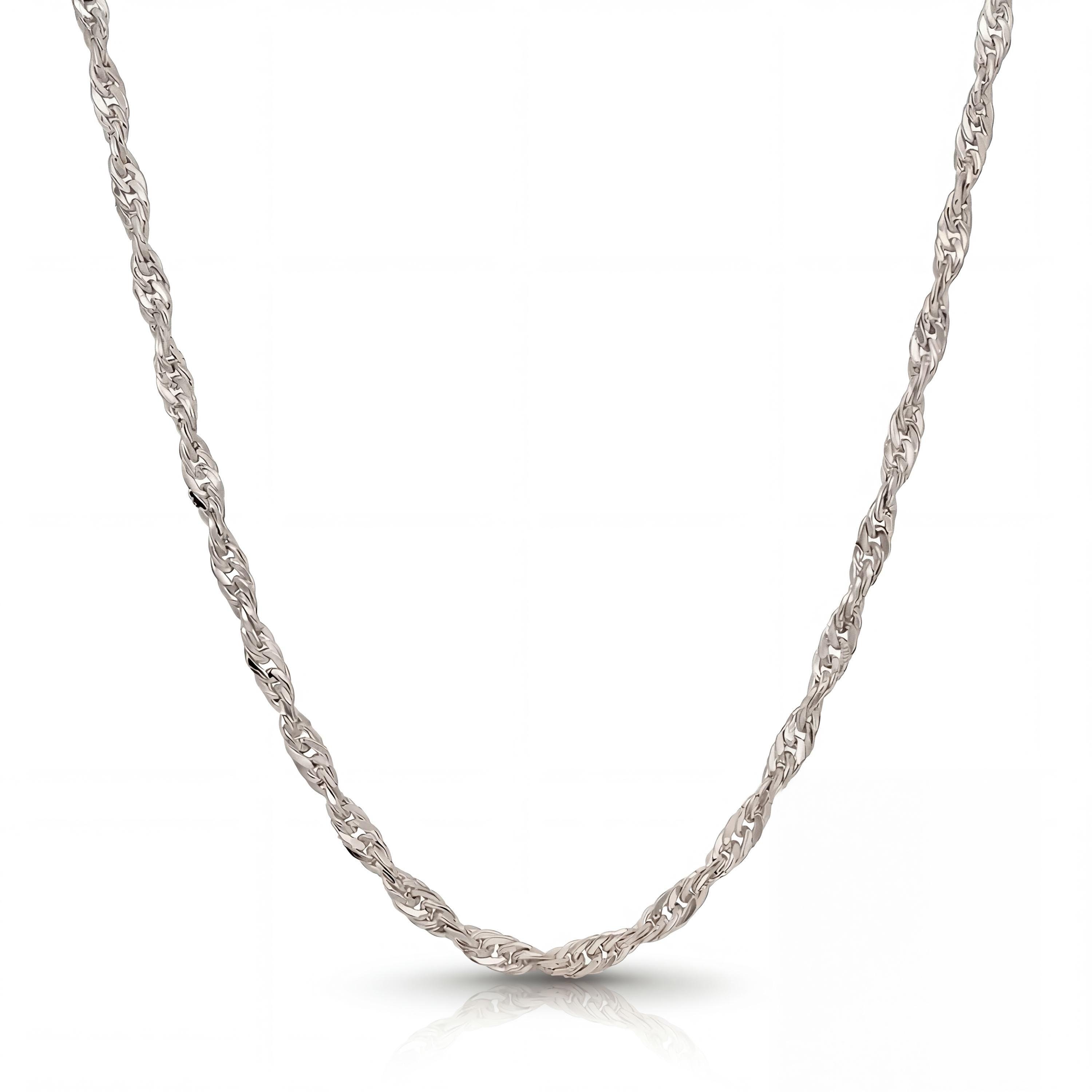
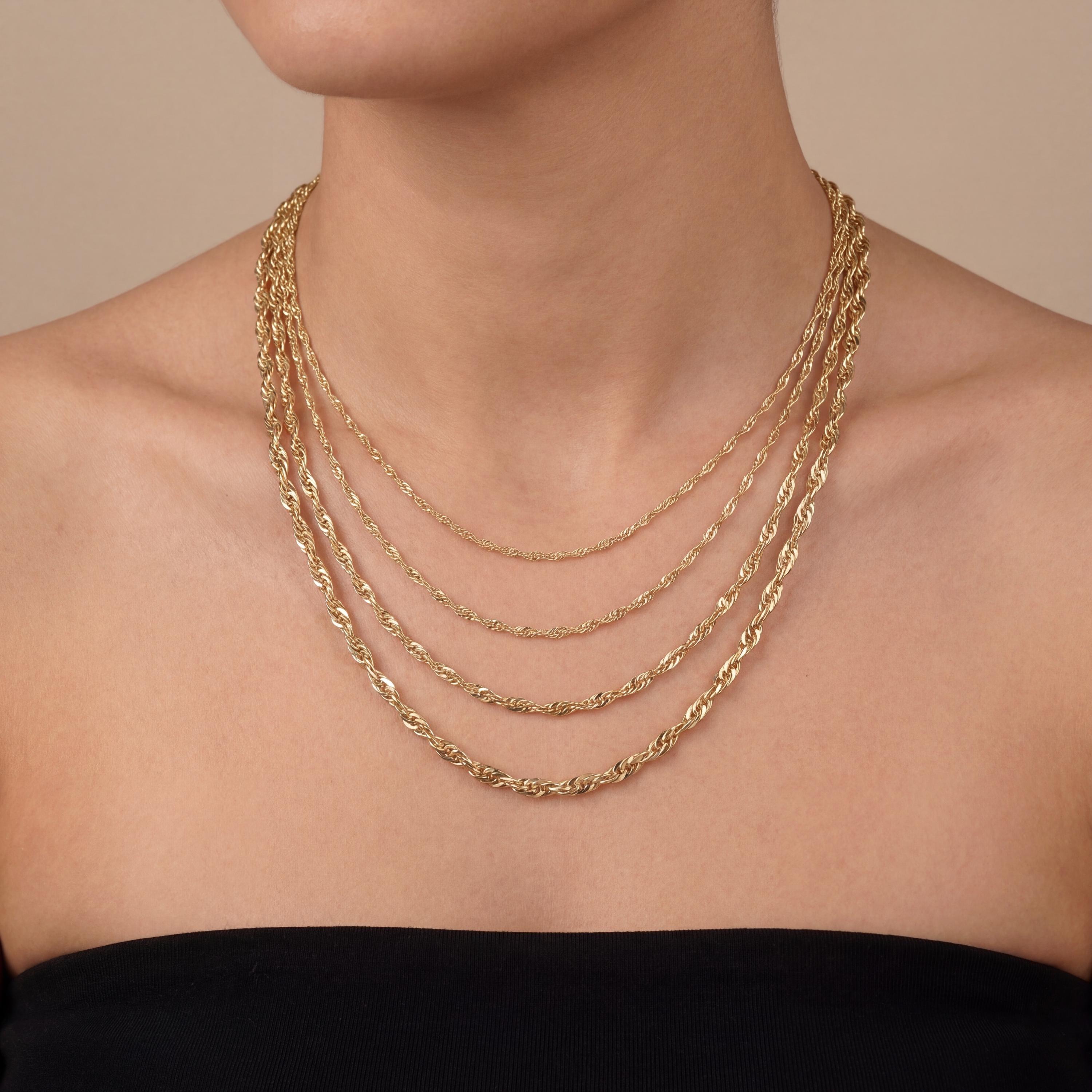
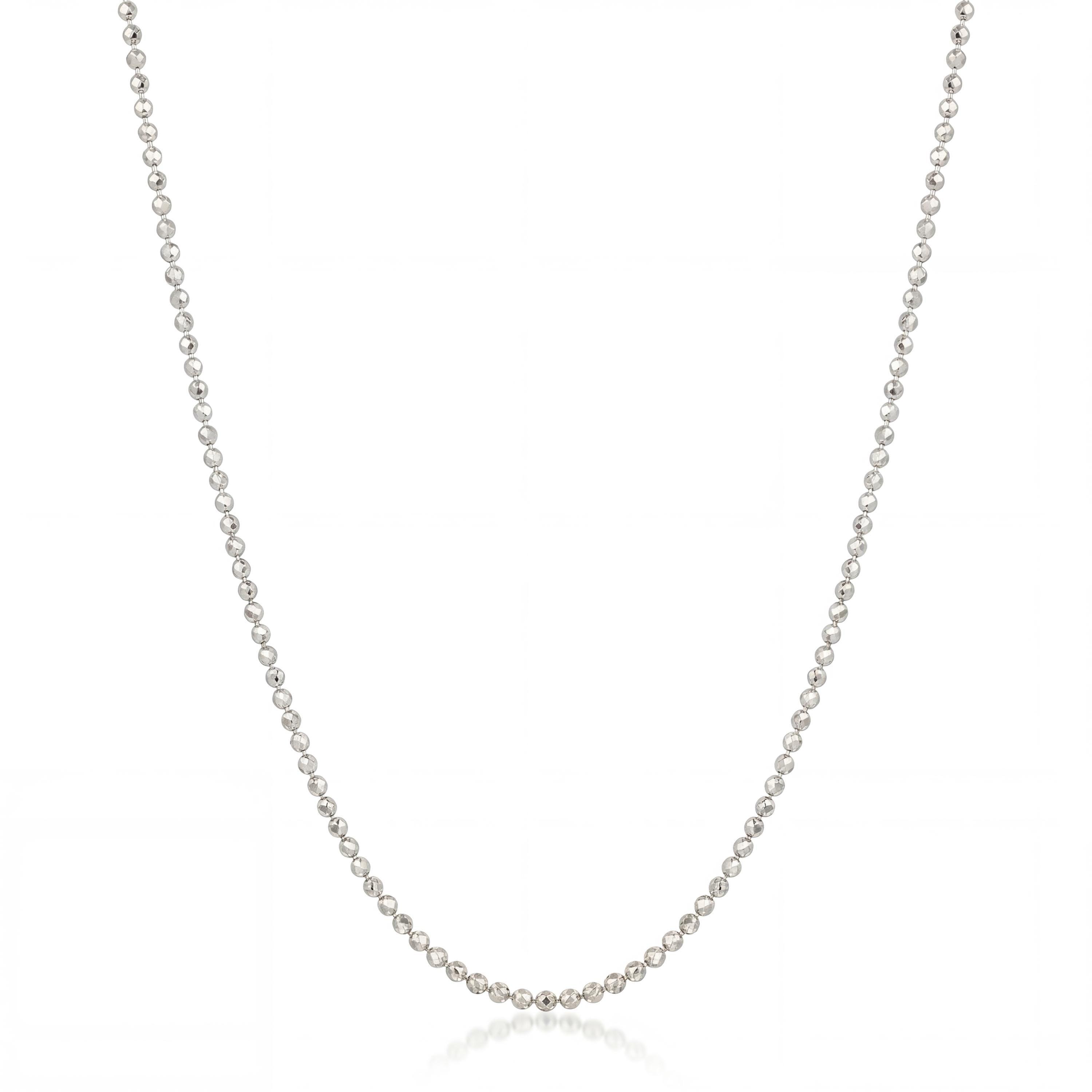
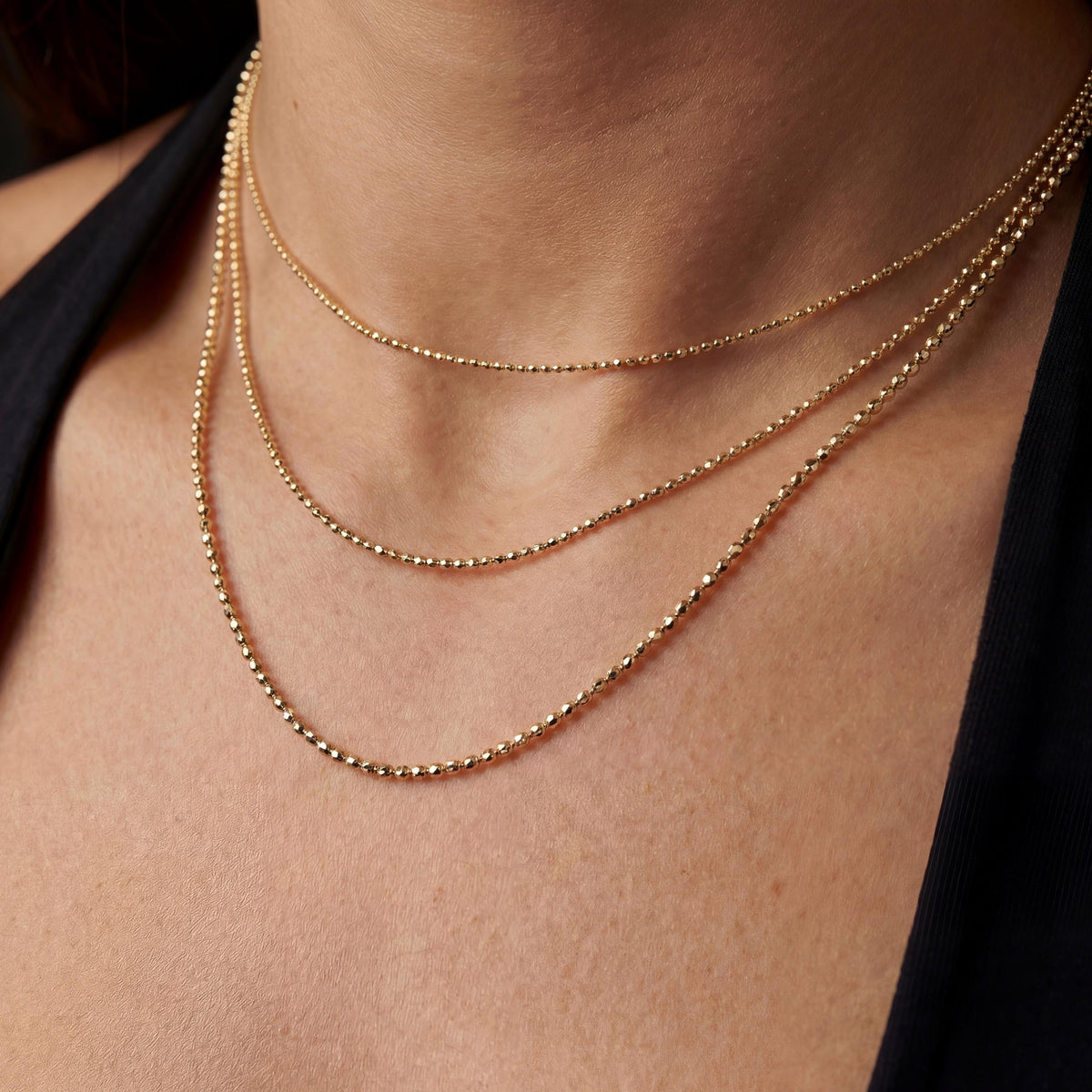
The "Italy" mark indicates the piece was made in Italy — a country with a centuries-old goldsmithing tradition and a global reputation for chain-making in particular. Italian manufacturers are especially known for producing finely crafted chains: rope, Figaro, herringbone, mariner, and box chains that are prized for their precision and finish.
It's worth being precise about what this claim covers: "Italy" reflects where the piece was manufactured, not a separate purity guarantee. The purity is what the "14K" handles.
Why Italian Gold Has a Reputation
Italy — especially regions like Vicenza and Arezzo — has been a center of fine goldsmithing for generations. The reputation comes from a few real strengths:
- Chain-making expertise — Italian machinery and craftsmanship set the standard for many popular chain styles
- Design heritage — a long tradition of elegant, refined styling
- Finishing quality — high polish and consistent construction
That said, "made in Italy" is about craftsmanship and origin — it doesn't by itself make the gold any purer than 14K gold made anywhere else. A well-made 14K piece is 14K gold regardless of country.
Is "14K Italy" Always Genuine?
Mostly, but not automatically. Because Italian gold carries prestige, the "Italy" mark is sometimes counterfeited or applied loosely. A genuine piece will have:

- A clean, crisp, evenly struck stamp (not blurry or uneven)
- A maker's mark alongside it — often a number inside a diamond/oval shape, the Italian manufacturer's registration mark
- Consistent gold color throughout, including inside clasps and links
A "14K Italy" stamp with no maker's mark, on a suspiciously cheap piece, is worth verifying before trusting.
Related Stamps You Might See
Italian pieces often carry additional marks:
- 585 — the metric fineness mark used in Europe
- 750 — 18K gold (75% pure)
- A number inside a shape — the Italian manufacturer's registration (maker's) mark
- "VI," "AR," or similar — abbreviations sometimes tied to Italian regions/provinces
How to Verify a Genuine Piece
To be confident a "14K Italy" piece is genuine:
- Look for the accompanying maker's mark, not just the country stamp
- Do a quick magnet test — gold isn't magnetic
- For valuable pieces, get a jeweler's non-destructive XRF scan to confirm exact gold content
(Our quick gold tests guide walks through each of these in detail.)
Once you can read the stamp, the next question is which purity to buy. We explain the trade-offs in why 14K gold is the best choice for everyday jewelry.
The Bottom Line
"14K Italy" means 14-karat gold (58.3% pure) manufactured in Italy — a combination that often signals quality craftsmanship, especially in chains. The 14K refers to the gold; the "Italy" points to the origin. Just confirm there's a maker's mark, and you can trust what the stamp is telling you.
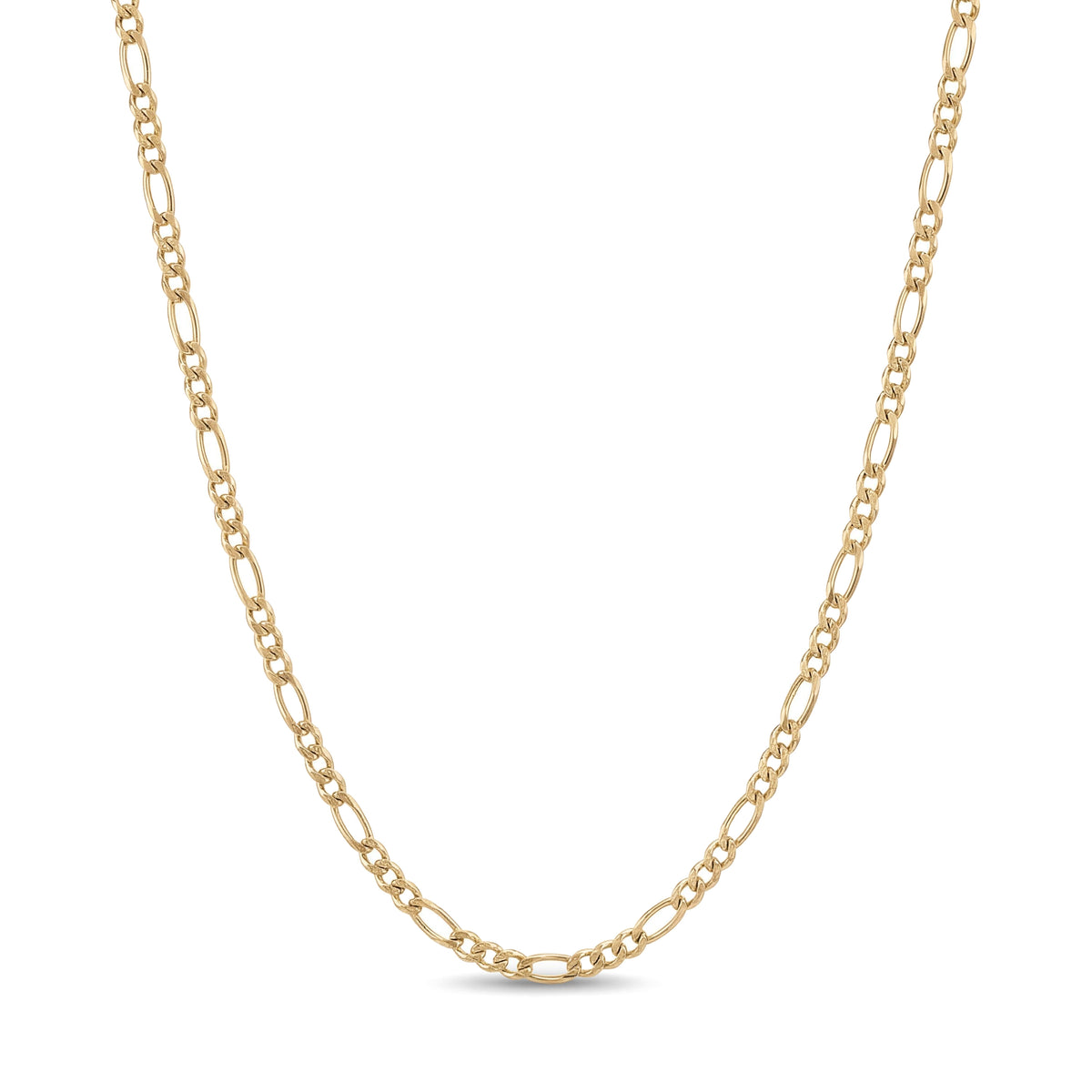
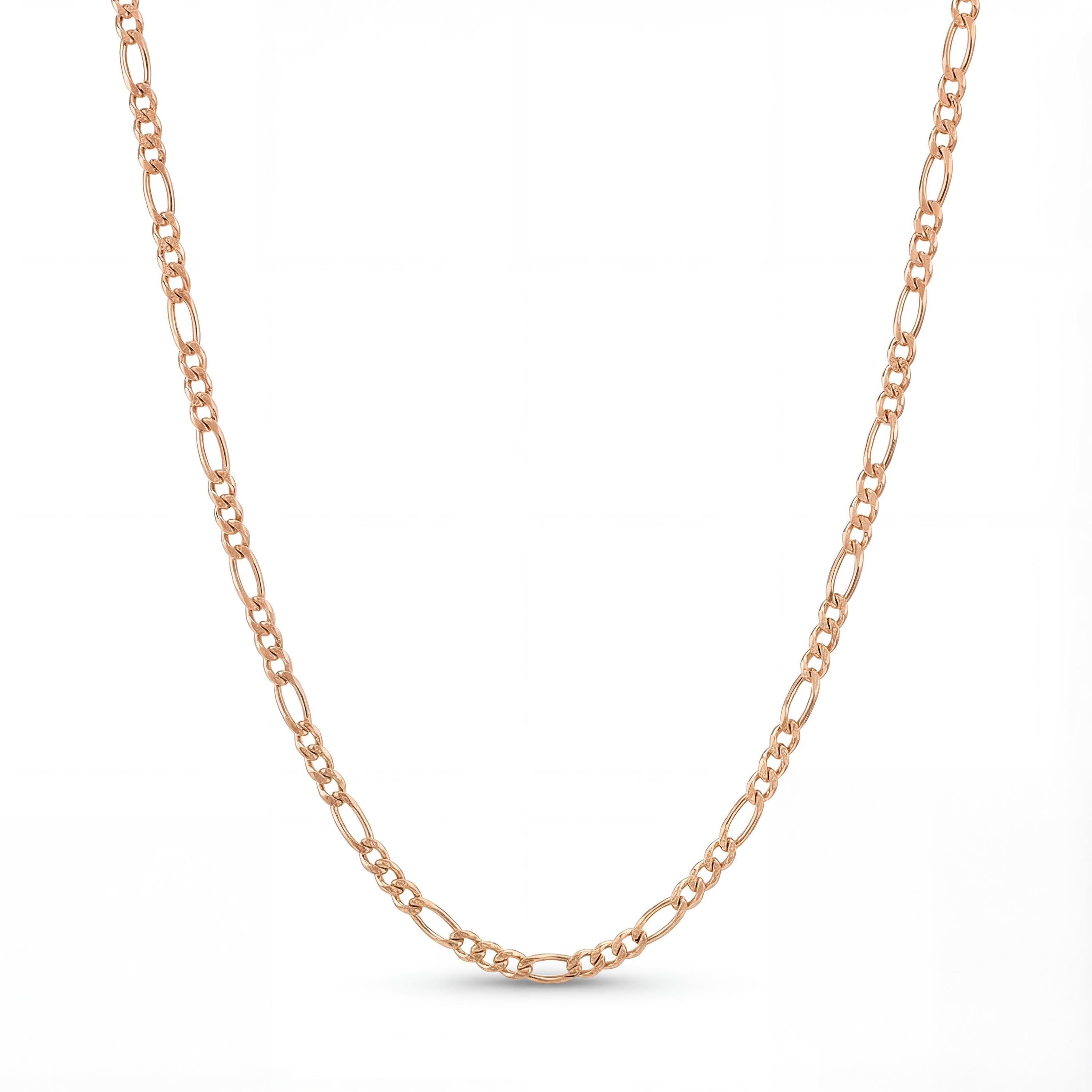
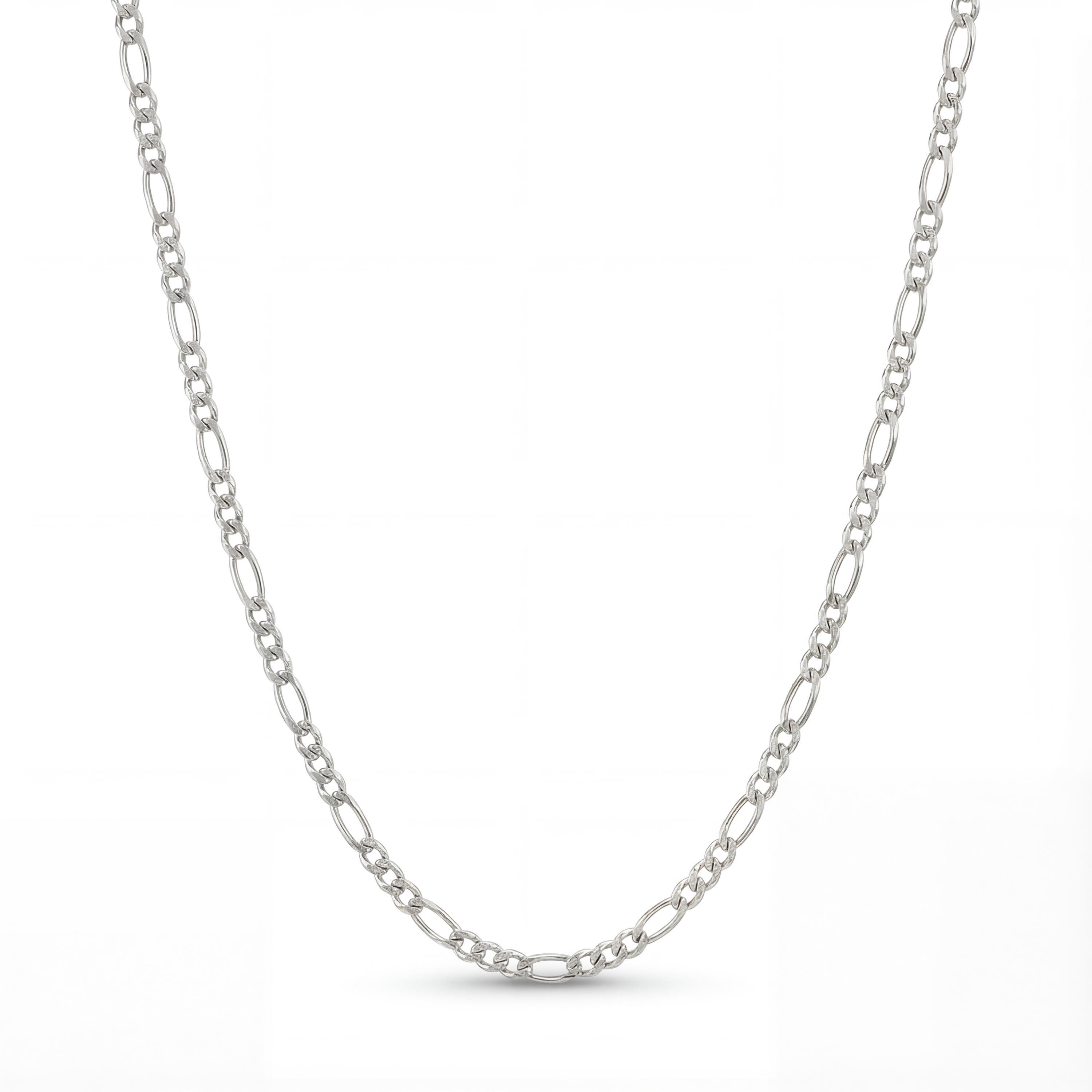
Browse the 14K Gold Chain Collection, or decode every stamp in our Jewelry Hallmarks Guide.





Share:
What Do the Numbers Inside My Ring Mean? (Complete Stamp Decoder)
Gold Vermeil vs. Solid Gold: What's the Real Difference?