

An emerald crystal is the raw, uncut form of emerald. It is a green mineral that grows in six-sided columns, long before a cutter shapes it into a gem.
If you came here to learn what the stone is, how it forms, or how to wear the look, you are in the right place. Below you will find the facts, a quick raw-versus-cut guide, and tips for choosing emerald-green jewelry.
- An emerald crystal is green beryl, colored by trace chromium or vanadium.
- Natural emerald is hard but brittle, so rough crystals and cut stones need different care.
- Emerald-green jewelry made with cubic zirconia gives you the color in solid 14K gold.
What Is an Emerald Crystal?
Emerald is the green variety of beryl. Beryl is a mineral made of beryllium, aluminum, silicon and oxygen. When trace chromium or vanadium sits inside the crystal, the stone turns green.
A natural emerald crystal forms in long, six-sided columns. Some are smooth and glassy. Others are cloudy, striped or full of tiny cracks.
Those tiny cracks and spots have a trade name: inclusions. Jewelers often call the web of inclusions in emerald its "garden." Most natural emerald has some, and that is normal for the stone.
People also search for the crystal in shops that sell raw stones, tumbled stones and bracelets. Those pieces are often sold by weight and look very different from a cut gem. The next section shows how.
Raw Crystal vs Cut Emerald
A raw crystal and a cut emerald come from the same mineral, but they are not the same product. A cutter removes rough edges, picks the best color and adds flat faces called facets. The result sparkles far more than the rough stone.
Emerald rates 7.5 to 8 on the Mohs hardness scale. That sounds tough, and it is good against scratches. But inclusions make the stone brittle, so a hard knock can chip it.
| Feature | Raw emerald crystal | Cut emerald |
|---|---|---|
| Shape | Six-sided column, rough | Faceted or smooth cabochon |
| Shine | Dull to glassy | Bright, polished |
| Common use | Display, collecting, beads | Rings, earrings, pendants |
| Wear risk | Edges can catch and chip | Can chip on hard knocks |
| Price drivers | Size, color, clarity of crystal | Color, clarity, cut quality |
Because the surface of a raw crystal is rough, it is not a good fit for a ring or bracelet you wear every day. Cut stones set in metal protect the edges better.

Why Emerald Is Green
The color is the whole story. A top natural emerald shows a vivid, slightly bluish green that looks even from every angle. Pale or yellow-green stones sit lower on the value scale.
Chromium and vanadium make the green. Iron can shift it toward a darker tone. Size and clarity matter too, but color leads.
When you shop for the natural stone, look at three things:
- Hue: pure green, or green with a hint of blue, is the classic look.
- Saturation: rich, strong color beats a washed-out tint.
- Clarity: some inclusions are expected. Large cracks near the edge raise the chip risk.
Many natural emeralds are treated with oil or resin to hide small cracks. Sellers should tell you that. Always ask before you buy a natural stone.
Emerald Crystal Meaning in Jewelry History
Many shoppers search for emerald crystal meaning. In jewelry, the answer is mostly history and tradition. Emerald has been prized for more than 4,000 years.
It is the May birthstone. People often link it with spring, renewal, love and growth, because of its fresh green. Those links come from custom and gift giving, not from science.
Rulers and collectors have long worn emerald in rings, crowns and necklaces. That history is why a green stone still feels special as a gift.
You will also see claims online about healing powers. We keep this guide to the facts about the mineral and the jewelry. A piece is worth owning because you love how it looks and how it is made.
How to Wear the Emerald Look
You do not need a natural stone to enjoy the color. At Golden Planet, the stones in our jewelry are cubic zirconia or other simulated stones, set in solid 14K gold. That gives you the green look with a sturdy, made-to-order piece.
Here are easy ways to style it:
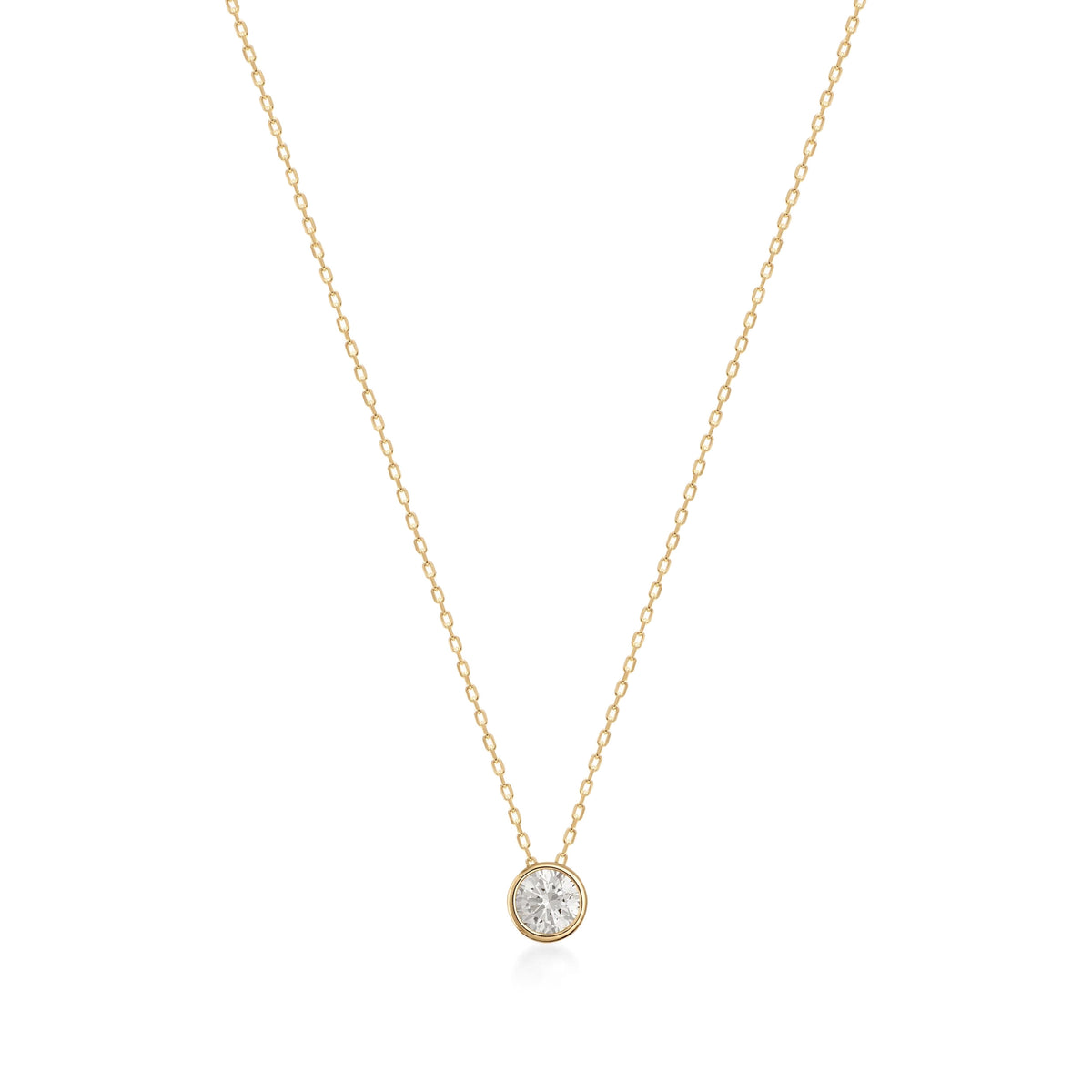
- Single pendant: a small green stone on a thin chain adds color without fuss.
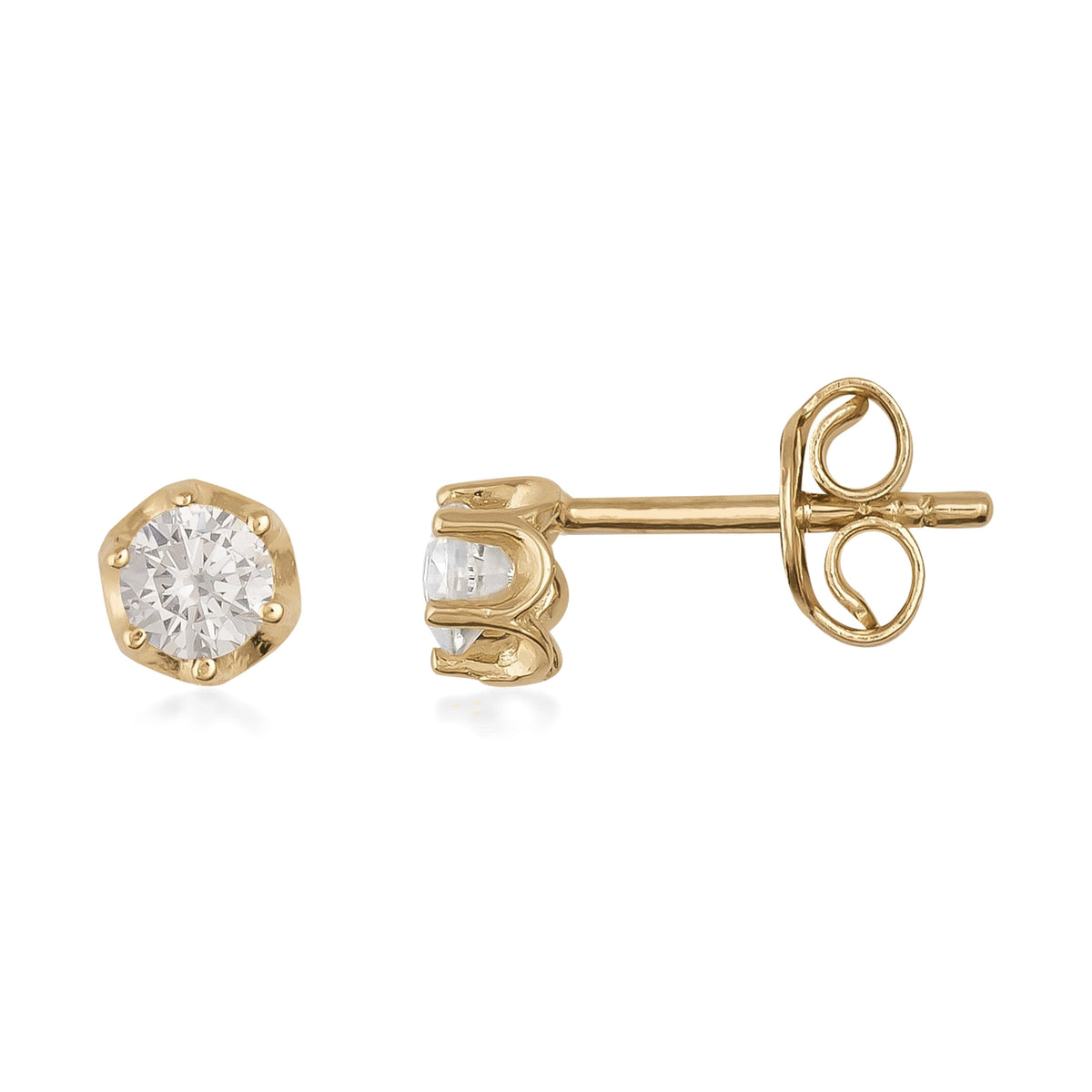
- Studs or small hoops: green earrings frame the face and work with yellow, white or rose gold.
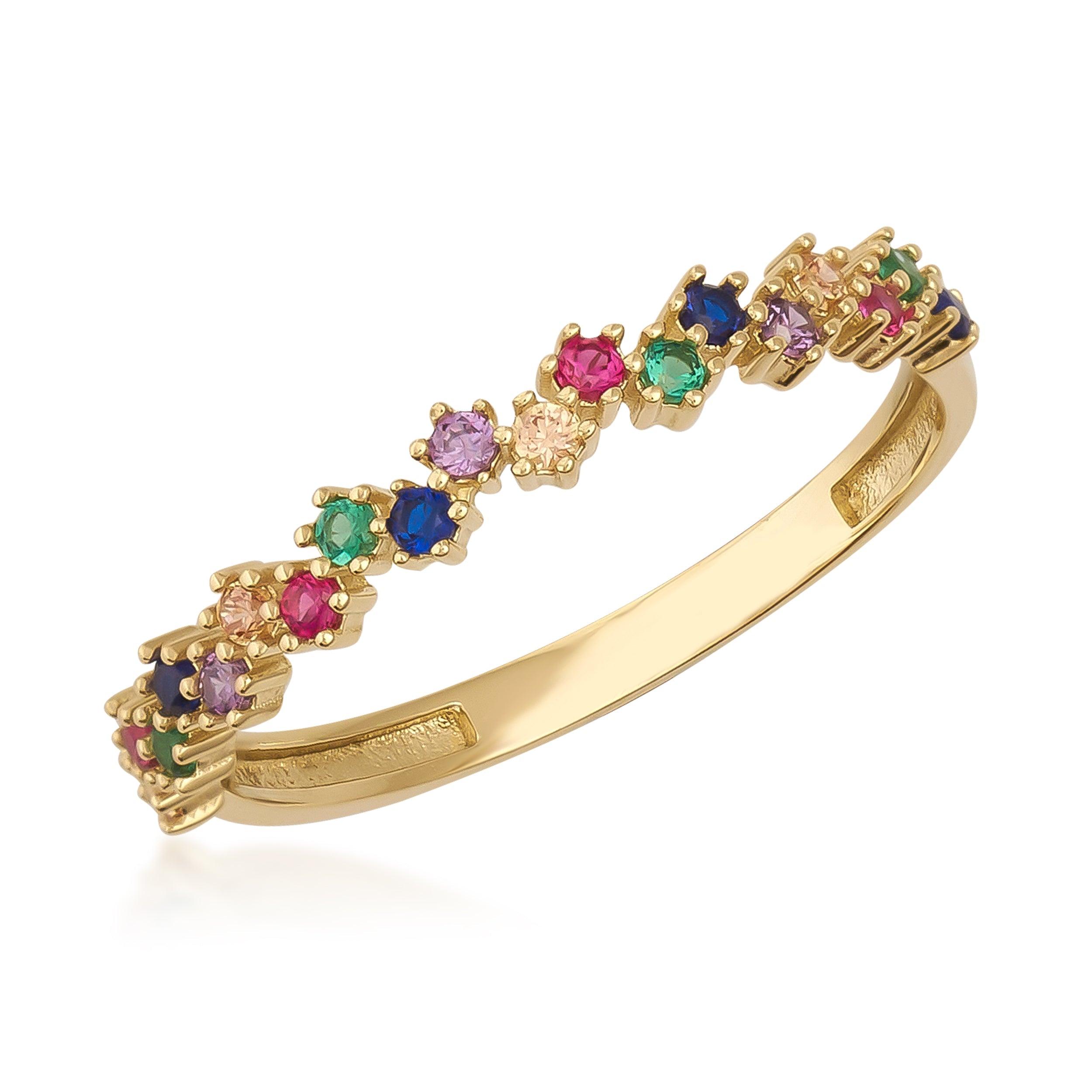
- Stacked rings: pair one green ring with plain gold bands.
- Bracelet charm: a green accent turns a simple chain into a gift.
Yellow gold makes green look warm and rich. White gold makes it look cooler and crisper. Choose the metal that matches the rest of your jewelry.

To keep gold jewelry bright, wipe it with a soft cloth after wearing. For a deeper clean, follow our guide on how to clean 14K gold jewelry at home. Not sure what you own? Our guide on how to tell real gold from fake helps.
Caring for Emerald and Emerald-Look Jewelry
Natural emerald needs gentle care. Heat, sudden temperature swings and harsh cleaners can hurt a stone that has been oiled. Skip ultrasonic cleaners and steam for those pieces.
Warm water, a drop of mild soap and a soft brush are enough. Rinse well and pat the piece dry. Store it apart from harder stones so it does not get scratched.
Gold settings are easier. A soft cloth after each wear removes skin oils and keeps the shine. Put jewelry on last, after lotion, perfume and hair spray.
Shopping for an emerald crystal bracelet or a raw-stone piece? Check how the stone is attached. Wire-wrapped or bead-style pieces can snag on sleeves, so take them off before sports or heavy work.
A natural emerald crystal can also cost far more than you expect once color and size rise. If you want the green look for everyday wear, a simulated stone in 14K gold keeps the price sensible. It also lets you choose a shape that suits your style, from studs to pendants.
Frequently Asked Questions
What is the emerald crystal good for?
In jewelry, emerald is valued for its green color and its place as the May birthstone. It is used in rings, earrings and pendants, and raw crystals are kept by collectors. We make no health claims for any stone.
How do you activate an emerald crystal?
Jewelry does not need activation. "Activating" a stone is a belief some people hold, not a jeweler's step. Just wear the piece and keep it clean with a soft cloth.
Who cannot wear emerald stones?
Anyone can wear emerald jewelry. The only practical limit is the stone itself, since natural emerald can chip. If you work with your hands, choose earrings or a pendant over a ring.
Is there an emerald crystal?
Yes. Emerald is a natural crystal, the green form of the mineral beryl. It grows in six-sided columns and is colored by trace chromium or vanadium.
What is the difference between a raw crystal and a cut emerald?
A raw crystal is the uncut stone with rough edges. A cut emerald has been shaped and polished, so it shines and fits into a ring, earring or pendant.
The Bottom Line
An emerald crystal is green beryl in its natural column form. It is hard but brittle, so cut stones in protective settings suit daily wear better than rough pieces. If you love the color, you can wear it in solid 14K gold with simulated stones.
Ready to add some green? Browse the Best Sellers collection to find your next favorite piece.






Share:
Types of Bracelet Clasps: A Simple Guide to Every Style
Sterling Silver: What It Is, How to Spot It and Its Worth