
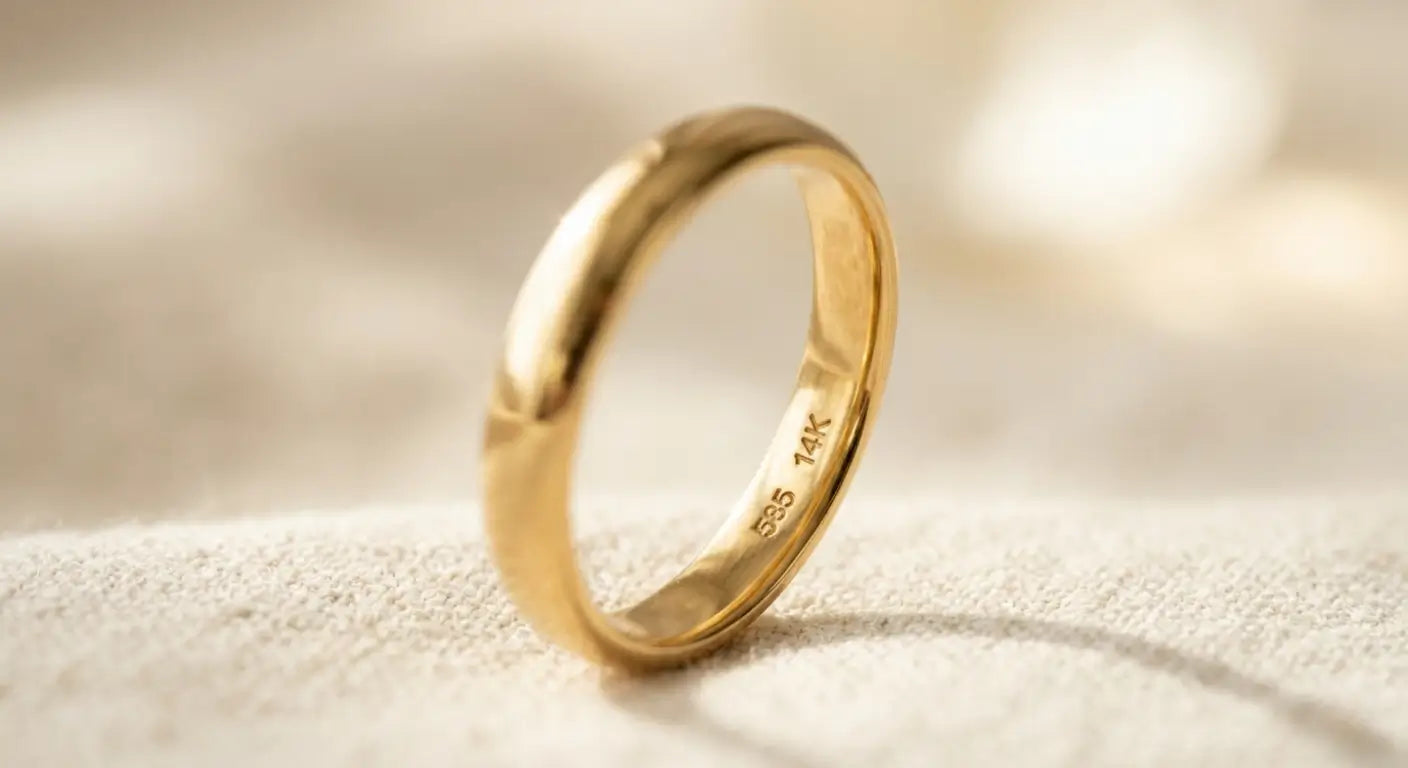
You slip off your ring, glance at the inside of the band, and notice a row of tiny stamped characters — maybe "585," maybe "14K PLUMB," maybe a little symbol you don't recognize. They look almost like a secret code. And in a way, they are: every one of those marks tells you something specific about what your ring is made of, who made it, and what it's worth.
Here's a complete decoder for the numbers and letters you'll find inside a ring — so you can read your own jewelry like a jeweler.
Article Contents
Why Rings Are Stamped at All
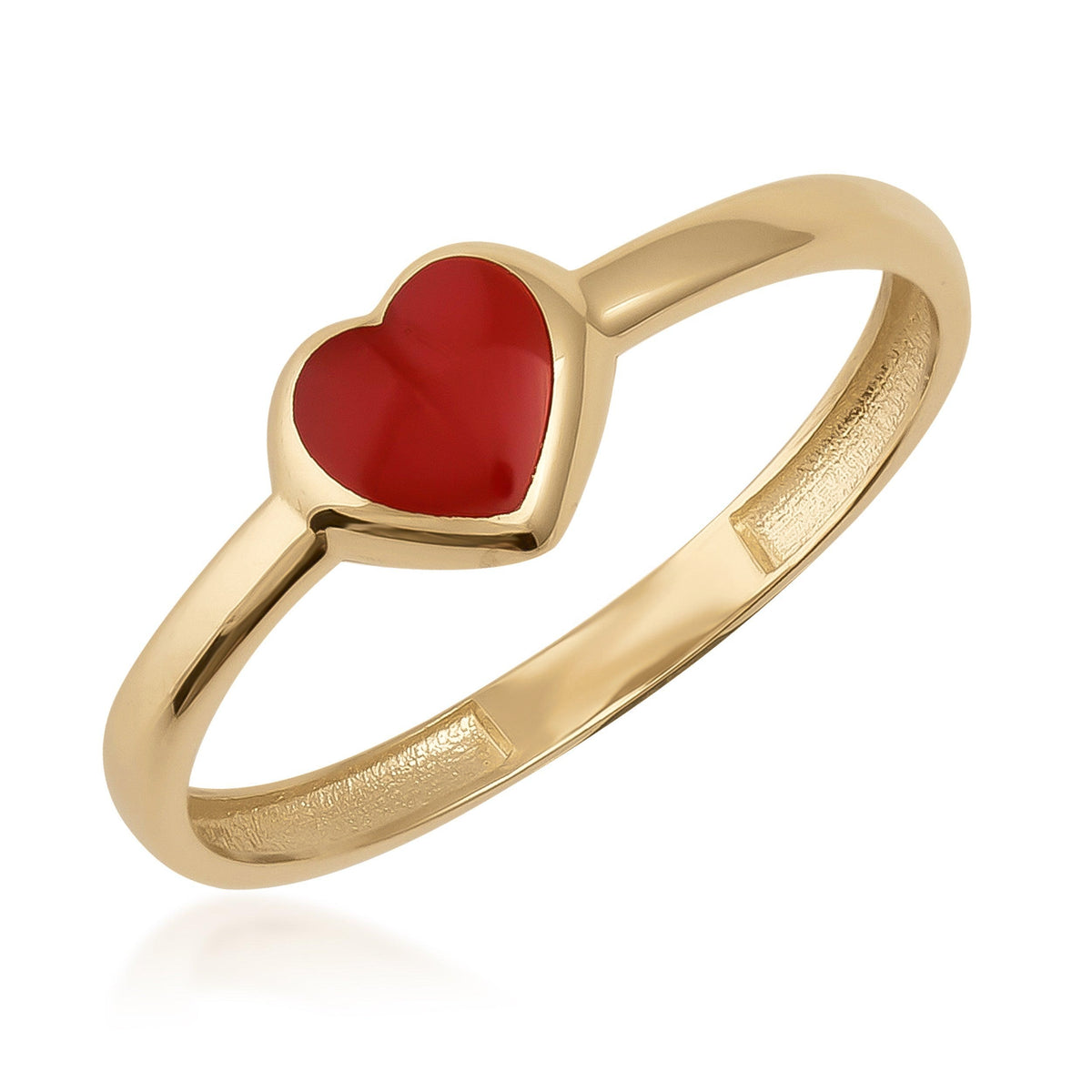
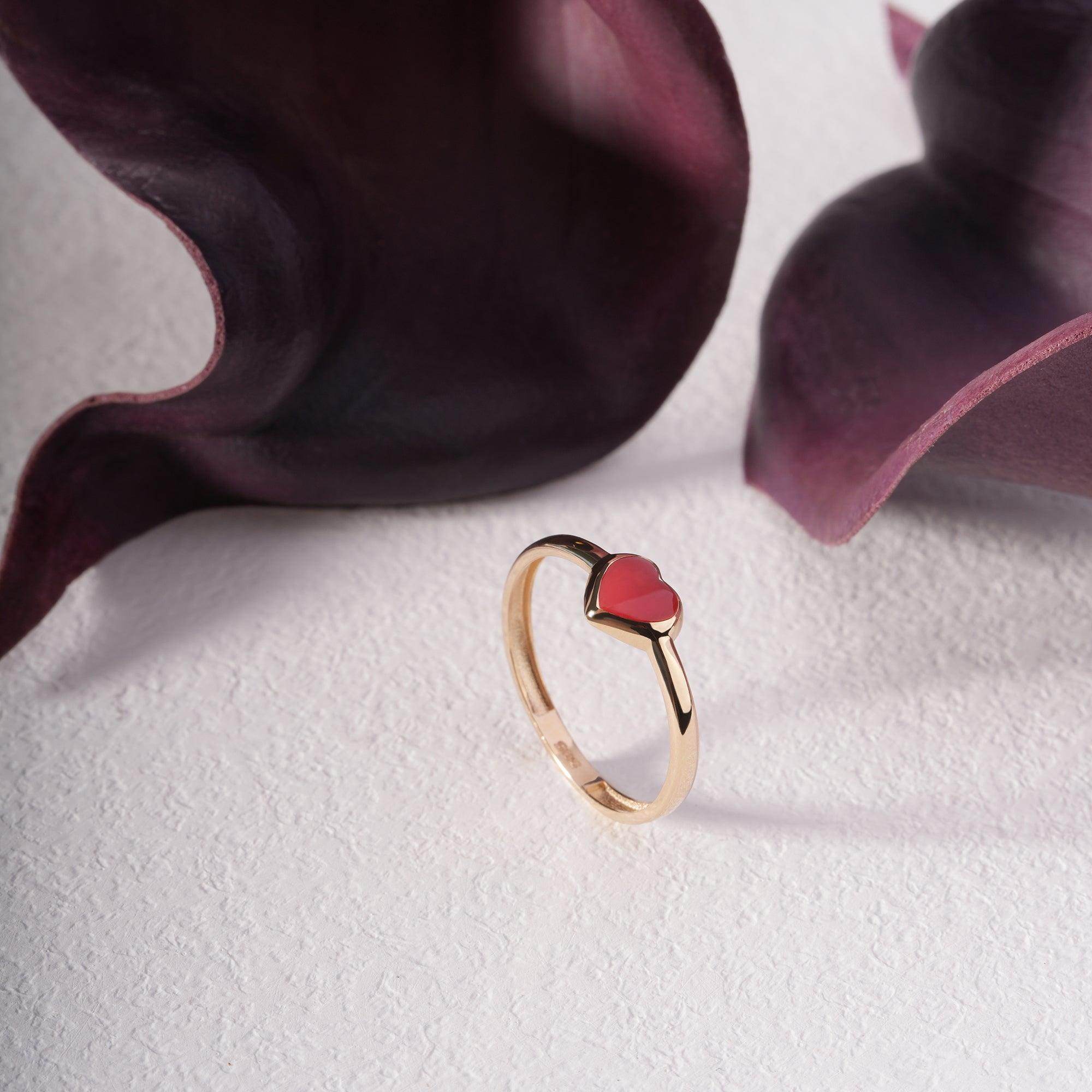
Those tiny marks are called hallmarks, and they exist to certify what a piece is made of. In the US, the Federal Trade Commission requires that any jewelry marked with a purity (like "14K") also carry a maker's mark, so there's accountability behind the claim. The stamps are deliberately placed in discreet spots — inside a band, on a clasp, on an earring post — so they don't interfere with the design. On a small ring such as a heart enamel ring, the inside of the band is the first place to look.
Reading them is the single fastest way to know what your ring actually is, without any tools.
Gold Purity Numbers Decoded
The most important stamp is the purity mark. In the US karat system, here's what each means:

| Stamp | Pure Gold | Notes |
|---|---|---|
| 10K | 41.7% | Legal minimum to be called "gold" in the US |
| 14K | 58.3% | The everyday-wear sweet spot |
| 18K | 75% | Richer color, softer metal |
| 22K | 91.7% | Very soft, mostly cultural/investment pieces |
| 24K | 99.9% | Pure gold; too soft for daily wear |
The Three-Digit European System
If your ring shows a three-digit number instead of a "K," it's using the millesimal fineness system common in Europe and much of the world. It expresses purity in parts per thousand — and it maps directly onto the karat system:
- 417 = 10K (41.7% gold)
- 585 = 14K gold. The stamp refers to the 585 fineness standard — at least 58.5% gold. Expressed in karats, 14K is 14 parts gold out of 24, or 58.3%.
- 750 = 18K (75% gold)
- 916 or 917 = 22K (91.6% gold)
- 999 = 24K (pure gold)
So if you see 585, that's identical to a 14K stamp — same gold, just labeled in the international format.
Letter Stamps and What They Warn You About
Some stamps signal that a piece is not solid gold. If you see these letters next to a gold mark, the piece is coated, not solid:
- GP (Gold Plated) — a thin gold layer over base metal
- GF (Gold Filled) — a thicker bonded layer; better than plating, still not solid
- GE / GEP (Gold Electroplated) — a chemically applied coating
- HGE (Heavy Gold Electroplate) — a heavier plating, still a coating
- RGP (Rolled Gold Plate) — a mechanically bonded thin layer
On the other hand, some letters are reassuring. "PLUMB" or "P" after a karat (like "14KP") means "plumb gold" — the piece is exactly the karat stated, not slightly under.
Platinum and Silver Stamps
Not every white-colored ring is white gold. Check for these:

- PT, PLAT, 950, or 900 → platinum (950 = 95% pure platinum)
- 925, STG, or STER → sterling silver (92.5% silver). If a 925 ring looks gold, it's gold vermeil — silver with a gold coating, not solid gold
- PD or 950 PD → palladium, a platinum-group metal
Maker's Marks and Symbols
Alongside the purity number, you'll often find a maker's mark — a logo, set of initials, or small symbol identifying the company that made the piece. Antique rings may also carry assay office marks, date letters, and country-of-origin symbols, which collectors use to date and authenticate older pieces.
What If My Ring Has No Stamp?
A missing stamp isn't automatic proof of fake — but it's a reason to investigate. Possible explanations:
- It's a genuinely old or antique piece made before modern stamping was standard
- The stamp wore off after decades of wear, or was lost during a resizing
- It's not precious metal at all — the most likely reason for a modern, unmarked, gold-colored ring
If a piece is sold today as solid gold but carries no hallmark, ask the seller for verification. A reputable jeweler can confirm metal content with a non-destructive XRF scan.
Once you can read the stamp, the next question is which purity to buy. We explain the trade-offs in why 14K gold is the best choice for everyday jewelry.
The Bottom Line
The numbers inside your ring are a precise record of what it's made of. A "14K" or "585" stamp means 14K gold; letters like GP, GF, or GE mean a coating over base metal; and 925 means a silver base. Once you know the code, you can read any ring in seconds and know exactly what you're holding.
Want the full breakdown of every jewelry stamp? Read our Jewelry Hallmarks Guide, or browse the 14K Gold Ring Collection.





Share:
Why Does Gold Turn Your Skin Green? (And How to Stop It)
What Does "14K Italy" Stamped on Jewelry Mean?