
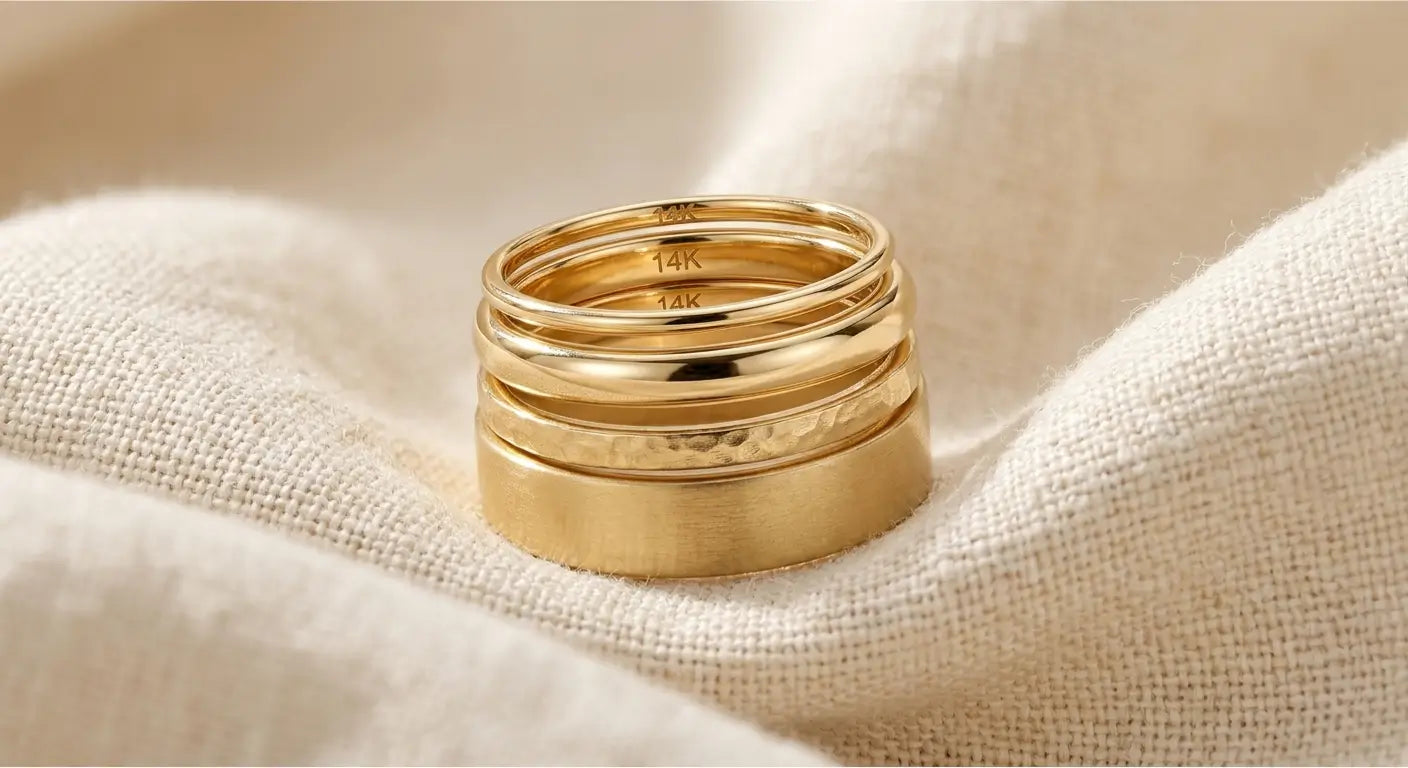
If you're buying gold jewelry — especially something you'll wear every day — the first decision isn't style. It's karat. The number stamped inside the band, on the clasp, or on the back of a pendant tells you how much gold you're actually getting. It also tells you how that piece will wear, age, and hold up over time.
There are four karat options on the US market: 10K, 14K, 18K, and 24K. All are real gold. But for everyday fine jewelry, 14K gold is the right call for most people, most of the time. Here's why.
- 14K is 58.3% pure gold. The rest is strengthening metals such as copper, silver, and zinc.
- It is hard enough for daily wear and still looks richly golden.
- Check the stamp and ask if the piece is solid, plated, or filled before you buy.
Article Contents
- What the Karat Numbers Actually Mean
- What Does 14K Mean on Jewelry?
- The Case for 14K Gold
- When 18K Is Worth It (and When It Isn't)
- Why 10K Falls Short
- Why 24K Pure Gold Isn't Practical for Wearable Jewelry
- The Hallmark Test
- Solid Gold vs. Plated, Filled, and Vermeil
- Care Considerations for 14K Gold
- Frequently Asked Questions
- The Bottom Line
What the Karat Numbers Actually Mean
Gold purity is measured on a 24-point scale. 24K is pure gold. Anything less is alloyed with other metals to add strength, change color, or reduce cost.
| Karat | Pure Gold | Alloy Metals |
|---|---|---|
| 10K | 41.7% | 58.3% |
| 14K | 58.3% | 41.7% |
| 18K | 75% | 25% |
| 24K | 99.9% | ~0% |
What Does 14K Mean on Jewelry?
The "K" stands for karat. The number says how many of 24 parts are pure gold. So 14K means 14 parts gold and 10 parts other metals, or 58.3% gold. People also search for the 14k meaning on a stamp, and the answer is the same.
The other metals are usually copper, silver, and zinc. They add strength and set the shade. More copper gives a warmer, rosier tone. More silver gives a paler yellow.
Pure gold on its own is too soft for most jewelry. Blending it is how nearly all 14K gold jewelry gets made.
One common mix-up is a "14K" stamp on a silver ring. A real 14K stamp means the metal is a gold alloy. If the same piece is described as silver, the gold is likely a thin coating. That makes it plated or vermeil, not solid 14K. Ask the seller to confirm in writing.
The Case for 14K Gold
1. Durability That Stands Up to Daily Wear
This is the biggest reason 14K gold dominates the US fine jewelry market. Its 41.7% alloy content gives 14K a Vickers hardness around 140. That's noticeably harder than 18K gold, which measures about 125 HV. It's far harder than 24K pure gold too — soft enough that a fingernail can dent it.
You'll wear a 14K piece daily — bumping into keyboards, doorknobs, gym equipment, car steering wheels. That extra hardness means fewer scratches, less bending, and stones that stay put in their settings.
2. Rich Color That Doesn't Look Cheap
14K gold still reads unmistakably as gold. Its 58.3% purity gives it a warm, deep tone — richer than 10K, which can look pale or yellow-tinged. Yet it's barely different from 18K to the naked eye. It's the color sweet spot.

3. Value: Real Gold Without the Premium Tax
18K gold costs meaningfully more than 14K. That's not because it looks half again as nice — it's because it holds half again as much pure gold by weight. For most buyers, that extra cost doesn't show up as a noticeably better piece.
14K gold gives you genuine, valuable gold jewelry at a price that works. You can build a collection instead of owning one single piece.
What 14K is worth in money depends on two things: its weight and the day's gold price. A heavier chain holds more gold than a light one. Craftsmanship and design add to the retail price on top of that.
4. The US Industry Standard
Whether it's a ring, a bracelet, or a chain, 14K gold is the most common choice in US fine jewelry. It's a practical balance of durability, color, and cost for everyday wear. Walk into any reputable US jewelry store and you'll see it more than any other option in the case.
5. Real Melt and Trade-In Value
Because 14K gold is solid gold all the way through — not a plated shell — it carries real melt value. A jeweler or refiner can weigh it and price it against the current gold market. That's the same way they'd price any solid gold piece.
Plated and filled jewelry has little to no resale value once the outer layer thins. There's only a trace of actual gold in the piece to begin with. That's part of what makes solid 14-karat jewelry a long-term asset, not just an accessory.
When 18K Is Worth It (and When It Isn't)
18K is worth considering for:
- Engagement rings and major heirloom pieces where the deeper color matters
- Statement pieces worn occasionally, not daily
18K is overkill for:
- Everyday wear pieces (it scratches more easily)
- Anything with stones (softer prongs bend faster)
- Pieces where the small visual difference doesn't justify the 30–50% price premium
Why 10K Falls Short
10K is the legal minimum to be called gold in the US. It's harder than 14K gold, which sounds like an advantage.
But more alloy means a slightly washed-out color. It also tarnishes faster, since there's more silver and copper to react. Most reputable fine jewelers don't carry 10K.
Why 24K Pure Gold Isn't Practical for Wearable Jewelry
24K is what investors buy as bars and coins. As jewelry, it's impractical. It's too soft to hold a polish and too easy to dent. It can't securely hold gemstones either, so it won't survive daily wear.
It's also almost orange in tone — far yellower than what most Americans picture as "gold jewelry." Most 24K jewelry sold in the US goes to cultural occasions or investment, not daily wear.

The Hallmark Test
Every solid 14K gold piece should carry a hallmark: 14K, 14KT, or 585. The 585 mark is the metric fineness stamp for at least 58.5% gold. 14K itself runs 14 parts in 24, or 58.3% pure.
If a piece marketed as solid 14K gold has no stamp, ask questions. Reputable jewelers always hallmark their work.
Solid Gold vs. Plated, Filled, and Vermeil
Important distinction: a piece can be labeled 14K and still not be solid gold all the way through.
- Solid 14K gold: Gold all the way through. Will last generations.
- Gold filled (14/20): A thick gold layer mechanically bonded to a base metal core. Wears better than plated but eventually wears through.
- Gold plated: Thin gold layer over base metal. Wears off in months to a few years.
- Vermeil: Gold plating over sterling silver — better than regular plating but still wears.
For more on spotting the difference before you buy, see our guide on how to tell real gold from fake.
Care Considerations for 14K Gold
Like all fine jewelry, 14-karat gold deserves basic care:
- Clean monthly with warm soapy water (full method in our cleaning guide)
- Remove before exercising or sleeping — and see our guide on wearing gold jewelry in water for when it's fine to keep a piece on
- Store each piece separately, away from other jewelry that could scratch it
- Put on after lotion, perfume, and hairspray
Frequently Asked Questions
Is 14-karat gold considered real gold?
Yes. Any gold alloy of 10 karat or higher is legally recognized as real gold in the US. At 58.3% pure gold, 14-karat gold is genuine, solid gold. It's simply blended with other metals for strength, the same way nearly all fine jewelry is made.
What is 14-karat gold worth?
Its value comes from two things: the gold weight it contains and the current market price. Because it's solid, not plated, a jeweler can weigh and price it like any other solid gold item. Plated and filled jewelry holds little melt value once that thin outer layer wears through.
What does 14-karat mean?
The karat number tells you how much pure gold is in the alloy, out of 24 total parts. 14-karat gold is 14 parts pure gold and 10 parts other metals, or 58.3% pure gold by weight.
How much is 14K in money?
There is no single price. Value depends on the piece's weight in grams and the current gold market. Only 58.3% of the weight is pure gold. A jeweler can weigh your piece and quote you from the live price.
The Bottom Line
For everyday fine jewelry in the US market, 14K gold is the right answer most of the time. Hard enough for daily wear, rich enough to look unmistakably like gold. That is why 14K gold jewelry fills most jewelry cases.
Affordable enough to actually build a collection. And built to last for generations, not seasons.
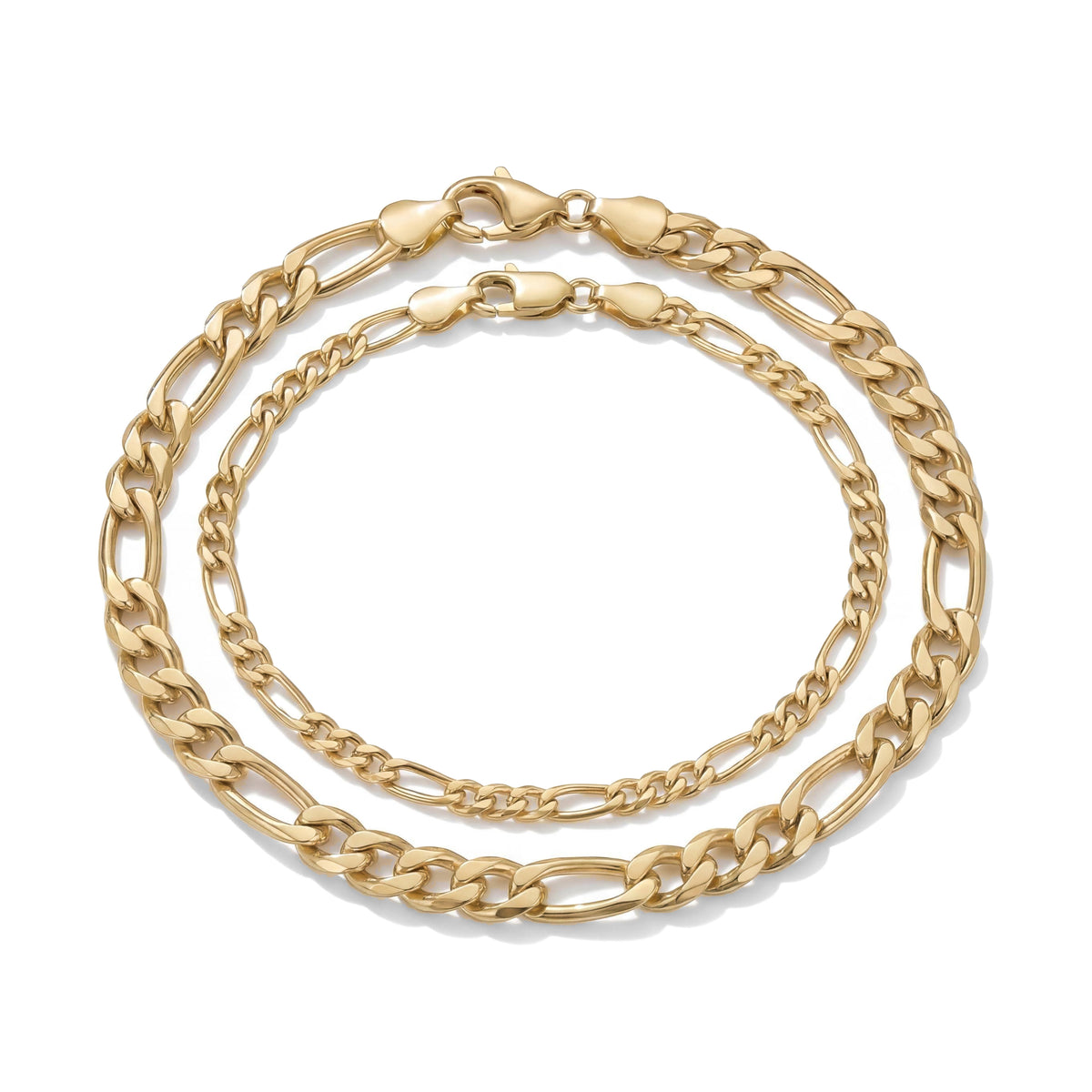
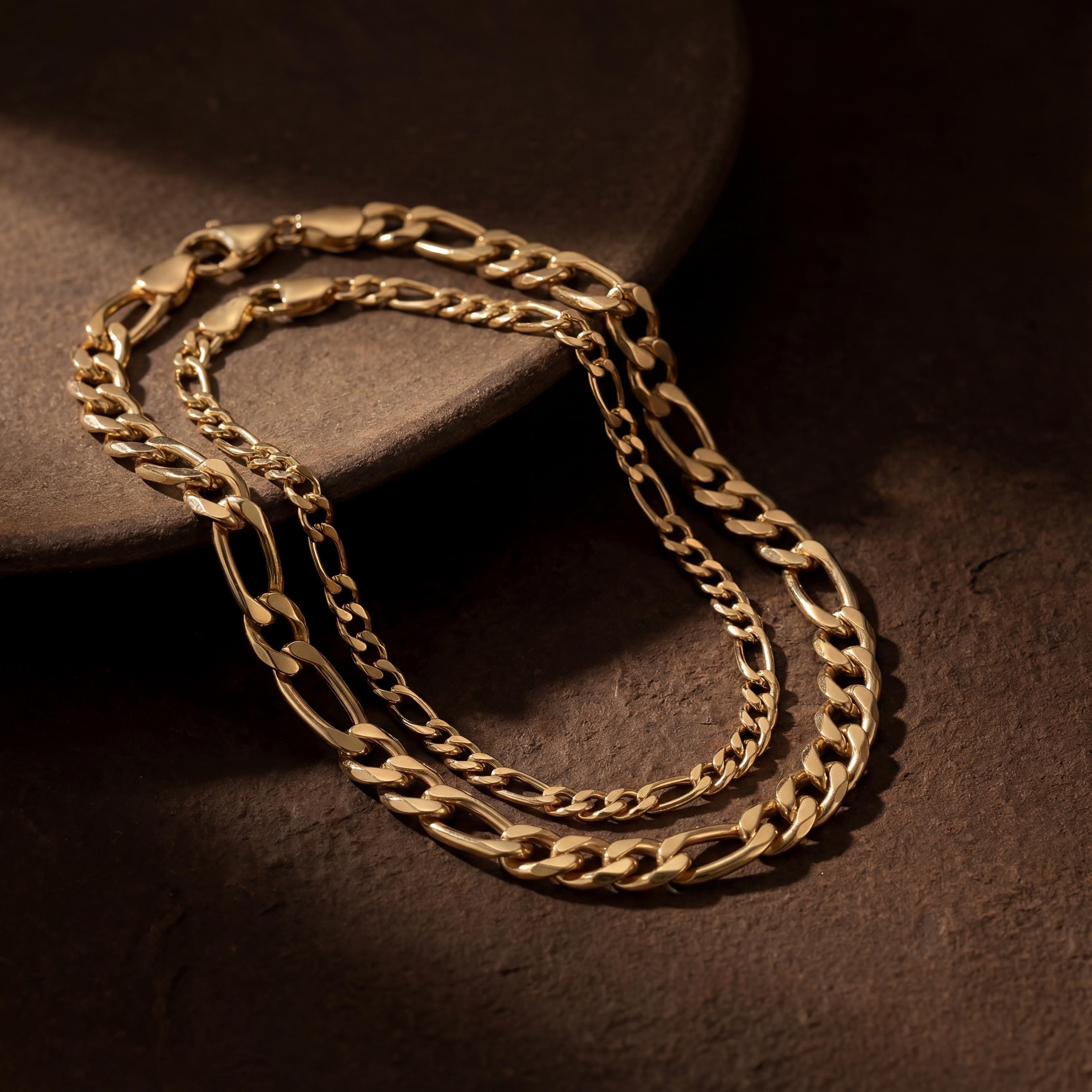
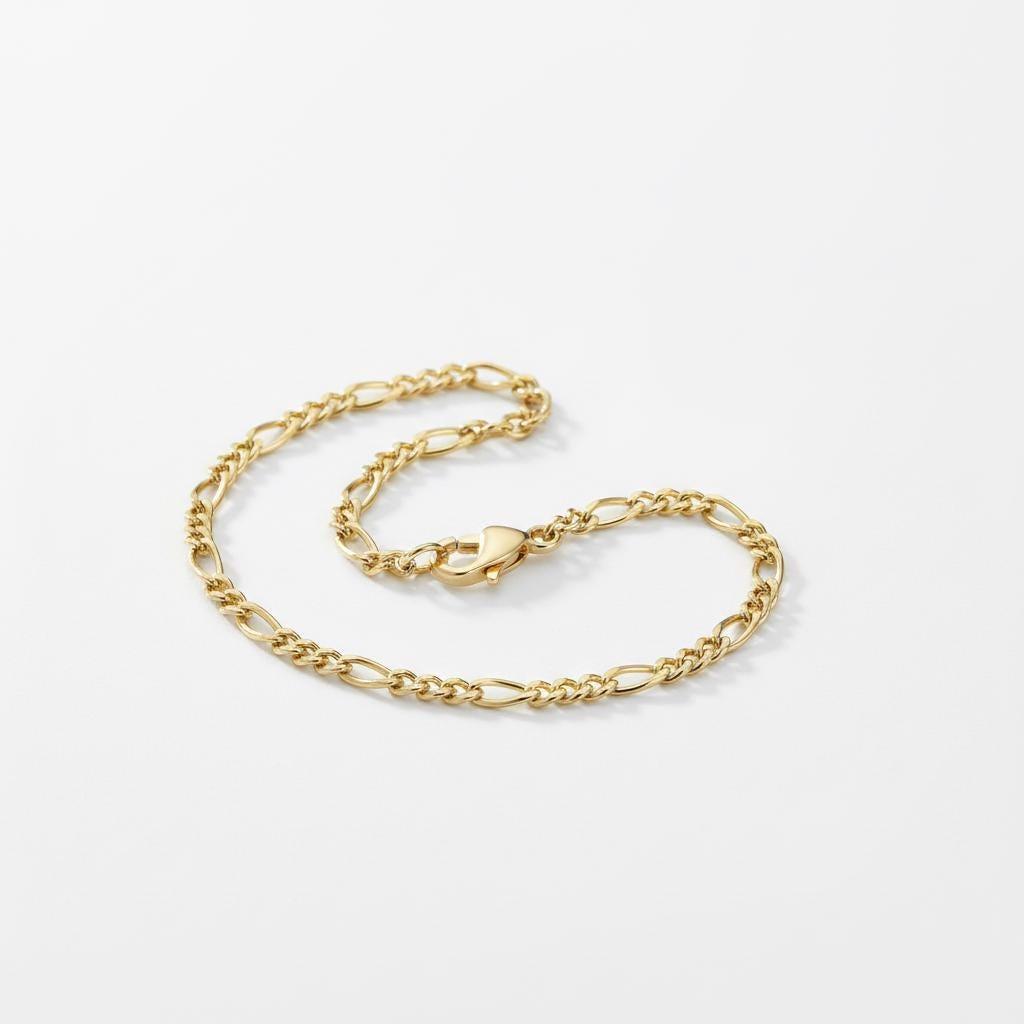
Every piece at Golden Planet Jewelry is crafted in 14K gold, made to order and shipped from New York for US orders, or from Istanbul, Turkey for all others. Browse our Best Sellers collection to see it in person.





Share:
Wedding Band Styles for Women: How to Pair It with Your Engagement Ring
How to Start a Fine Jewelry Collection (5 Pieces to Buy First)