
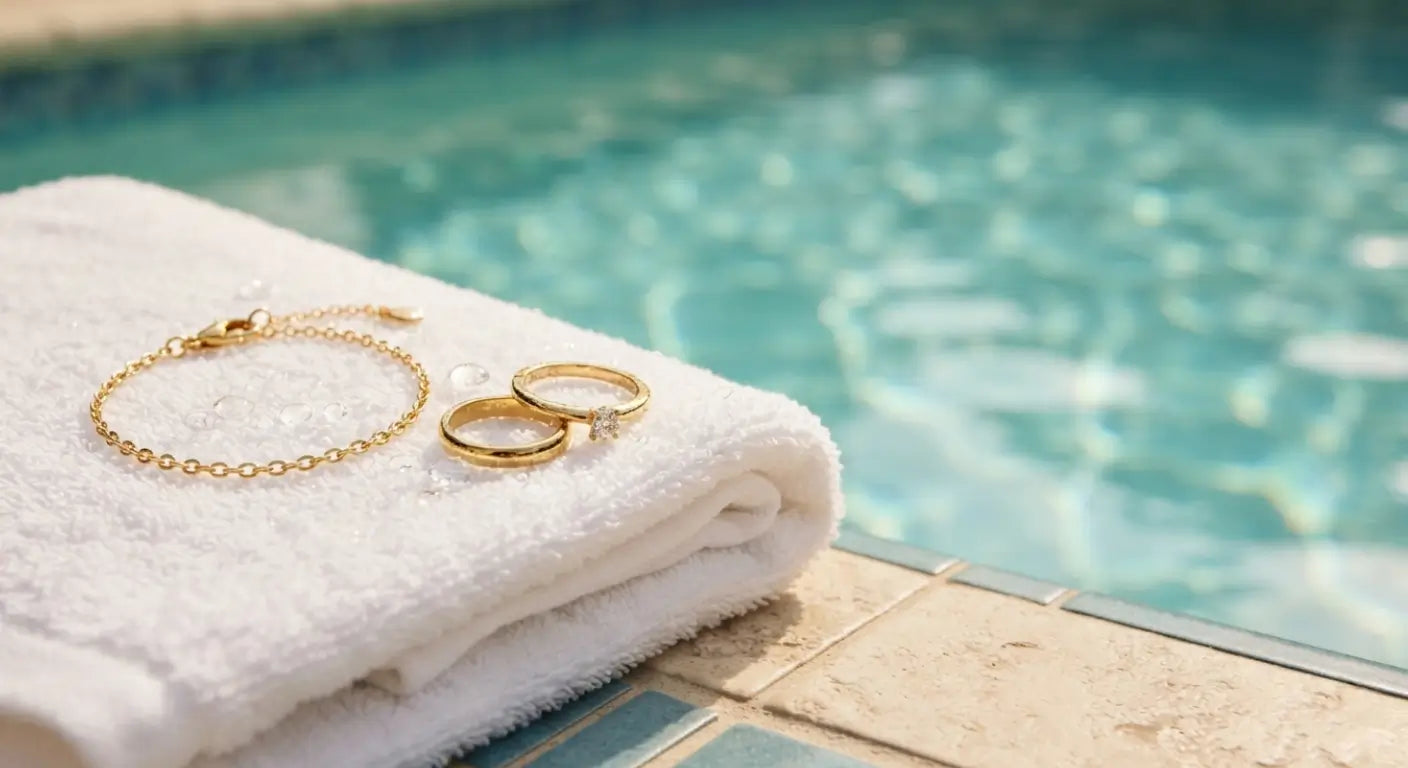
It's the middle of summer, you're about to jump in the water, and you glance at your gold bracelet: leave it on, or take it off? It's one of the most common questions we hear — and the answer isn't a flat yes or no. It depends on the water, the piece, and how often you do it.
Here's exactly how pools, oceans, showers, and sweat affect solid 14K gold, which situations are truly risky, and a two-minute habit that keeps your pieces bright all season.
- 14K gold won't rust or tarnish — but pool chemicals can slowly attack the alloy metals mixed in.
- The real villain is a hot tub: heat plus concentrated chlorine is hard on solder and settings.
- A quick freshwater rinse after any swim is all it takes to keep gold looking new.
The Short Answer
Yes, you can wear solid 14K gold in water — occasionally and with a little care. Pure gold doesn't corrode, so your piece won't rust or turn your skin green. But 14K gold is mixed with stronger metals like copper and silver, and those alloy metals are what harsh pool chemicals can slowly wear on. Occasional dips are fine; daily chlorine soaks are not.
Water & Your Gold: At a Glance
Here's the quick reference for solid 14K gold, from safest to skip-it.
| Situation | Verdict | What to do |
|---|---|---|
| Sweat & workouts | Fine | Wipe dry afterward |
| Ocean / saltwater | Rinse after | Rinse with fresh water; mind loose fingers |
| Chlorinated pool | Caution | Occasional is OK; rinse right after |
| Shower | Dulls shine | Fine, but soap film builds up |
| Hot tub / spa | Take it off | Heat + chlorine is the real risk |
| Pieces with pearls / soft stones | Take it off | Chemicals and salt harm stones |
Chlorine & the Pool
Chlorine is the one to watch. It doesn't touch the pure gold, but over repeated exposure it can react with the alloy metals in 14K gold, and in a hot tub — where chlorine is concentrated and the water is hot — it can weaken solder joints and the tiny prongs holding stones. A quick swim and rinse won't hurt. Daily laps or a long hot-tub soak, over months, can. When in doubt, take it off for the hot tub.

Saltwater & the Ocean
Saltwater is gentler on gold than chlorine, but salt is mildly abrasive and can leave your pieces looking dull if you let it dry on. The bigger ocean risk is actually physical: cold water shrinks your fingers and wrists, and more than one ring has been lost to a wave. If you swim in the sea, rinse afterward — and consider leaving loose-fitting rings on the towel.
Sunscreen, Lotion & Sweat
These won't damage solid gold, but they're the usual reason a bright piece starts looking cloudy. Sunscreen and lotion leave a film, and sweat adds to it. It's cosmetic, not structural — a gentle clean brings the shine right back. To avoid buildup, apply sunscreen and let it absorb before putting your jewelry on.
The Shower Question
An occasional shower in your gold won't harm it, but daily showering slowly coats it in soap and hard-water residue that dulls the finish over time. If you shower with it on, a quick rinse and a soft-cloth dry keeps that film from building. Curious why plated pieces fade in the shower but solid gold doesn't? That comes down to construction — our guide on why gold jewelry fades explains it.
Your 2-Minute Post-Swim Rinse
This one habit does almost all the work:
- Rinse the piece under cool, fresh tap water to flush off chlorine or salt.
- Add a drop of mild dish soap and gently rub with your fingers or a soft brush.
- Rinse again, then pat dry with a soft, lint-free cloth — don't let it air-dry.
For a deeper clean, our full at-home gold cleaning guide walks through it step by step.

Frequently Asked Questions
Will 14K gold tarnish in water?
No. 14K gold doesn't rust or tarnish. It can look dull from mineral or soap film, but that's surface buildup that cleans right off — not damage to the metal.
Is chlorine or saltwater worse for gold?
Chlorine, especially hot and concentrated in a spa, is harder on the alloy metals and solder than saltwater. Both are fine occasionally as long as you rinse afterward.
Can I shower with my gold bracelet every day?
You can, but it will gradually dull from soap and hard-water film. A quick rinse and dry keeps it bright, or simply take it off before showering.
What about gold pieces with gemstones or pearls?
Take those off before any water. Pearls and softer or porous stones can be damaged by chlorine, salt, and chemicals far more easily than the gold itself.
The Bottom Line
14K gold is tougher than most people think: a summer of pools and oceans won't ruin it, as long as you skip the hot tub, take extra care with stones, and give your pieces a quick freshwater rinse afterward. One exception: white gold and two-tone pieces are finished with rhodium, a surface layer that wears with time and can be re-applied. Do that, and your gold stays bright from the first beach day to the last.
Want pieces built to keep up with your summer? Explore our 14K gold — everyday-ready and made to be worn.





Share:
How to Measure Your Wrist for a Bracelet (At-Home Sizing Guide)
Beach to Fall: How to Transition Your Gold Jewelry for the Season