
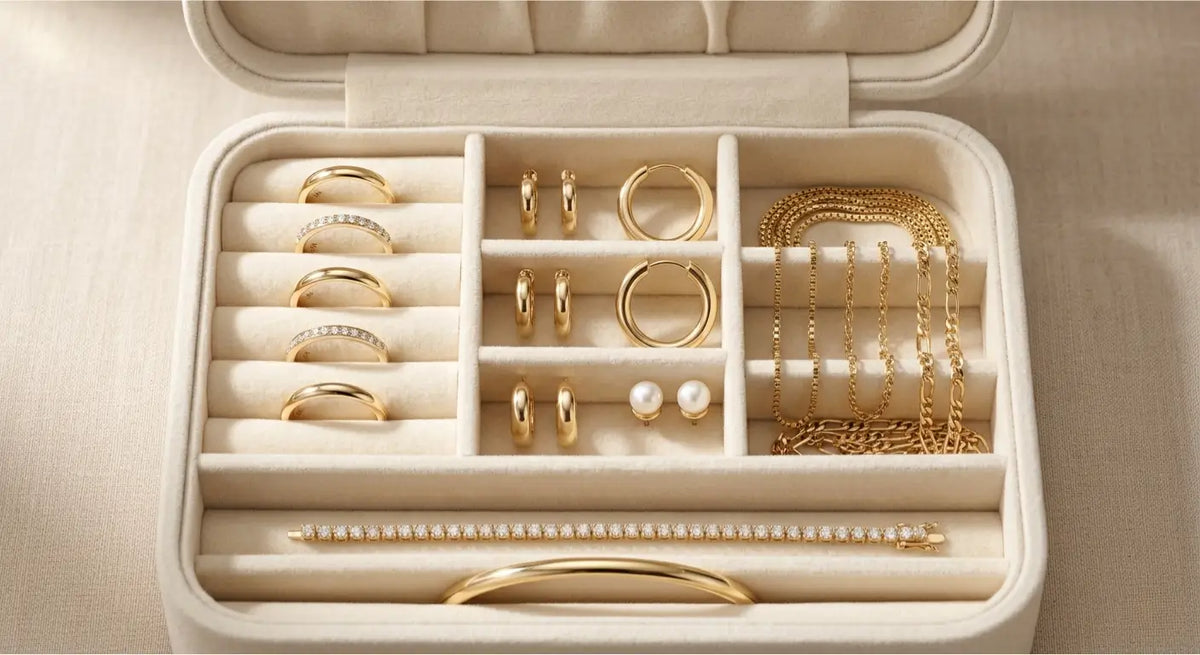
Most jewelry damage doesn't happen while you're wearing it. It happens in the drawer. Chains tangle into knots that take hours to undo. Rings scratch each other when stacked in a single tray. Earrings lose their backs in the bottom of a pouch. Gold tarnishes faster when stored in humid air. None of it is dramatic in any single moment — but six months in, you open the drawer and realize your favorite pieces aren't as pristine as they used to be.
Good storage is the single highest-leverage thing you can do for your fine jewelry collection. Here's how to do it right.
Article Contents
The 3 Things That Damage Stored Gold
- Other metal: Gold scratches gold. Two pieces touching each other in a drawer scratch each other over time.
- Moisture and humidity: Speeds up tarnish on the alloy metals in 14K gold and damages gemstones.
- Air exposure: Doesn't damage gold itself, but accelerates dulling and dust accumulation.
The Golden Rule: Separate Every Piece
The single most important storage rule is to keep every piece in its own compartment, pouch, or padded slot. Never throw multiple pieces into the same bowl, jar, or tray.
Best Storage Options
Lined Jewelry Box (Best Overall)
A jewelry box with felt or velvet-lined compartments is the gold standard. Look for:
- Ring rolls or padded slots that hold rings upright
- Hooks for necklaces (prevents tangling)
- Felt-lined trays for earrings
- Separate dividers so pieces don't touch
Soft Pouches (Best for Travel)
Individual soft fabric pouches — one piece per pouch — are perfect for travel or as a budget alternative to a jewelry box. The fabric absorbs moisture and prevents scratching.
Acrylic Drawer Organizers
Modular acrylic dividers let you build storage that fits your collection. Great for vanity drawers. Just make sure to add a soft liner — bare acrylic still scratches gold.

Wall-Mounted Necklace Hooks
For necklace chains that tangle easily, individual wall hooks or a board with multiple hooks keeps each piece visible, accessible, and untouched. Bonus: you'll actually wear them more when you can see them.
How to Store Each Type
Rings
Use a ring roll or slot. Storing rings flat in a tray means they scratch against each other. Stand them upright in dedicated grooves.
Necklaces and Chains
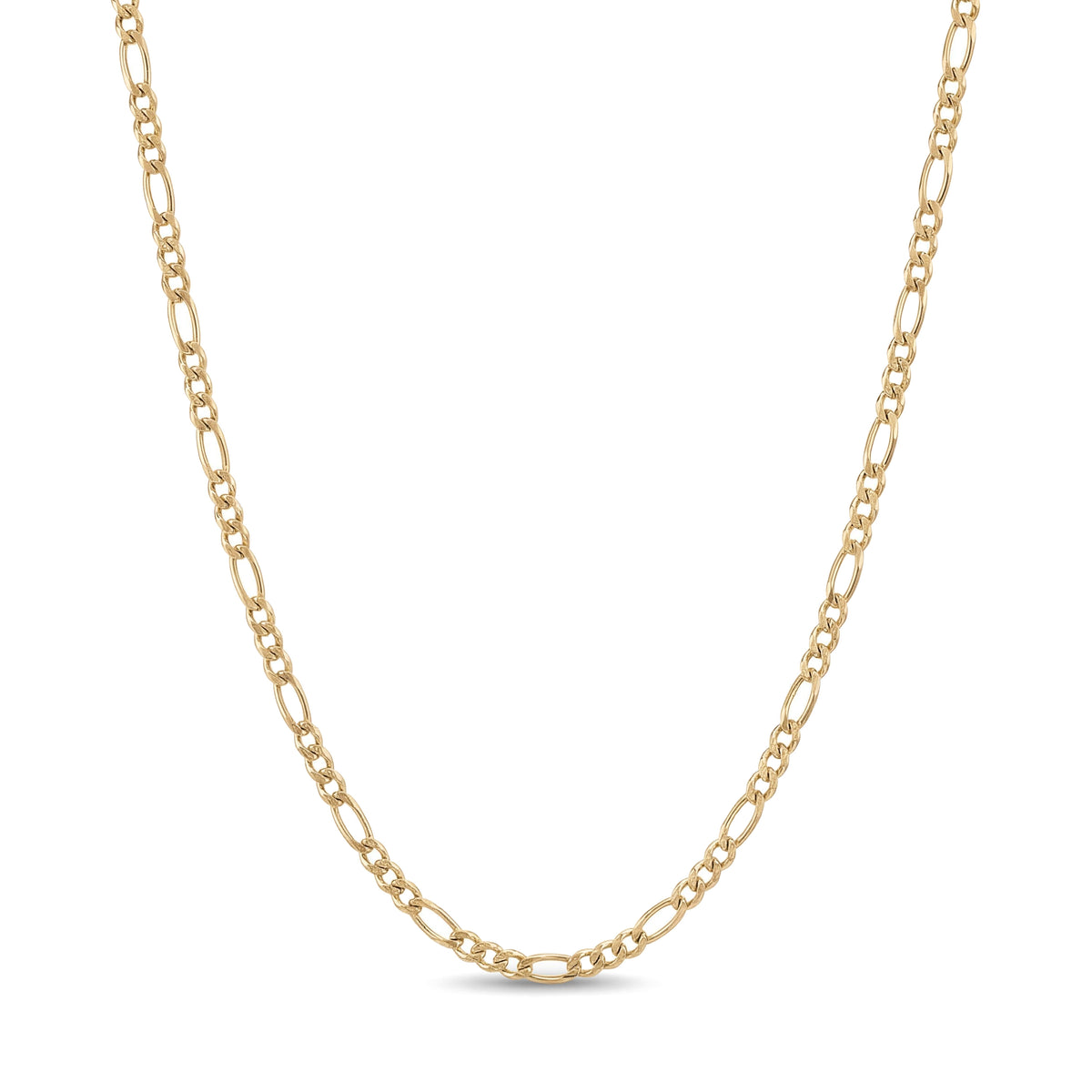
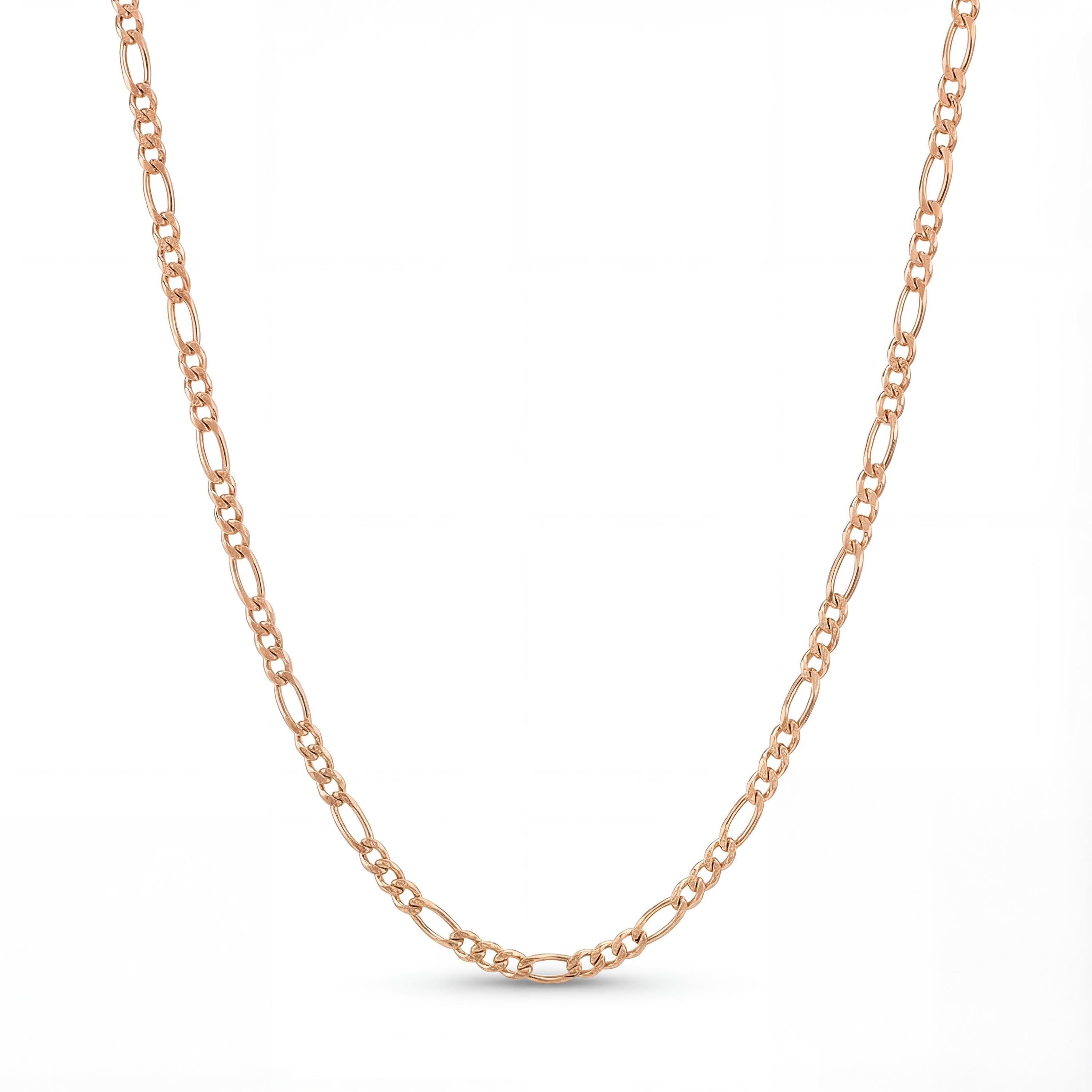
This is where most damage happens. The right way: hang each chain on its own hook, fully closed. Hanging closed prevents the chain from tangling on itself.
The wrong way: throwing chains in a drawer, where they tangle around each other within days.
The travel hack: Thread a chain through a drinking straw and clasp it — keeps it perfectly straight in any pouch.
Earrings
For studs: a felt earring tray with paired slots. For huggies and hoops: small hooks or stick pads. For drops and dangles: hang them by the hook on a perforated card or a small jewelry stand.

Always store earrings in pairs — losing one half of a 14K gold earring set is heartbreaking.
Bracelets
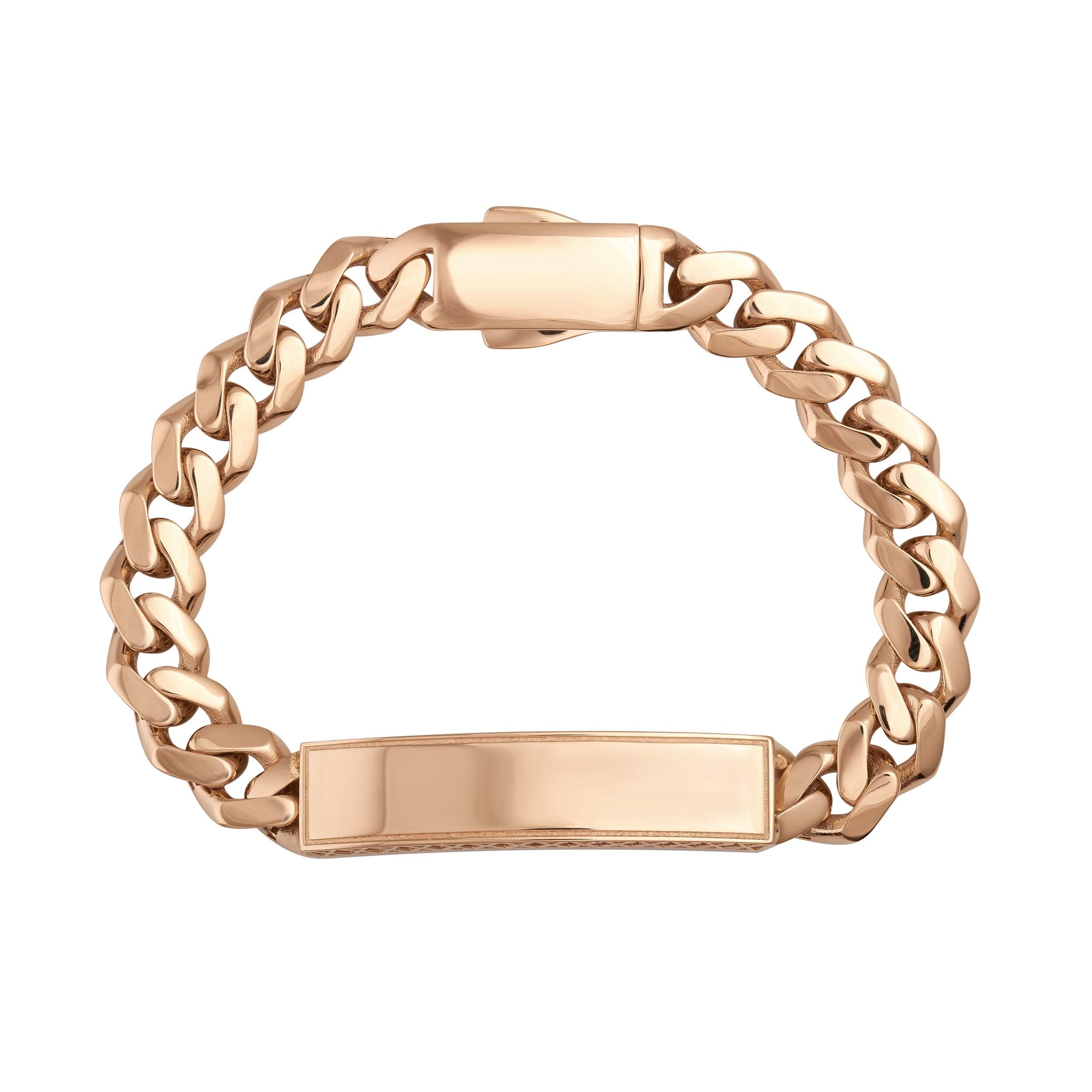
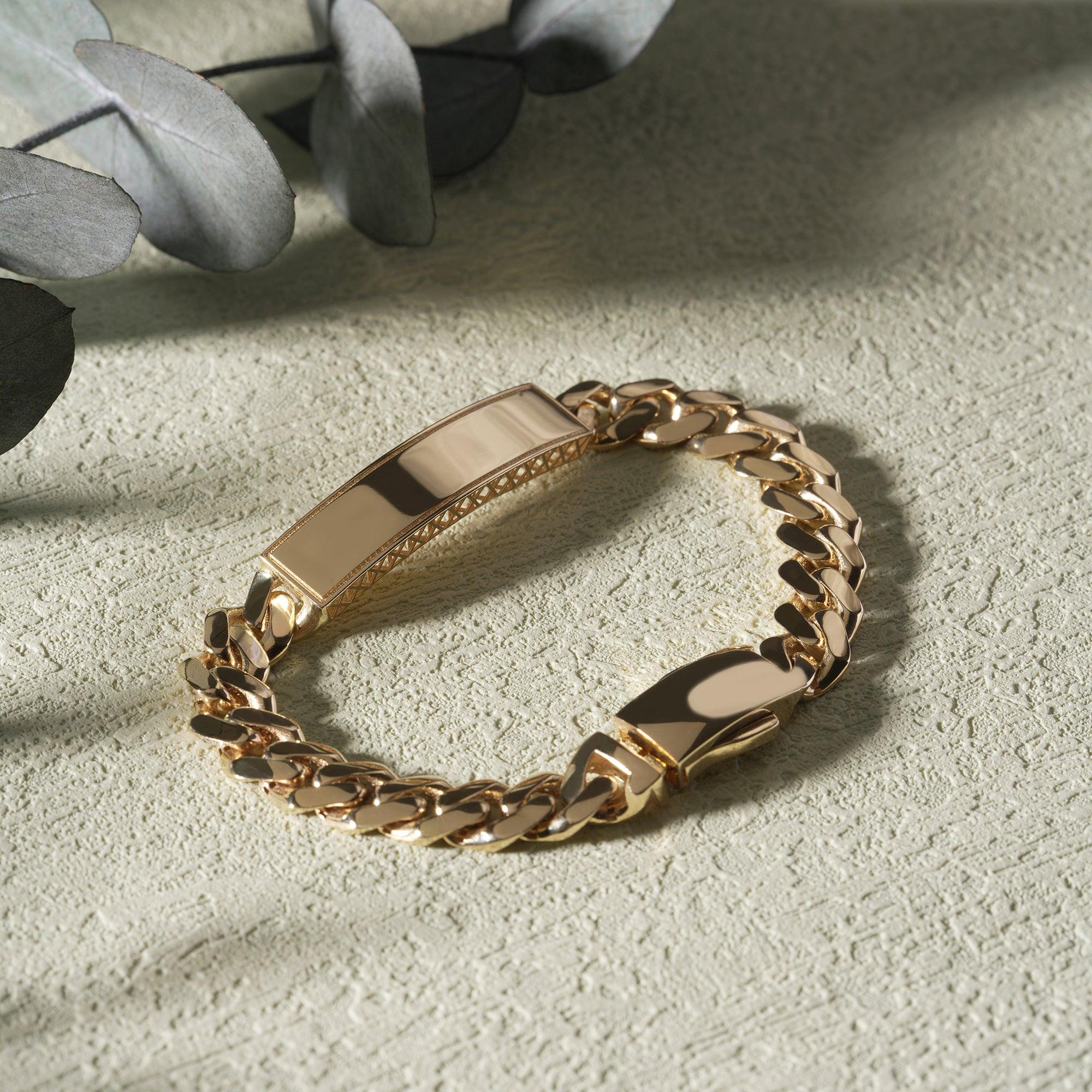
Lay flat in a felt tray, ideally with each bracelet in its own slot. Tennis bracelets and chain bracelets benefit from being clasped before storing.
Tarnish Prevention
14K gold doesn't rust, but the silver and copper alloys can tarnish over years. Three small additions keep your storage area tarnish-free:
- Anti-tarnish strips: Tiny chemically-treated strips placed inside a jewelry box absorb humidity and tarnishing agents. Replace every 6 months.
- Silica gel packets: The little packets from shoeboxes. Drop a fresh one into your jewelry box to absorb humidity.
- Avoid bathroom storage: Bathroom humidity is the enemy of fine jewelry. Store somewhere drier — bedroom drawer, closet.
Daily Habits That Help
- Wipe before storing: A quick swipe with a soft cloth removes skin oils and lotion before they sit on the metal overnight.
- Take it off before bed: Tossing and turning damages chains and clasps. Sleep jewelry-free.
- Remove rings for showering: Soap film builds up faster on gold worn in the shower.
- Use a small dish next to the sink: A tiny ring dish prevents the "took it off and forgot where" problem.
Travel Storage
For travel, a small zippered travel case with separate compartments is essential. Quick rules:
- Travel only with pieces you'll actually wear — leave the rest at home.
- Use a hard case, not a soft pouch, in checked luggage (or ideally don't check fine jewelry at all).
- Use the drinking straw trick for chains.
- Keep an inventory list with photos — useful for insurance if anything is lost.
What NOT to Store With Your Gold
- Rubber bands: They release sulfur as they break down, which tarnishes silver-alloy gold.
- Wooden boxes without lining: Untreated wood releases acids over years.
- Other metals: Don't store gold and silver in the same compartment — they react with each other in humid conditions.
- Plastic bags: Trap moisture against the metal, accelerating tarnish.
Insurance: The Last Step
For any single piece worth over $1,000, get it appraised and added to your renters or homeowners insurance. Some insurers require a separate jewelry rider. The peace of mind is worth the small annual cost.
Want to take care of your pieces from the inside out? Pair good storage with our home cleaning guide and the full Golden Planet care policy.





Share:
White Gold vs Yellow Gold vs Rose Gold: Which Should You Choose?
Wedding Band Styles for Women: How to Pair It with Your Engagement Ring