
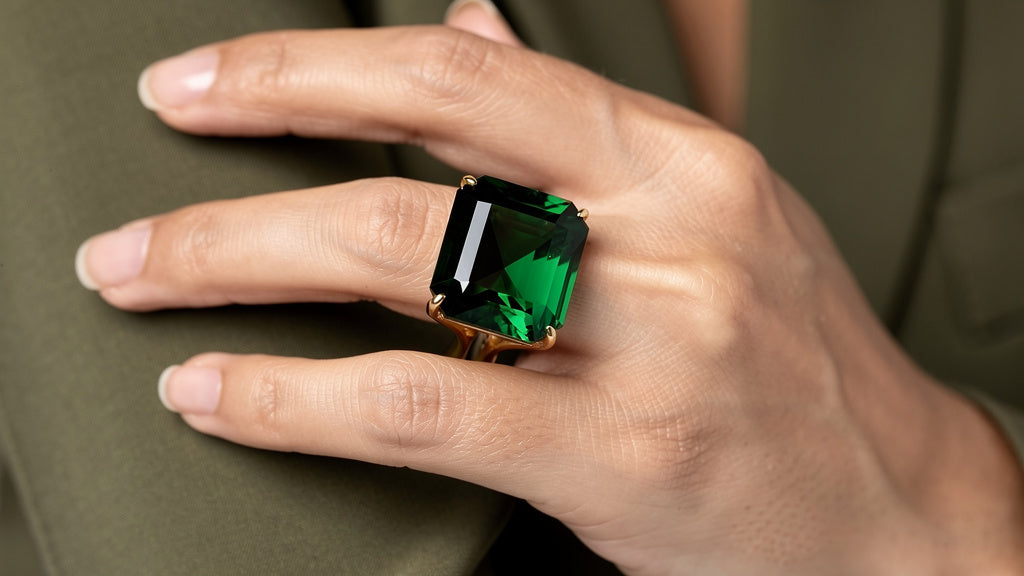
Emerald natural means a green stone that formed in the earth, not one made by people. Most buyers want to know three things. Is it real, what makes one worth more, and how do you care for it?
This guide answers all three in plain terms. You will learn how a natural emerald looks, what sets its price, and how to tell it from a copy.
- A natural emerald is a green beryl. Chromium and vanadium give it color.
- Small flaws inside the stone are normal. Color matters most for value.
- Simulated green stones in 14K gold give the look at a lower cost and are easy to wear daily.
What an emerald natural stone really is
Emerald is a green variety of the mineral beryl. Its color comes from tiny amounts of chromium and vanadium inside the crystal. Without them, the same mineral would be clear or pale.
Yes, emerald is a true gemstone. It is one of the classic "big four" colored stones, and it is the May birthstone. People have worn it for thousands of years.
Natural means the stone grew in rock under heat and pressure. Miners dig it out, then cutters shape it. Synthetic emerald is made in a factory and has the same chemistry. A simulated emerald is a different material that only copies the look.
How a natural emerald looks
Raw emerald often grows as a six-sided prism. The crystal can be dull, streaky, or cloudy before cutting. Many people are surprised by how plain rough stones look.
Cut emeralds show a range of greens. Some lean yellow-green. Others lean blue-green. The best are a rich, even, medium-to-deep green.
Nearly all natural emeralds have small inner marks. Gem experts call them inclusions, and they often look like a soft garden of lines and spots. These marks are part of the stone's story.
Because the stone is brittle, cutters favor a rectangular step cut with trimmed corners. This is the classic "emerald cut." It protects the edges and shows off the color.

What sets the price of a natural emerald
Four things drive value. Color comes first, and it counts for more than the rest. A vivid, even green with no gray or brown tint costs the most.
Clarity comes second. Emerald is judged more gently than other gems, since marks are expected. A stone that is clean to the eye is rare and costs more.
Cut and size follow. A well-cut stone shows even color from every angle. Large, fine stones are far scarcer than small ones, so price climbs fast as size grows.
Many natural emeralds are also treated with oil or resin to hide tiny surface cracks. This is a long-standing trade practice. Good sellers tell you about it, and a gem lab report can confirm it.
Exact prices swing with origin, quality, and the market. A 1 carat stone can cost a little or a great deal. Look at color and clarity first, then compare the same grade across sellers.
How to tell a real emerald from a fake
Start with the eye test. Real emerald usually has small inner marks. A stone with no marks at all and a perfect neon green is a warning sign.
Next, look at the weight and feel. Glass often feels warmer in the hand and can show tiny round bubbles under a loupe. Natural stones show jagged lines and crystals instead.
Then check the setting. Fine stones are usually set in solid gold or platinum, and the metal carries a stamp. If you want to check the metal too, read our guide on how to tell real gold from fake.
Home tests are only a first look. The sure answer is a trained gemologist with a loupe and proper tools. For a costly stone, ask for a report from an independent gem lab.
| Type | Made by | Typical look |
|---|---|---|
| Natural emerald | The earth | Rich green, small inner marks |
| Synthetic emerald | A factory process | Same chemistry, very clean |
| Simulated emerald | Another material, such as cubic zirconia | Bright green, no inner marks |
| Green glass | A mold | Round bubbles, soft edges |

Buying an emerald natural ring or loose stone
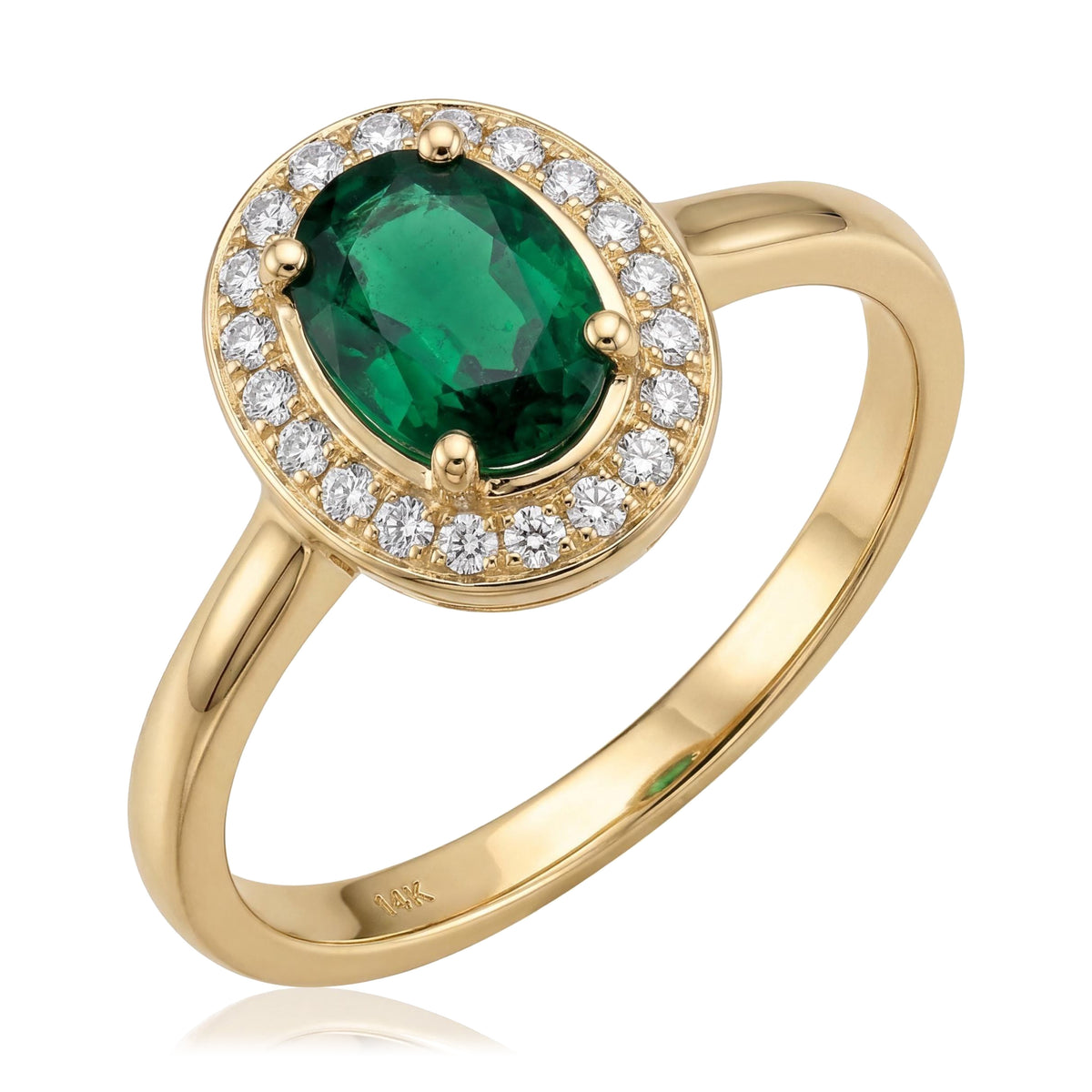
An emerald natural ring is the most popular way to wear the stone. Loose stones suit buyers who want a custom setting. Both routes need the same checks.
Ask where the stone came from. Colombia, Zambia, and Brazil are well-known sources. Origin can add to value, but only when a lab report backs the claim.
Ask about treatment and get it in writing. Light oiling is common and widely accepted. Heavy filling lowers value and needs more care.
Check the cut as well. A stone cut too shallow looks watery, and one cut too deep looks dark. Turn it slowly and watch whether the green stays even.
Compare at least three sellers before you buy. Look at photos taken in daylight, not only studio shots. A fair seller will answer every question without pressure.
Be careful with very low prices. A big "natural" stone at a tiny price is often glass, a copy, or a heavily treated stone. If a deal feels too good, it usually is.
Wearing and caring for emerald jewelry
Emerald rates about 7.5 to 8 on the Mohs scale, so it resists scratches fairly well. But it is brittle, and a sharp knock can chip it. Rings take the most hits, so many people pick pendants and earrings for daily wear.
Clean natural emeralds with a soft cloth and mild soapy water. Skip steam and ultrasonic cleaners, since oiled stones can react badly. Store the piece apart from harder gems.
The gold needs care too. Our guide to cleaning 14K gold jewelry at home covers safe steps for the metal.
A simple, lower-cost option
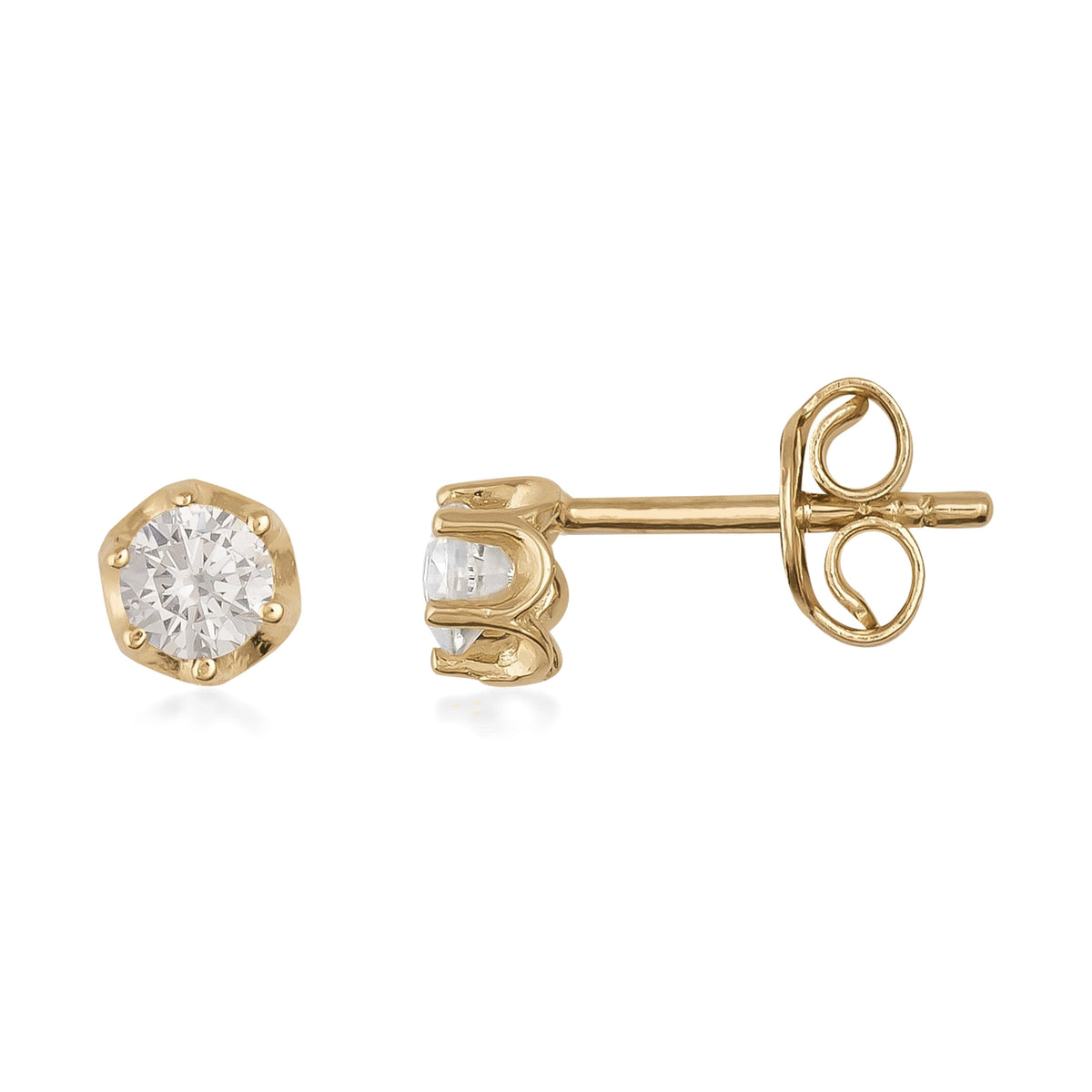
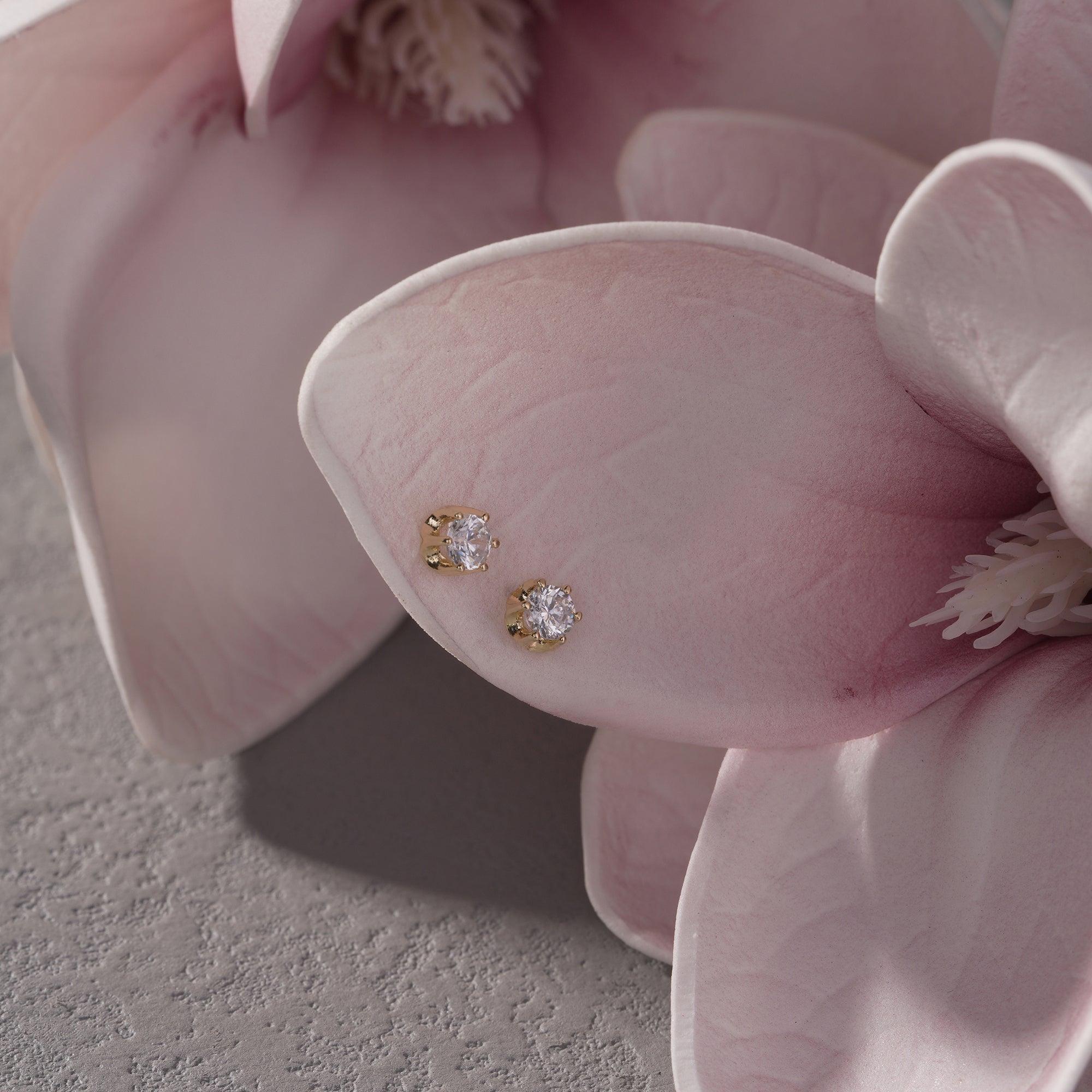
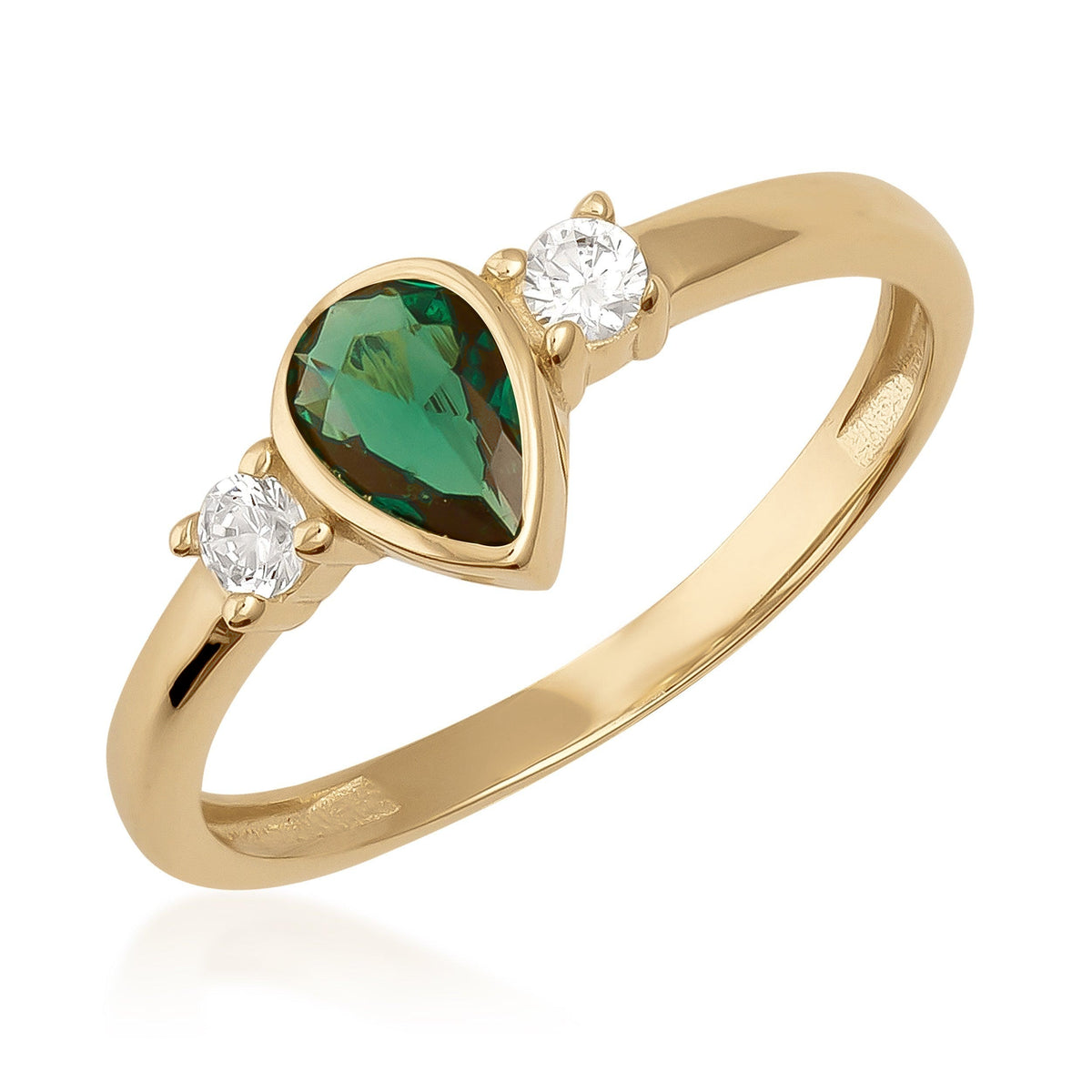
Not everyone wants to buy a costly natural stone. At Golden Planet, we make solid 14K gold pieces set with green cubic zirconia and other simulated stones. They give you the deep green look, and the stone is tough enough for daily wear.
Orders are shipped from New York for US orders, or from Istanbul, Turkey for all others. Each piece is made to order.
Frequently Asked Questions
Is emerald considered a gemstone?
Yes. Emerald is a green beryl and one of the best-known colored gemstones. It is also the May birthstone.
What is the price of a natural emerald per carat?
It varies widely. Color, clarity, cut, size, and treatment all change the price. Fine, vivid stones cost far more per carat than pale or cloudy ones, so compare stones of the same grade.
How does raw emerald look?
Raw emerald often forms a six-sided prism. It can look dull, streaky, or cloudy, with a green that is less vivid than a cut stone.
Are synthetic emeralds real?
They are real emerald in chemistry, but they are made in a factory, not found in the earth. A simulated emerald is different. It is another material that only copies the look.
Is it normal for a natural emerald to have flaws?
Yes. Almost every natural emerald has small inner marks. A stone with none at all deserves a closer look.
The Bottom Line
A natural emerald is prized for its deep green and its one-of-a-kind inner marks. Judge it by color first, ask about treatment, and have costly stones checked by a lab. If you want that green look in solid gold, browse our 14K gold rings collection.








Share:
String Bracelet Making: A Simple Step-by-Step Guide
Types of Bracelet Clasps: A Simple Guide to Every Style