
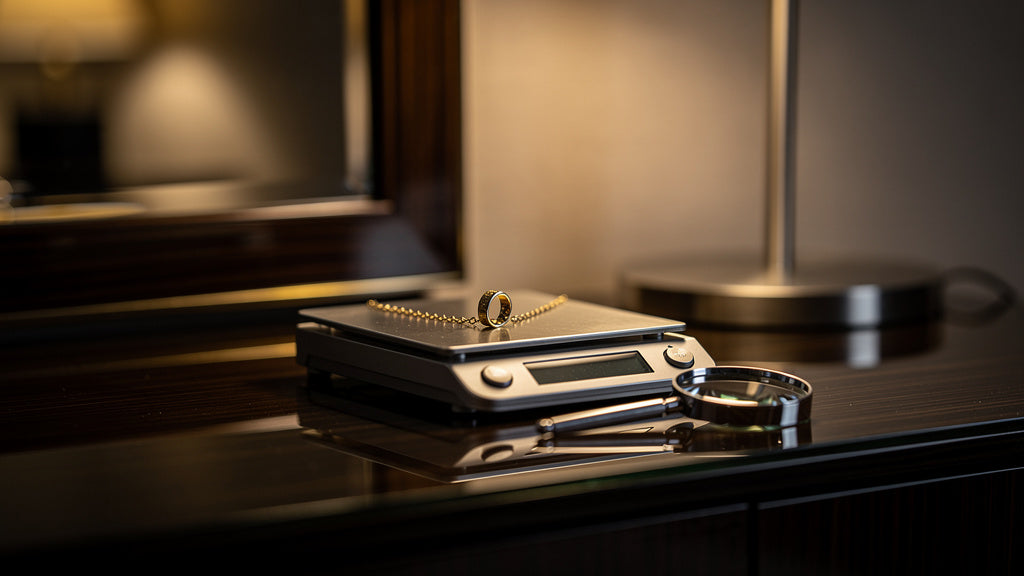
Wondering what your 18K gold jewelry is worth today? The 18K gold price per gram comes down to three numbers: the current spot price of gold, the 75% purity of 18K, and the piece's weight in grams. Multiply those together and you get a fair, no-guesswork estimate.
Gold's spot price moves all day, every trading day. Any dollar figure you see quoted online is a snapshot, not a fixed rate. What stays constant is the math that turns that snapshot into your item's real value, and that's what this guide walks through.
- 18K gold price per gram equals the day's spot price, multiplied by 0.75 for purity, multiplied by the piece's weight in grams. The same formula works for 10K through 24K, you just swap in that karat's purity.
- 18K gold is 75% pure gold. 14K is about 58.5% pure, so at the same spot price, 14K always costs less per gram.
- Retail jewelry prices sit above pure melt value, since design, labor, and stone-setting add cost that a scale can't measure.
What Determines 18K Gold Price Per Gram
Three inputs set the price. First, the spot price of gold, which is quoted for pure, 24K gold and shifts by the minute on global markets. Second, purity, which is fixed by definition at 75% for 18K. Third, weight, which is unique to your item and needs an actual gram scale, not a guess.
Multiply those three together and you have the melt value: what the raw gold is worth if it were stripped down and refined. It's the floor price of any 18K piece, not the full retail price.
Most price feeds quote gold by the troy ounce, not the gram. One troy ounce equals 31.1 grams, so you can divide any per-ounce figure by 31.1 to get a per-gram number for comparison.
Spot price itself moves with global supply and demand, currency strength, and how investors feel about economic uncertainty. None of that changes the 75% purity math for 18K. It only changes the number you plug in on any given day.
18K Gold Purity, Explained
Karat measures how many parts out of 24 are pure gold. 18K means 18 parts gold and 6 parts other metal, usually copper, silver, or zinc, added for strength and color. That works out to 75% pure gold by weight.
Higher-karat gold is richer in color and softer to the touch. Lower-karat gold trades some of that richness for durability and a lower price per gram. Here's how the common karats compare.
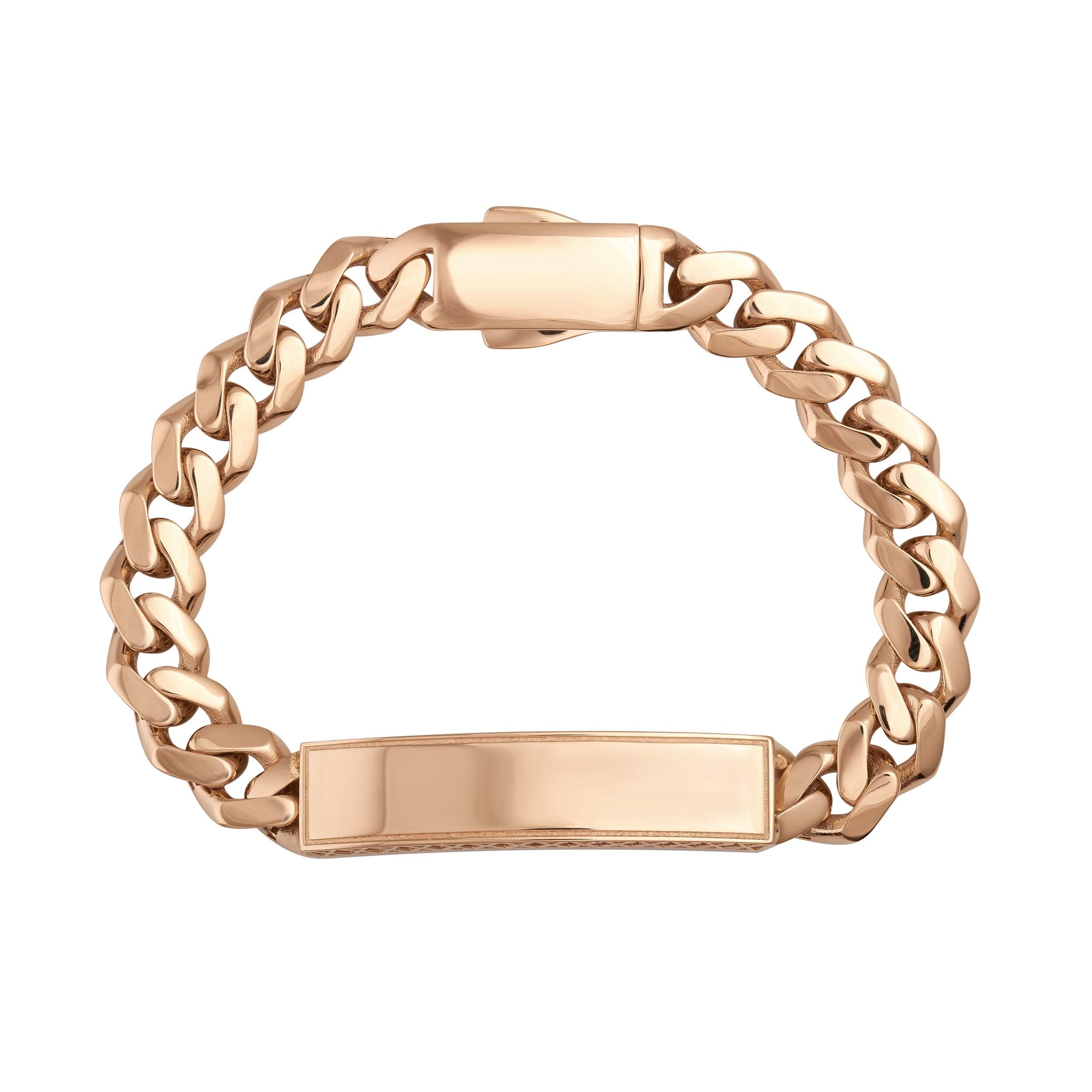
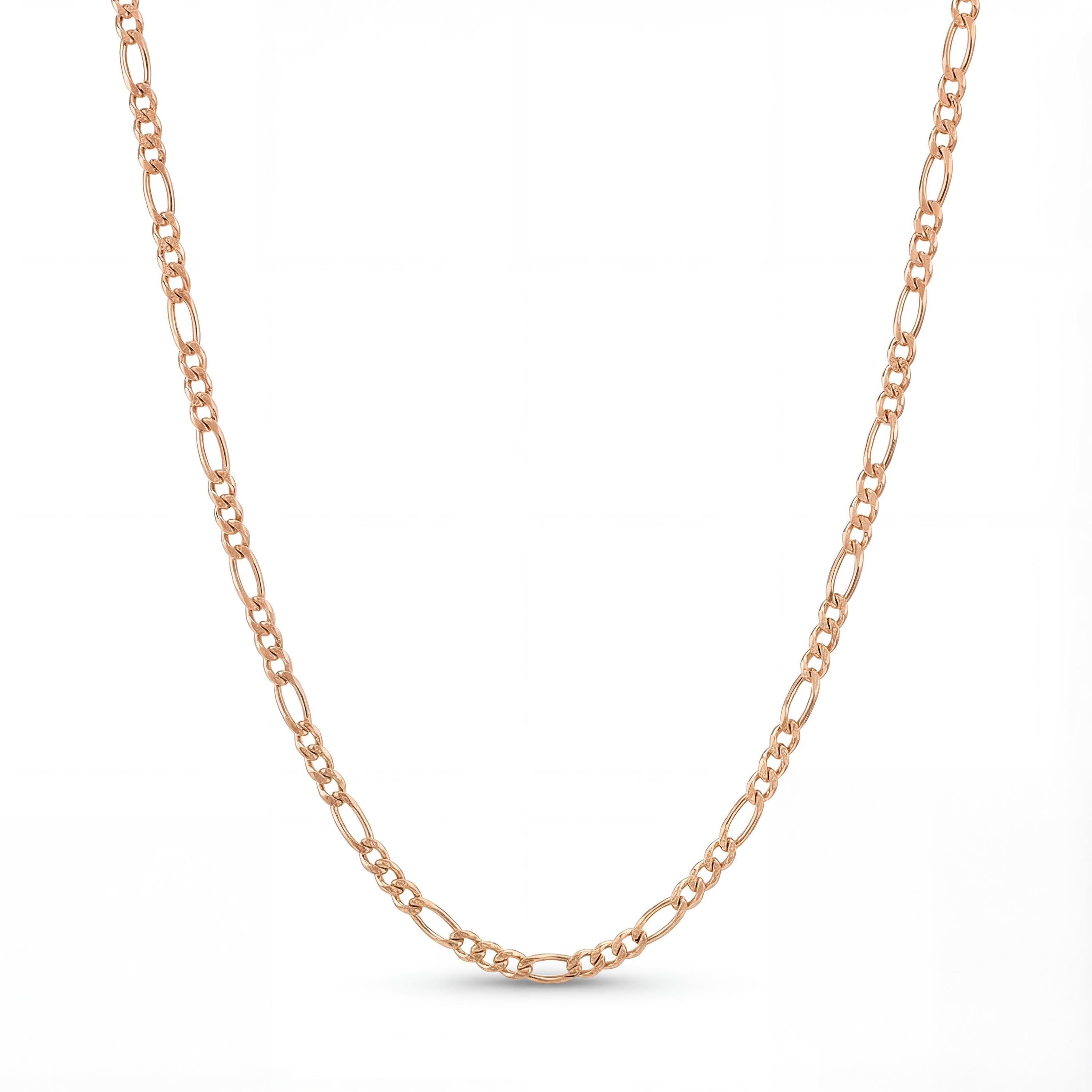
The alloy metal also shapes color, not just strength. More copper in the mix leans a piece toward warm rose tones, while more silver or palladium leans it toward a paler, cooler yellow. The gold content, and the price per gram, stays tied to karat either way.
| Karat | Gold Purity | Typical Stamp | Common Use |
|---|---|---|---|
| 24K | 99.9% | 999 | Bullion, investment bars |
| 22K | 91.6% | 916 | Traditional and bridal pieces |
| 18K | 75% | 750 | Fine jewelry, higher gold content |
| 14K | 58.5% | 585 | Everyday fine jewelry |
| 10K | 41.7% | 417 | Budget jewelry, most durable |

How to Calculate 18K Gold Price Yourself
Say a spot price feed shows $70 per gram for pure gold, purely as an example. Multiply that by 0.75 for 18K purity, and you get $52.50 per gram of melt value.
Now weigh your piece. A 5-gram 18K ring would carry roughly $262.50 in gold value before labor, design, or any stones are factored in. Swap in whatever spot price you find quoted the day you're checking, since the number changes daily.
Comparing against a price of 18K gold per ounce instead of per gram? Multiply the per-gram figure by 31.1. That same $52.50 per gram works out to about $1,633 per troy ounce, using the example above.
If you'd rather skip the multiplication, plenty of free 18K gold price per gram calculators exist online. Just plug in the day's spot price and your item's weight, and the purity math is done for you.
18K vs 14K Gold: Price and Durability
18K gold is 75% pure. 14K gold is about 58.5% pure. At the exact same spot price and weight, 18K always costs more per gram, simply because it holds more actual gold.
That extra purity comes with a trade-off. 18K is softer, so it scratches and dents more easily in daily wear. 14K holds its edges and setting better over years of regular use, which is one reason we build our 14K Gold Rings collection around it rather than higher karats.
For everyday rings, chains, and bracelets, 14K strikes a practical balance: a warm, genuine gold look, real durability, and a lower cost per gram that puts more of your budget into design and detail rather than raw metal weight.
18K Gold Compared to 10K, 22K and 24K
The purity math above works the same way for every karat, not just 18K and 14K. At the same spot price, 24K gold price per gram reflects 99.9% purity, 22K gold price per gram reflects 91.6%, and 10K gold price per gram reflects 41.7%. Each figure is just the spot price times that karat's purity.
That's why 24K sits at the top of any price chart and 10K sits at the bottom, with 18K and 14K in between. Whatever an 18K gold price per gram calculator shows you, the same spot price applies across karats, only the multiplier changes.
Color doesn't change this math either. 18K white gold price per gram is essentially the same as 18K yellow or rose gold, since all three hold the same 75% gold content. Any price gap you see at retail usually comes from rhodium plating or design work, not a difference in melt value; our guide to white, yellow, and rose gold breaks down what actually drives that gap.
What Affects Price Beyond the Metal
Melt value is only the starting point. Craftsmanship adds cost: cutting, soldering, polishing, and finishing all take skilled hours that a scale never measures.
Setting stones adds more. If a piece includes cubic zirconia or other simulated stones, that's labor and design cost, not gold weight, and it shows up in the final price without changing the metal's melt value.
Brand, design complexity, and where a piece is made all factor in too. Two rings with identical gold weight can carry very different price tags once you account for everything beyond the raw metal.
This is also why retail price and insurance replacement value differ from melt value. Melt value only accounts for the gold. Replacing a piece means paying for the design and craftsmanship again too, not just the metal inside it.

Selling or Trading In 18K Gold
If you're selling old 18K gold, expect quotes below full melt value. Pawn shops, refiners, and buyback counters all need a profit margin, so their offer typically sits under the raw calculation.
Get more than one quote before you sell. Offers can vary widely between buyers for the exact same piece and weight.
A stamp reading "750" or "18K" tells you the maker's claimed purity, but stamps aren't proof on their own. A buyer will usually test the metal before paying, and you can learn the same basic tests in our guide to telling real gold from fake.
Keep any receipt or paperwork that came with the piece. It won't change the melt value, but proof of purity often speeds up the transaction, since the buyer has less testing to do before making an offer.
Frequently Asked Questions
How much is 1 gram of 18K gold worth today?
It equals today's spot price for pure gold, multiplied by 0.75 for 18K purity. Since spot price changes throughout the day, check a live gold price source, then do that one multiplication yourself.
How much is 18 carat gold per gram today?
The same as "18K" gold, since carat and karat mean the same purity scale here. Take the current spot price per gram, multiply by 0.75, and that's your per-gram value for today.
How much can I sell 18K gold for today?
Usually somewhat less than full melt value, since buyers build in a profit margin. Get quotes from a few buyers on the same day and compare, since offers can vary a lot for identical items.
Is 18K gold worth more than 14K gold per gram?
Yes, gram for gram, at the same spot price. 18K holds 75% pure gold versus about 58.5% in 14K, so it always carries more melt value per gram.
How do I know if my gold is really 18K?
Start by checking for a "750" or "18K" stamp, usually near the clasp or inside a band. A stamp alone isn't proof, so a jeweler can confirm purity with a simple acid or electronic test.
How much is 18K gold worth per troy ounce?
Take the per-gram value and multiply by 31.1, since one troy ounce equals 31.1 grams. You can also divide a quoted per-ounce price by 31.1 to check the per-gram figure instead.
Does 18K white gold cost the same as 18K yellow gold?
Gram for gram, yes, since both are 75% pure gold priced off the same spot price. Any gap you see at retail usually comes from rhodium plating or design, not a difference in melt value.
The Bottom Line
18K gold price per gram is simple once you know the formula: spot price, times 0.75 for purity, times weight. From there, purity, craftsmanship, and design all shape what you pay or what you're offered.
If you want that rich gold look with everyday durability at a lower cost per gram, browse our 14K Gold Necklaces collection and see the difference 14K makes.





Share:
December 20th Birthstone: Colors, Meaning & Jewelry
October Birthstone Guide: Opal & Tourmaline Colors in Gold