
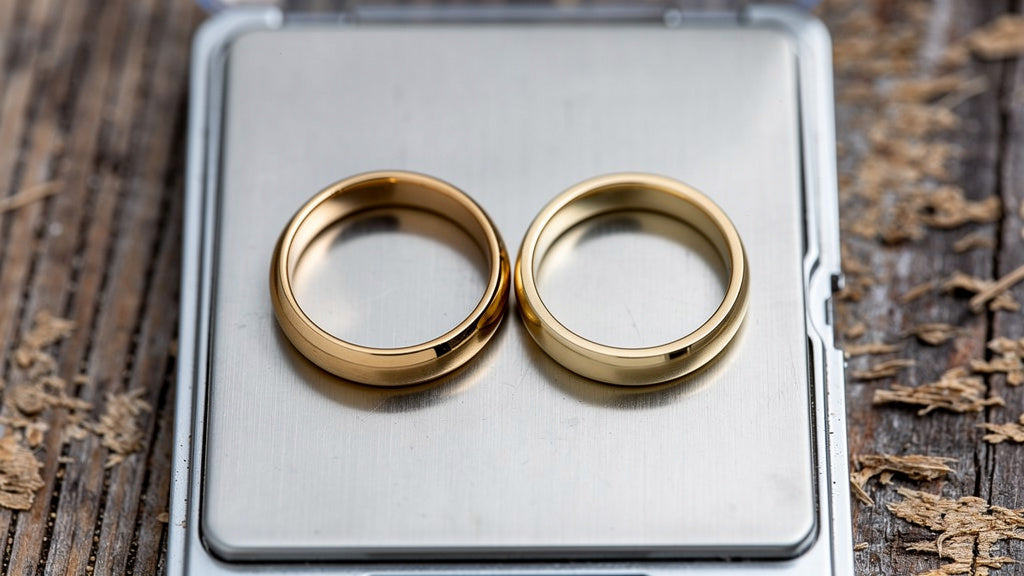
You're comparing 10K gold vs 14K gold and want a straight answer. Here it is: both are real, solid gold. The number just tells you how much pure gold is mixed into the alloy.
10K gold is 41.7% pure gold. 14K gold is 58.3% pure gold. That gap changes the color, the price, and how the metal holds up on your hand every day.
- 14K gold has more pure gold, a richer color, and a higher price than 10K.
- 10K gold resists scratches a little better and costs less, but looks paler.
- For everyday rings, bracelets, and chains, 14K is the balance most jewelers recommend.
- What "10K" and "14K" Actually Mean
- 10K vs 14K vs 18K vs 24K: Where They Fit
- Color and Shine: 10K vs 14K Gold
- Durability: Which Holds Up Better
- Resizing and Repairs: A Practical Difference
- Price: Why 14K Costs More
- 10K vs 14K Gold at a Glance
- Which Should You Buy?
- Caring for Your Gold Jewelry
- Frequently Asked Questions
- The Bottom Line
What "10K" and "14K" Actually Mean
Every gold piece is stamped with a karat number. That number is out of 24. Pure, 24-karat gold is soft, so jewelers mix it with other metals to make it strong enough to wear.
10K gold is 10 parts pure gold out of 24, or 41.7%. 14K gold is 14 parts out of 24, or 58.3%. The rest, in both cases, is alloy metal.
That alloy is usually a blend of metals like copper, silver, and zinc. The exact mix varies by maker, and it's what gives each karat its particular shade and weight.
Look for a small stamp reading "10K," "14K," or a number like "417" or "585" near a clasp or on the inside of a ring band. That stamp is the quickest way to confirm what you're actually holding.
You may also see 18K and 24K gold in stores. 18K has more pure gold (75%), and 24K is pure gold with no alloy at all. Most everyday jewelry, including ours, is made in 14K, since it balances color, strength, and cost. For tips on spotting genuine pieces, see our guide on how to tell real gold from fake.
10K vs 14K vs 18K vs 24K: Where They Fit
Line up 10K vs 14K vs 18K vs 24K gold side by side, and the pattern is simple: each step adds pure gold, and each step also changes cost and softness.
10K sits at the budget, high-durability end. 24K sits at the opposite end: maximum purity, maximum softness, and a color so deep it can look almost orange.
14K and 18K fall in the middle, where most fine jewelry lives. Comparing 10K vs 14K gold vs 18K, the jump from 10K to 14K changes color and price noticeably, while 18K adds even more richness at a steeper cost.
For daily rings, bracelets, and earrings, 14K is usually the practical sweet spot between those extremes.
Color and Shine: 10K vs 14K Gold
Searching 10K gold vs 14K gold color differences before you buy? Here's what changes and why.
Pure gold has a warm, deep yellow color. The more alloy metal a piece contains, the paler and cooler that color gets.
10K gold looks noticeably lighter, sometimes almost brassy in certain light. 14K gold keeps a warmer, richer yellow, closer to what most people picture when they think of gold jewelry.
This shows up in 10K vs 14K white gold and rose gold pieces too, since the base alloy shapes the final tone either way. For a full breakdown of tones, see our guide on white, yellow, and rose gold.
Color also affects how a piece photographs and how it looks against different skin tones. A warmer 14K tone tends to read as richer in photos, while a paler 10K piece can look closer to a plain metal band from a distance.
Side by side under bright light, most people can spot the 10K vs 14K gold color gap in seconds. Alone, without a comparison piece nearby, the difference is much harder to notice.
Durability: Which Holds Up Better
Is 10K gold stronger than 14K gold? In scratch resistance, yes, by a small margin. 10K gold contains more alloy metal, which makes it a touch harder. It resists scratches and dents slightly better than 14K gold.
14K gold is still plenty durable for daily wear. Rings, bracelets, and chains in 14K hold up for years of regular use without special care.
The real-world toughness gap between 10K vs 14K gold is small. Most people notice the color difference long before they notice any wear difference.
Both karats stand up fine to normal wear: typing, driving, washing your hands. Save your rings for the toolbox and gym weights either way, since any solid gold can bend or scratch under real impact.

Resizing and Repairs: A Practical Difference
Here's a difference most comparisons skip. 10K's extra alloy content makes it harder. That same alloy also makes it a little more brittle under a jeweler's torch.
Resizing a 10K ring or fixing a broken clasp carries a slightly higher risk of cracking. 14K solders and stretches more predictably. That's why many jewelers reach for 14K on pieces you might resize later, like rings.
This isn't a reason to skip 10K. A 10K gold vs 14K gold ring choice is worth a quick word with your jeweler. That matters most if you plan to resize it down the road.
Price: Why 14K Costs More Than 10K
Price tracks purity. 14K gold contains more actual gold, so it costs more per gram than 10K gold.
10K gold vs 14K gold price gaps vary by piece, but 14K usually runs noticeably higher. You're paying for more precious metal, not just labor and design.
14K jewelry also tends to hold its value better over time. You're buying more real gold, and that shows up if you ever resell or trade in a piece.
Gold's market price moves daily, so exact numbers shift. What stays constant is the pattern: the same design will always cost more in 14K than in 10K, simply because there's more precious metal inside it.
10K Gold vs 14K Gold at a Glance
Here's the full comparison in one place.
| Feature | 10K Gold | 14K Gold |
|---|---|---|
| Pure gold content | 41.7% | 58.3% |
| Color | Pale, slightly brassy | Warm, rich yellow |
| Durability | Slightly harder | Durable, daily-wear ready |
| Price | Lower | Higher |
| Best for | Tight budgets, active wear | Everyday jewelry, gifting, resale value |
Which Should You Buy?
If your budget is tight and you want a piece that shrugs off scratches, 10K gold works well. It's a practical, honest choice.
If you want the classic gold look and a piece that feels more special, 14K gold is worth the extra cost. It's the karat most fine jewelry brands, including Golden Planet, build around.
Still torn between 10K or 14K gold? Think about how often you'll wear the piece, and whether color matters more to you than price.
For an everyday ring or a chain you'll wear nonstop, 14K's warmer color tends to age better and feel more special years down the road. For a piece meant purely for rough, active use, like a gym or travel piece, 10K's extra hardness is a fair trade for a slightly paler color.
Buying a gift? 14K generally reads as the more thoughtful, premium pick, and it photographs better for that unboxing moment.

Caring for Your Gold Jewelry
Gold jewelry, at any karat, lasts longer with a little care. Take rings off before workouts, showers, or cleaning with harsh chemicals.
Store pieces separately so they don't scratch each other. A soft cloth with mild soap and water keeps most gold jewelry looking bright.
A quick wipe after wearing removes lotion, sweat, and everyday grime before it builds up. A deeper soak and gentle scrub once every few weeks is usually plenty for either karat.
For step-by-step instructions, see our guide on how to clean 14K gold jewelry at home.
Frequently Asked Questions
What are the cons of 10K gold?
10K gold looks paler than 14K gold and holds less pure gold, so it has less resale value. Some people also feel it looks less rich next to a warmer 14K piece.
Is 10K gold worth buying?
Yes, if you want a durable, budget-friendly piece and don't mind a lighter gold tone. It's real gold, just with lower purity than 14K.
How long will 10K gold last?
With basic care, 10K gold jewelry can last for decades. It resists scratches well, though the color may look duller over time next to higher-karat gold.
What lasts longer, 10K or 14K gold?
10K gold resists scratches a little better since it has more alloy metal. 14K gold holds its color and value better over the years. Neither wears out with normal use.
Is 14K gold worth the extra cost?
For most people, yes. You get a warmer color, better resale value, and a piece that still holds up to daily wear.
Is 10K white gold worth saving money on instead of 14K?
Often, yes. White gold at any karat gets a rhodium plating for its bright white finish, so a 10K and 14K white gold piece can look nearly the same color when new. The real difference shows up in price and hardness, not brightness, which makes 10K white gold a fair way to save on a ring or bracelet.
The Bottom Line
Both 10K and 14K gold are real, solid choices. The right pick depends on your budget and how rich a color you want. If you'd rather skip the guesswork, our 14K Gold Rings collection is built around the warmer, richer karat most people choose for everyday wear.





Share:
What Is Cubic Zirconia? An Honest Guide From a Jeweler
Cross Necklace for Women: A Complete Style Guide