
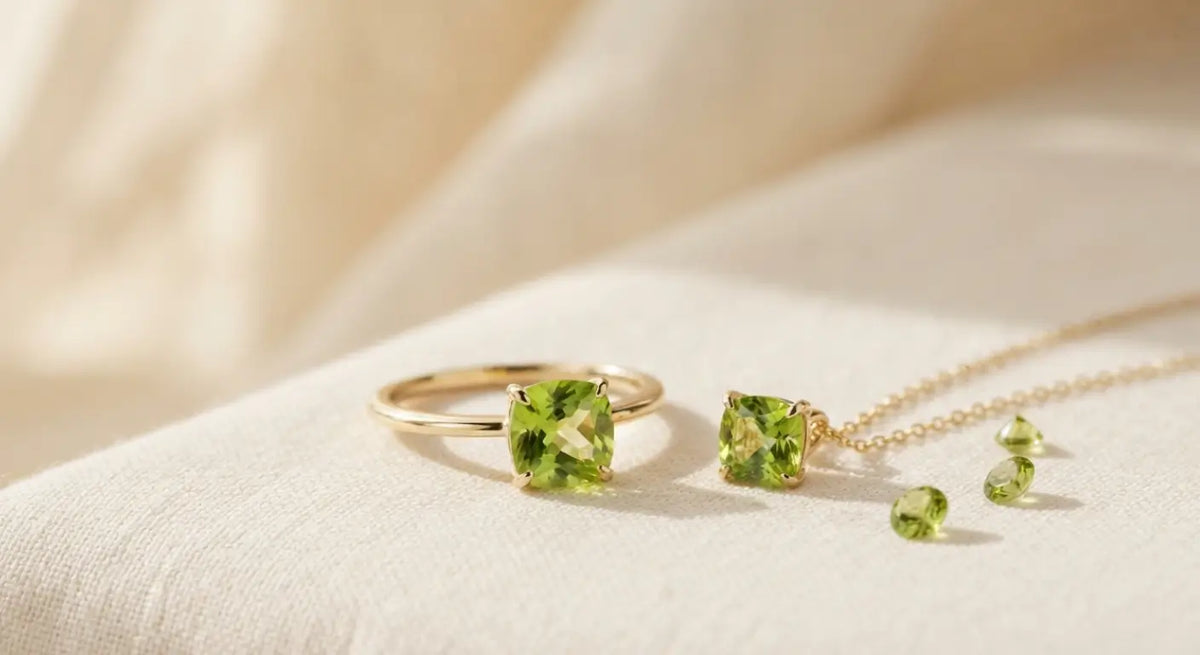
There's something about an August baby. Born in the warmest, brightest stretch of the year, they seem to carry a little of that sunlight with them — which makes it fitting that their birthstone glows the color of new leaves lit from behind. Peridot is one of the only gemstones found in a single color, and that color is pure, luminous green.
If you're shopping for an August birthday (or quietly treating yourself), here's everything worth knowing: what peridot means, where it comes from, how to care for its softer nature, and why it looks so at home set in warm 14K gold.
- Peridot is August's birthstone — one of the only gems that comes in a single color, a bright yellow-green.
- It's on the softer side (6.5–7 Mohs), so it shines in necklaces and earrings and prefers gentle care.
- It looks richest in warm 14K yellow gold — and it's affordable enough to gift generously.
What Is Peridot?
Peridot is the gem-quality form of a mineral called olivine. What makes it unusual is that it's idiochromatic — its green comes from the iron built into the stone itself, not from impurities. That's why peridot is always some shade of green, from a soft lime to a rich olive, and never blue, pink, or clear.
It also has a wild origin story. Most peridot forms deep in the Earth's mantle and is carried to the surface by volcanoes. A small amount has even arrived from space, found inside meteorites — making it one of the few gemstones with an extraterrestrial cousin. Today most peridot is mined in Arizona, Pakistan, Myanmar, and China.
The Meaning & History Behind Peridot
The ancient Egyptians called peridot the “gem of the sun” and mined it on a remote island in the Red Sea. Because its glow held steady by lamplight, it earned a reputation as a stone of light and positivity — worn historically to ward off nightmares and bring the wearer confidence and calm.
Those associations still shape how we think of it: peridot is the stone of renewal, warmth, and good energy. Beyond being August's birthstone, it's also the traditional gift for a 16th wedding anniversary, which makes it a quietly meaningful choice well past a birthday.

How Hard Is Peridot? (Care Basics)
Here's the one practical thing to know before you buy: peridot is a little softer than the stones you might be used to. On the Mohs hardness scale it sits at 6.5 to 7 — beautiful and perfectly wearable, but worth protecting from hard knocks, especially in rings.
Caring for peridot is simple: clean it with warm water, mild dish soap, and a soft brush, then pat dry. Avoid ultrasonic cleaners, steamers, and sudden temperature changes — peridot can be sensitive to heat. And because it's softer, it shines brightest in necklaces and earrings, where it isn't taking the daily impact a ring endures.
Why Peridot Loves Yellow Gold
Green and gold are a naturally warm pairing — think olive branches, sunlit gardens, late summer. Peridot's yellow-green undertone echoes the warmth of 14K yellow gold instead of fighting it, so the stone looks richer and the gold looks warmer. It's the most flattering setting peridot can have.
White gold gives a cooler, more modern contrast if that's your taste, but if you want peridot to glow, yellow gold is the classic choice — and 14K in particular gives you that warm color with the durability to wear it for decades.
Peridot vs. Emerald vs. Green Sapphire
Peridot isn't the only green gem, but it fills a specific niche: bright, cheerful color at an approachable price. Here's how it compares to the two other green stones people often consider.
| Stone | Hardness | Color | Best for |
|---|---|---|---|
| Peridot | 6.5–7 | Bright yellow-green | Everyday color, birthdays, gifts |
| Emerald | 7.5–8 | Deep blue-green | Heirloom statement pieces |
| Green Sapphire | 9 | Cool forest green | Durable daily rings |
If you want a hard-wearing green ring stone, sapphire wins. If you want depth and heirloom status, emerald is the icon. But if you want that fresh, sunny green — the one that actually says “August” — peridot is unmatched, and far kinder to your budget.
Is Peridot a Good Gift?
It's one of the best-value meaningful gifts in fine jewelry. Peridot carries a birthday, an anniversary, and a genuinely positive symbolism, all in a stone that's vivid enough to notice but affordable enough to give generously.

For an extra-personal touch, pair the birthstone with an initial or a meaningful date. It turns a pretty piece into her piece.
Frequently Asked Questions
Is peridot expensive?
No — peridot is one of the most affordable colored gemstones, which is a big part of its charm. You get vivid, eye-catching color without the price tag of emerald or sapphire.
Can I wear peridot every day?
Yes, with a little awareness. At 6.5–7 on the Mohs scale it's best suited to necklaces and earrings for daily wear. If you want a peridot ring, a protective bezel setting is the smart choice.
Are there other August birthstones?
Yes. August also has sardonyx (the traditional stone) and spinel (a modern addition), but peridot is by far the most popular and recognizable choice.
How do I clean a peridot piece at home?
Use warm water, a drop of mild dish soap, and a soft brush, then pat dry. Skip ultrasonic and steam cleaners, and avoid sudden temperature changes, since peridot can be heat-sensitive.
The Bottom Line
Peridot is a rare kind of gemstone: joyful, single-color, steeped in sunny symbolism, and priced so you can actually enjoy it.
New to building a gemstone wardrobe? Our ultimate birthstone guide walks through every month, and if you're leaning custom, our gift guide for her covers how initial and birthstone pieces come together.






Share:
Why Is My Gold Jewelry Fading? (Plated vs 14K Gold Explained)
How to Measure Your Wrist for a Bracelet (At-Home Sizing Guide)