
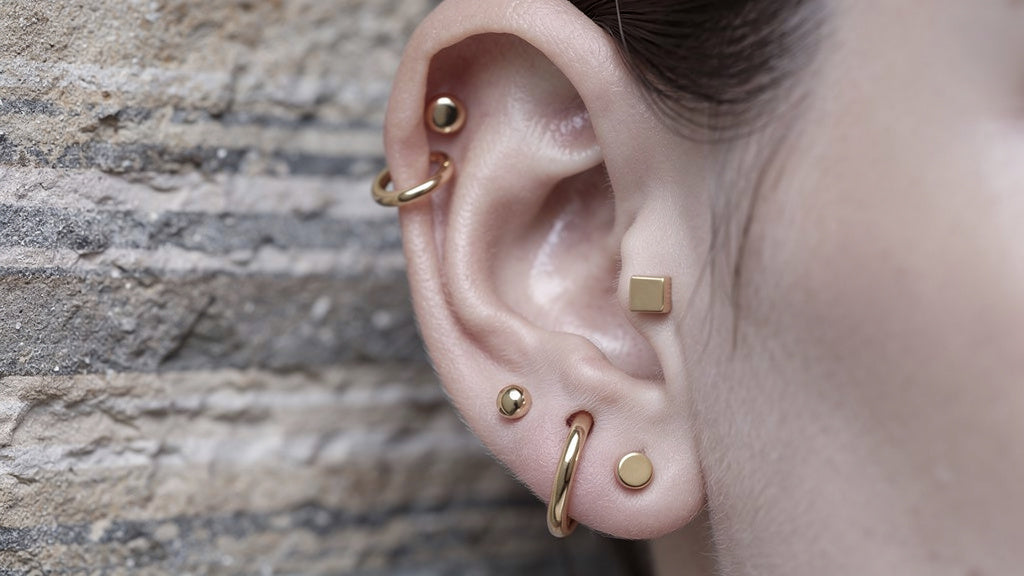
You want a new piercing, but the names all blur together. Helix, conch, tragus, daith: which one fits your ear, and what do you wear in it? This guide walks through the different ear piercings, where each one sits, and which jewelry suits it.
Think of your ear as a map. The soft lower part is the lobe. The firmer upper rim and inner folds are cartilage. Once you know that split, every name makes sense.
- Lobe piercings are the easiest place to start and the easiest to style.
- Cartilage spots like the helix, conch and tragus need a professional piercer and a snug flat-back stud at first.
- Plan your ear as a whole: mix sizes, keep metals matching, and leave space between holes.
Lobe piercings
The lobe is where most people start. The tissue is soft, and nearly any earring style fits. That makes it the most flexible part of the ear.
Standard lobe
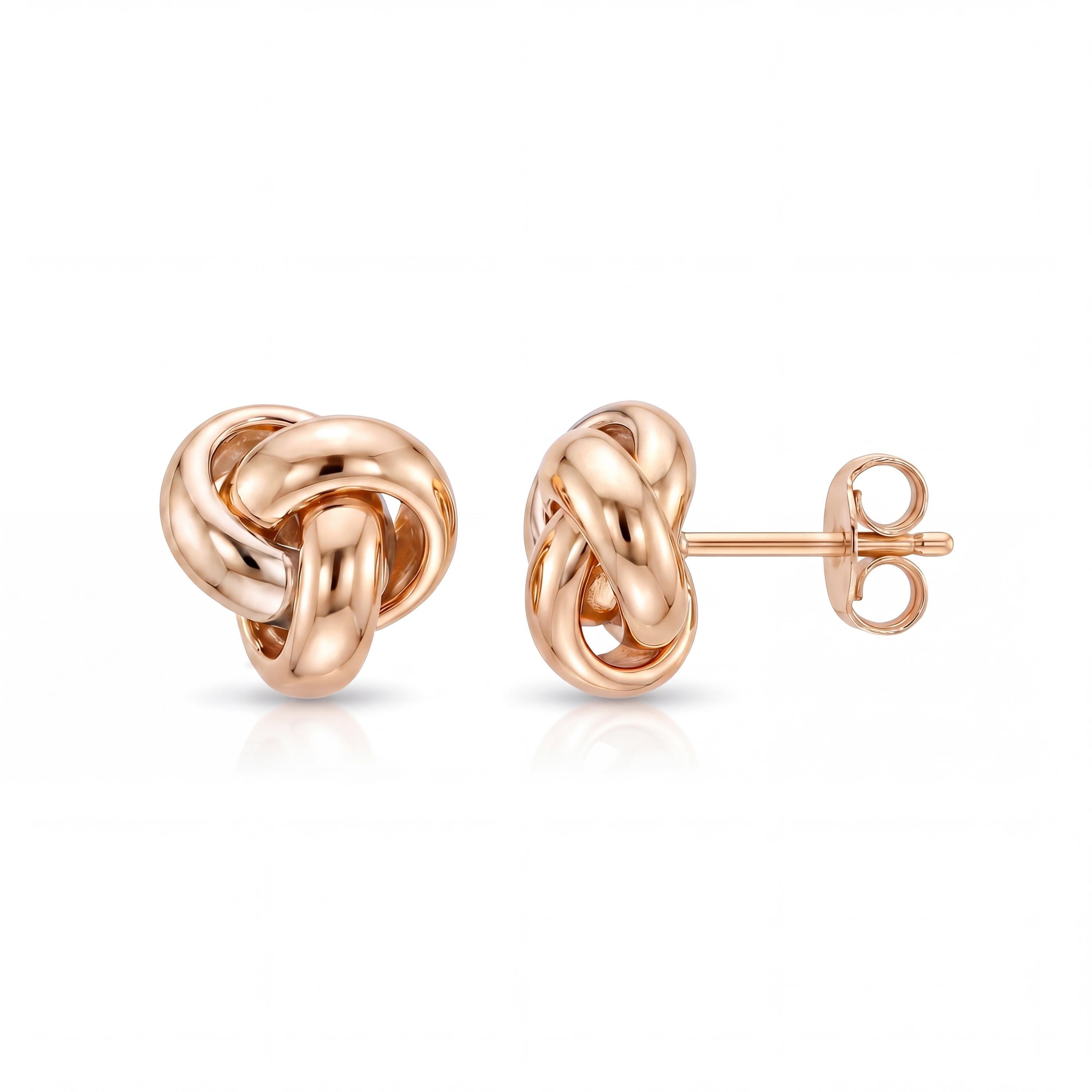
This is the classic first hole, centered in the fleshy part of the lobe. Studs, hoops and small drops all work here. It is the piece people see first, so many choose a simple gold stud.
Stacked and high lobe
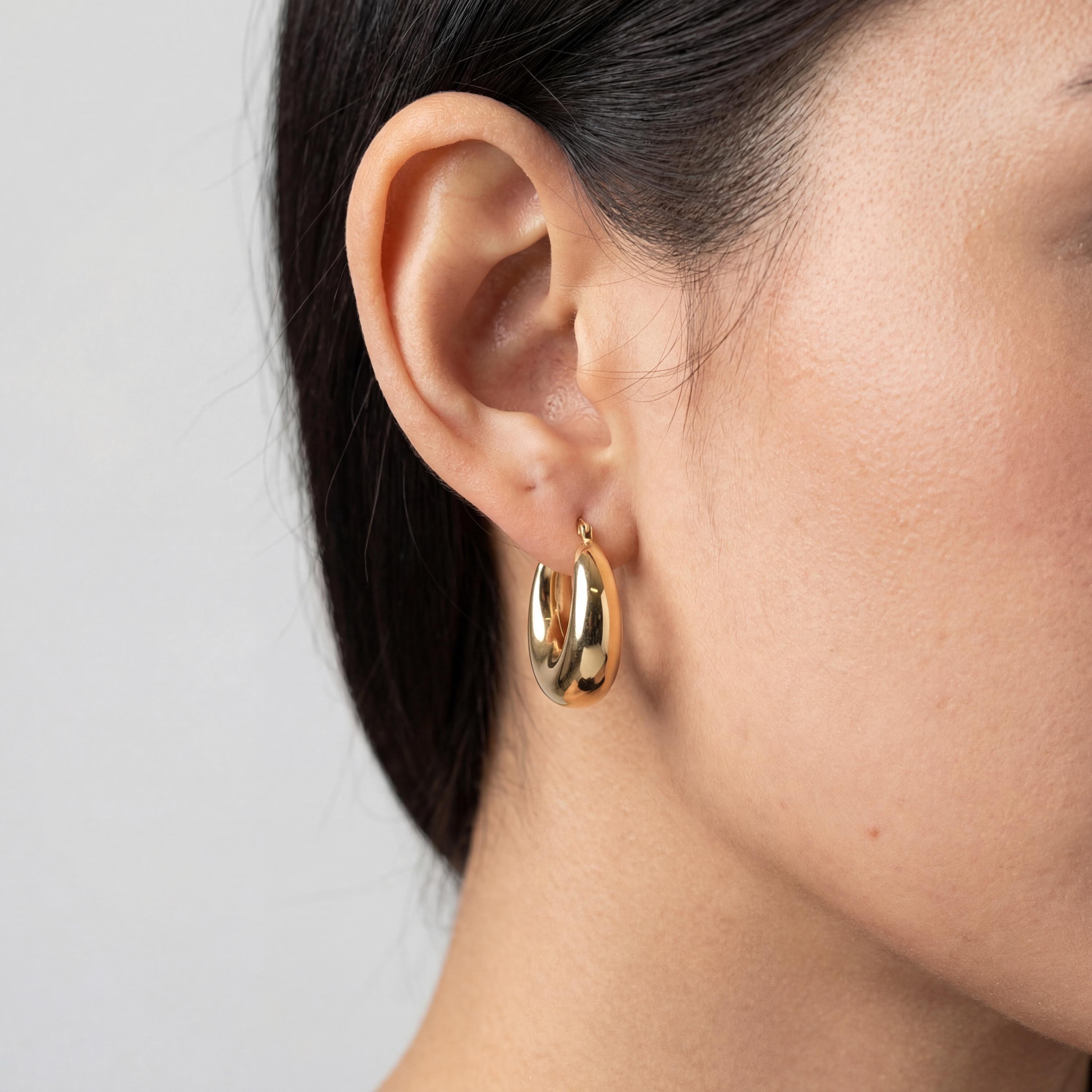
A stacked lobe adds a second or third hole below or above the first. A high lobe sits a little higher, in the thicker part of the lobe. Both let you build a small cluster of studs, huggies and tiny hoops.
Spacing is the trick. Holes placed too close leave no room for larger pieces. Ask your piercer to mark each spot first and check it in a mirror.
Different ear piercings in the cartilage
Cartilage is the firm tissue in the upper and inner ear. These spots have more names, and they look sharper and more graphic. Always go to a trained piercer, not a mall kiosk gun.
Helix and forward helix
The helix is the outer upper rim. It is the most popular cartilage spot, and it suits a small hoop or a stud. A forward helix sits near the face, just above the tragus. Tiny studs look best there, and one or two in a row look neat.
Flat and conch
The flat is the smooth area in the upper ear, between the rim and the inner folds. It suits a single stud or a few in a line. The conch is the cup-shaped center of the ear. An inner conch takes a stud, and an outer conch can take a larger ring.
Tragus, daith and rook
The tragus is the small flap of cartilage in front of the ear canal. The daith is the inner fold just above it. People sometimes call it the anxiety piercing, but that is only a nickname.
Choose jewelry for looks and fit, not for any claimed effect. The rook sits in the upper fold, above the daith.
Industrial and orbital
An industrial uses two holes joined by one long bar, usually across the upper ear. An orbital is two holes joined by one ring. These are less common than a lobe or helix, so if you want something rare, start here. For the same reason, expect to pay more attention to the exact placement.

Quick reference table
Use this table to compare the main spots at a glance. The jewelry column shows what looks best once the piercing is settled in.
| Piercing | Where it sits | Best jewelry style |
|---|---|---|
| Standard lobe | Center of the earlobe | Studs, hoops, drops |
| Stacked lobe | Below or above the first hole | Mixed studs and huggies |
| High lobe | Upper, thicker part of the lobe | Small studs, tiny hoops |
| Helix | Outer upper rim | Studs, small hoops |
| Forward helix | Upper rim near the face | Tiny studs |
| Flat | Flat area of the upper ear | Single studs |
| Conch | Cup of the inner ear | Studs, larger rings |
| Tragus | Flap in front of the canal | Small studs |
| Daith | Inner fold above the tragus | Small hoops, clickers |
| Rook | Upper inner fold | Curved bars, small hoops |
| Industrial | Two holes across the upper ear | One long bar |
Choosing jewelry for each spot
The right piece matters as much as the right spot. A poor fit can look off and feel worse. Three things decide most of it: the shape, the post length and the metal.
Stud or hoop?
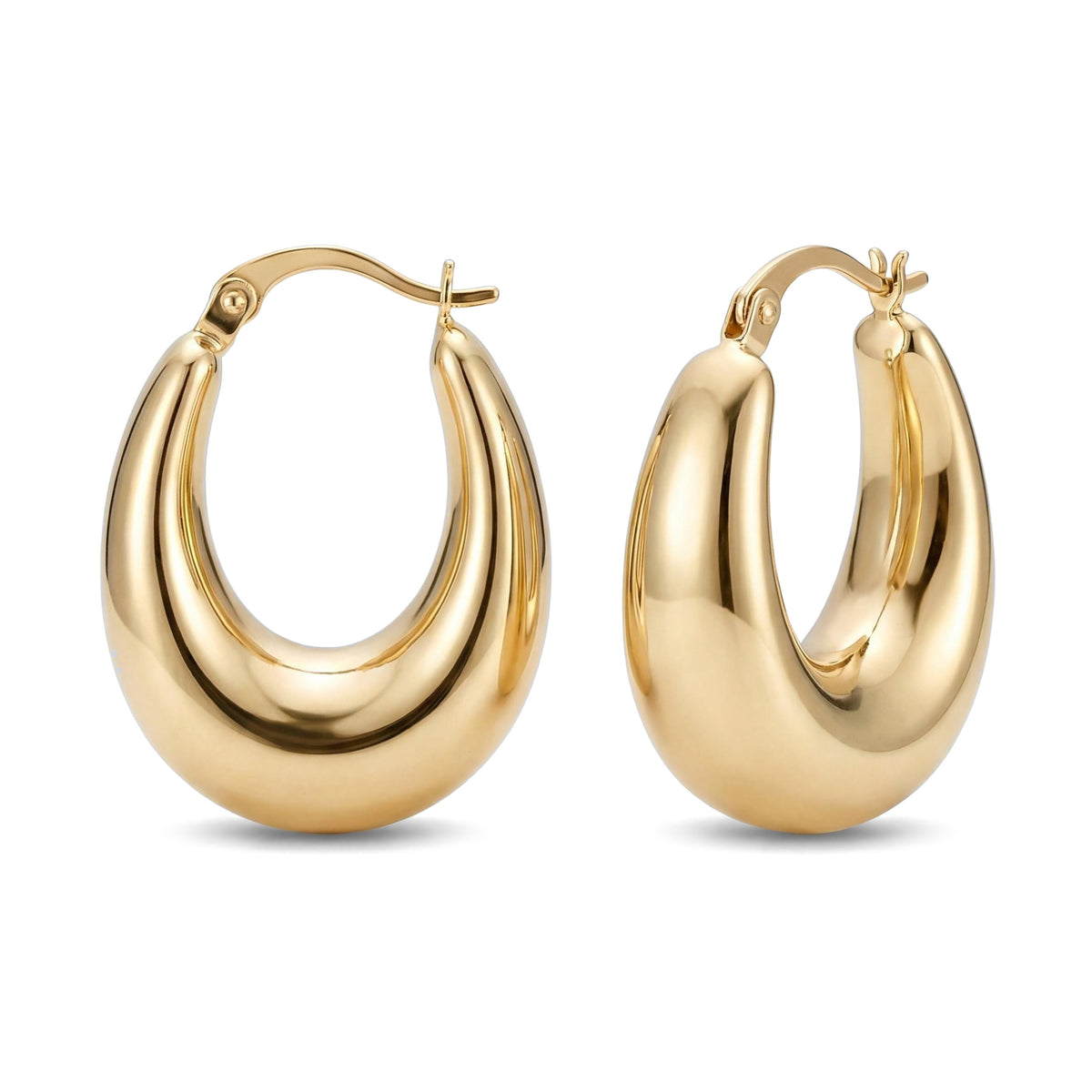
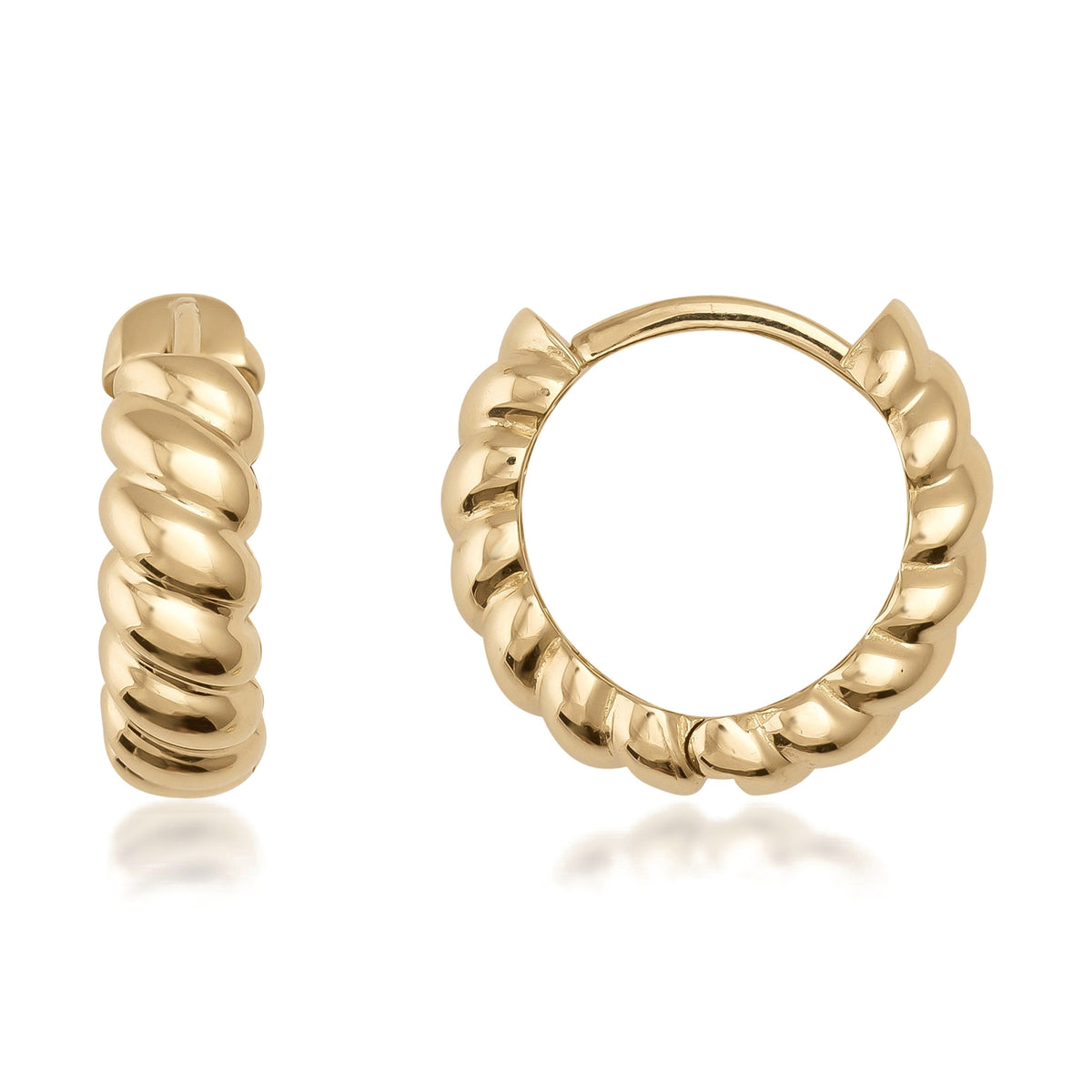
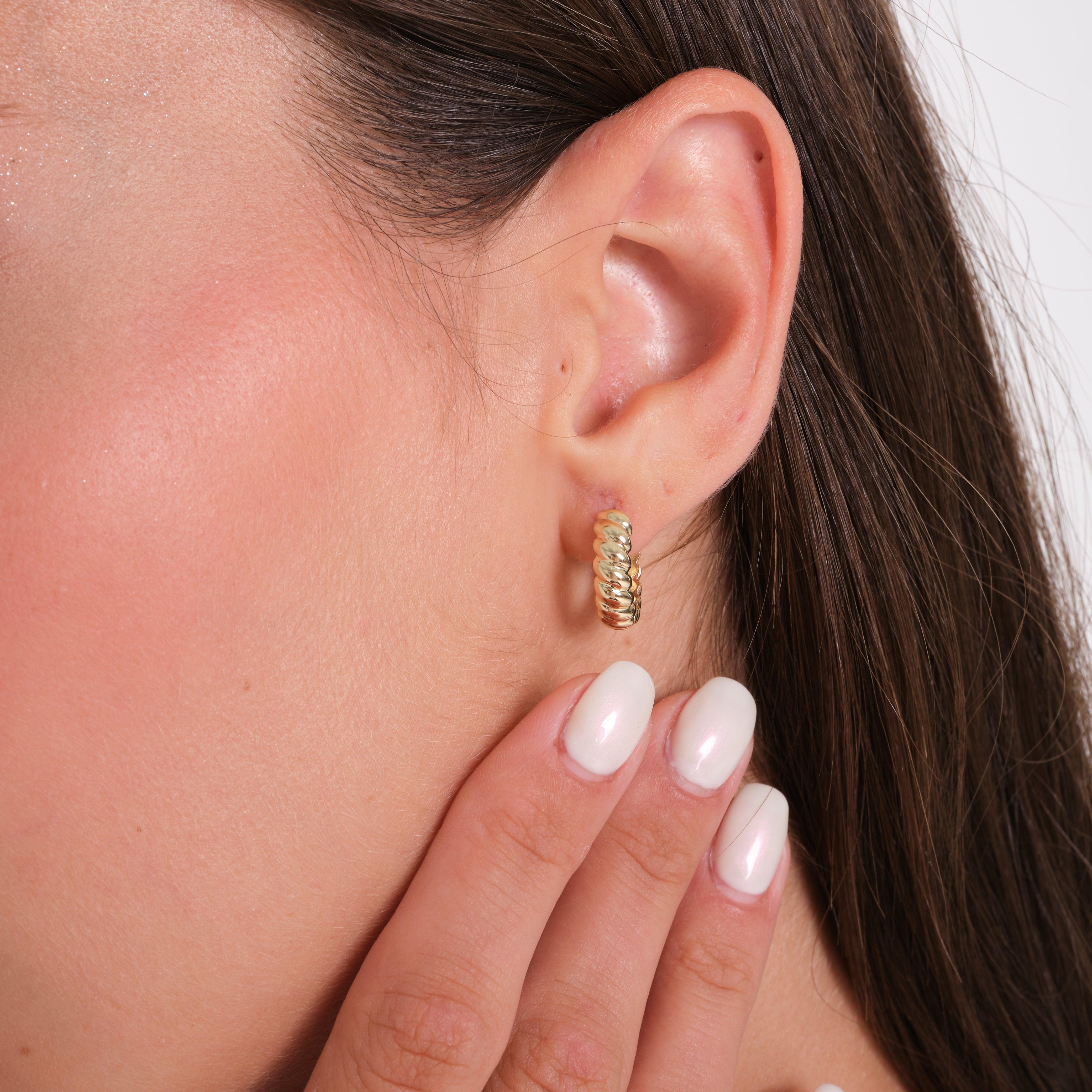
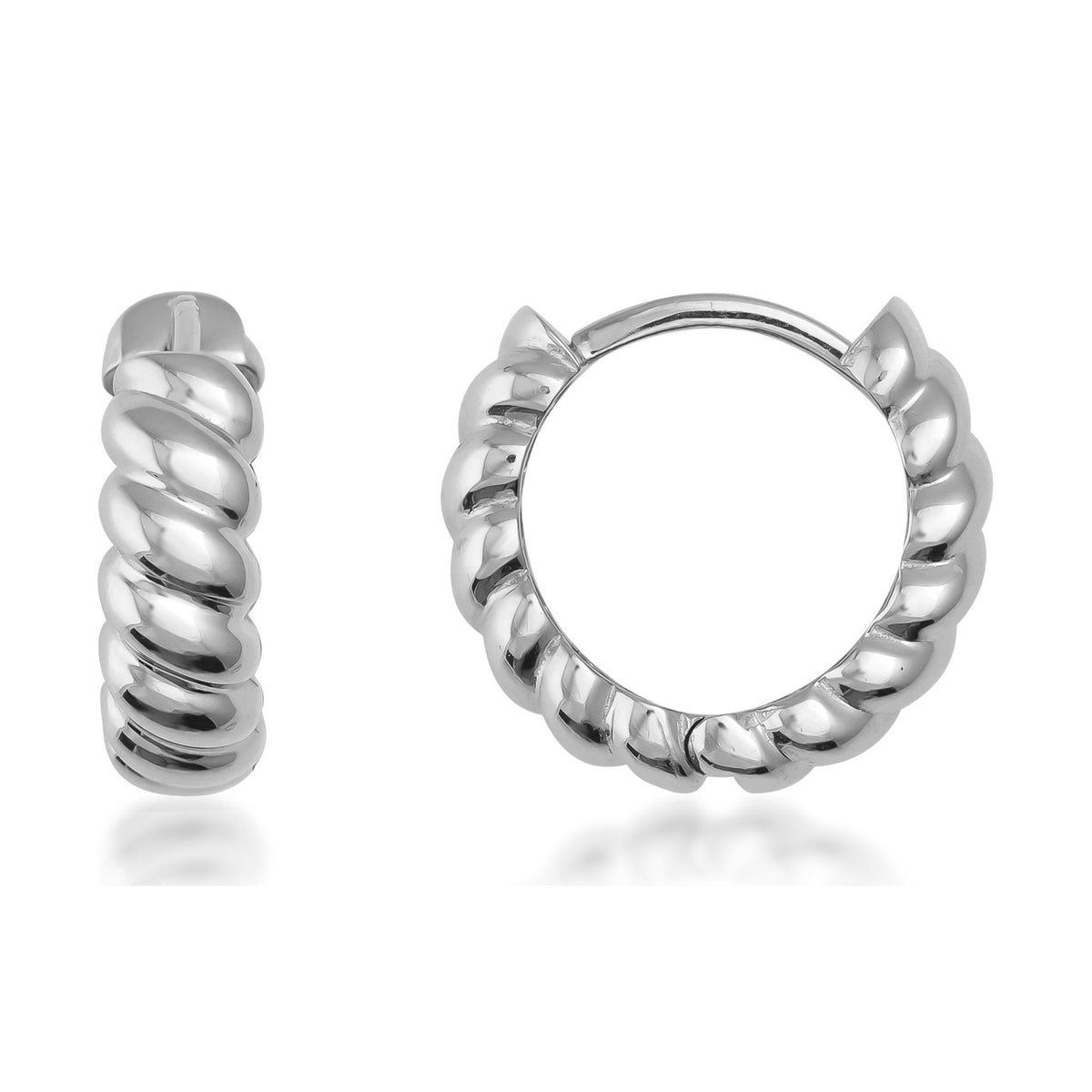
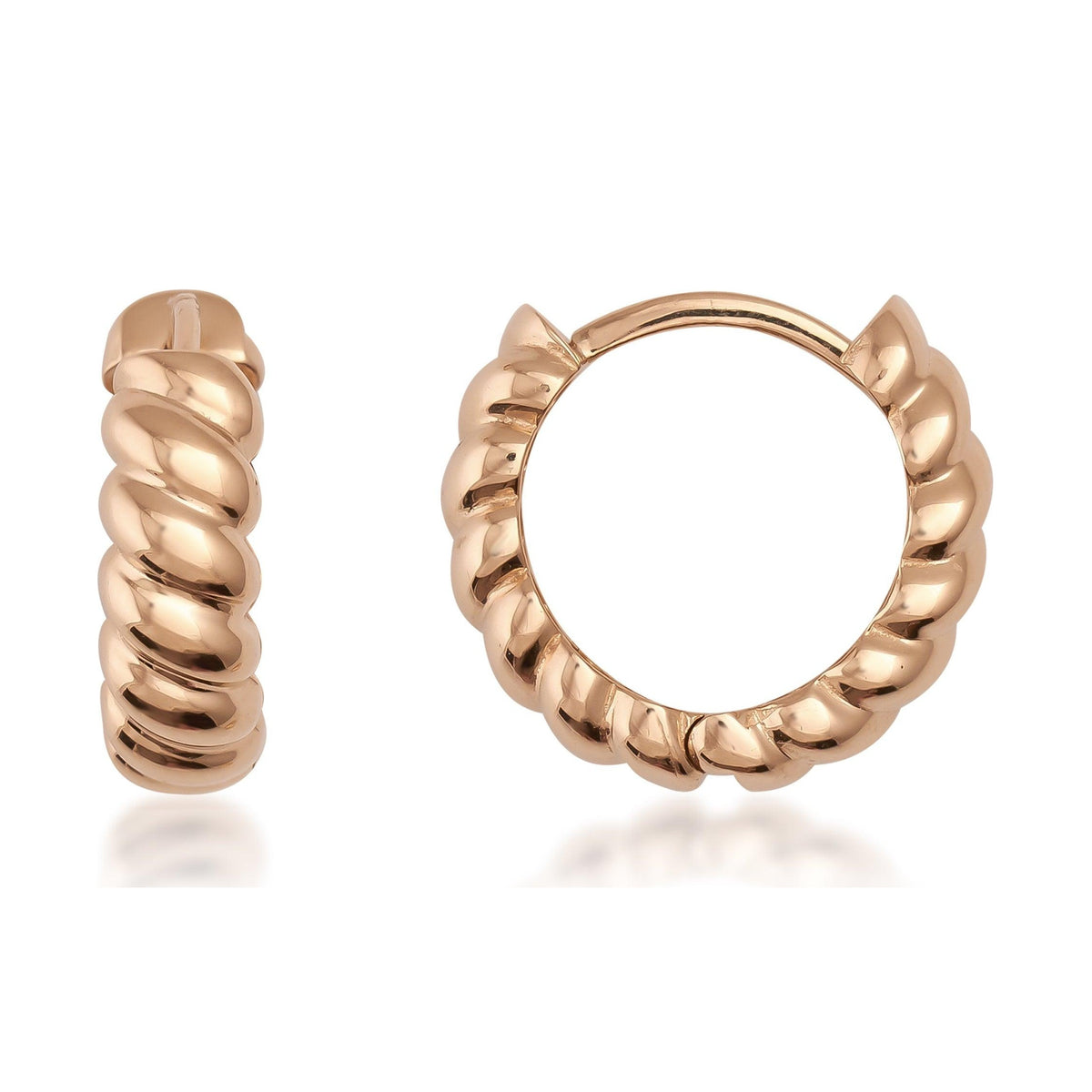
Studs sit flat and stay put, so they are the usual first choice for new cartilage holes. Hoops move more. Wait until your piercer says the hole is settled before you switch. Huggies are small hoops that hug the lobe or helix closely, and they bridge the two styles well.
Post length and fit
A new piercing swells a little, so first jewelry usually has a longer post. Later, a shorter post sits cleaner against the ear. If a stud tilts or sinks, the post is the wrong length. Bring it back to your piercer for a check.
Metal choice
Solid 14K gold is a steady, classic choice. It is 58.5% pure gold, so it will not flake or peel like plated pieces.
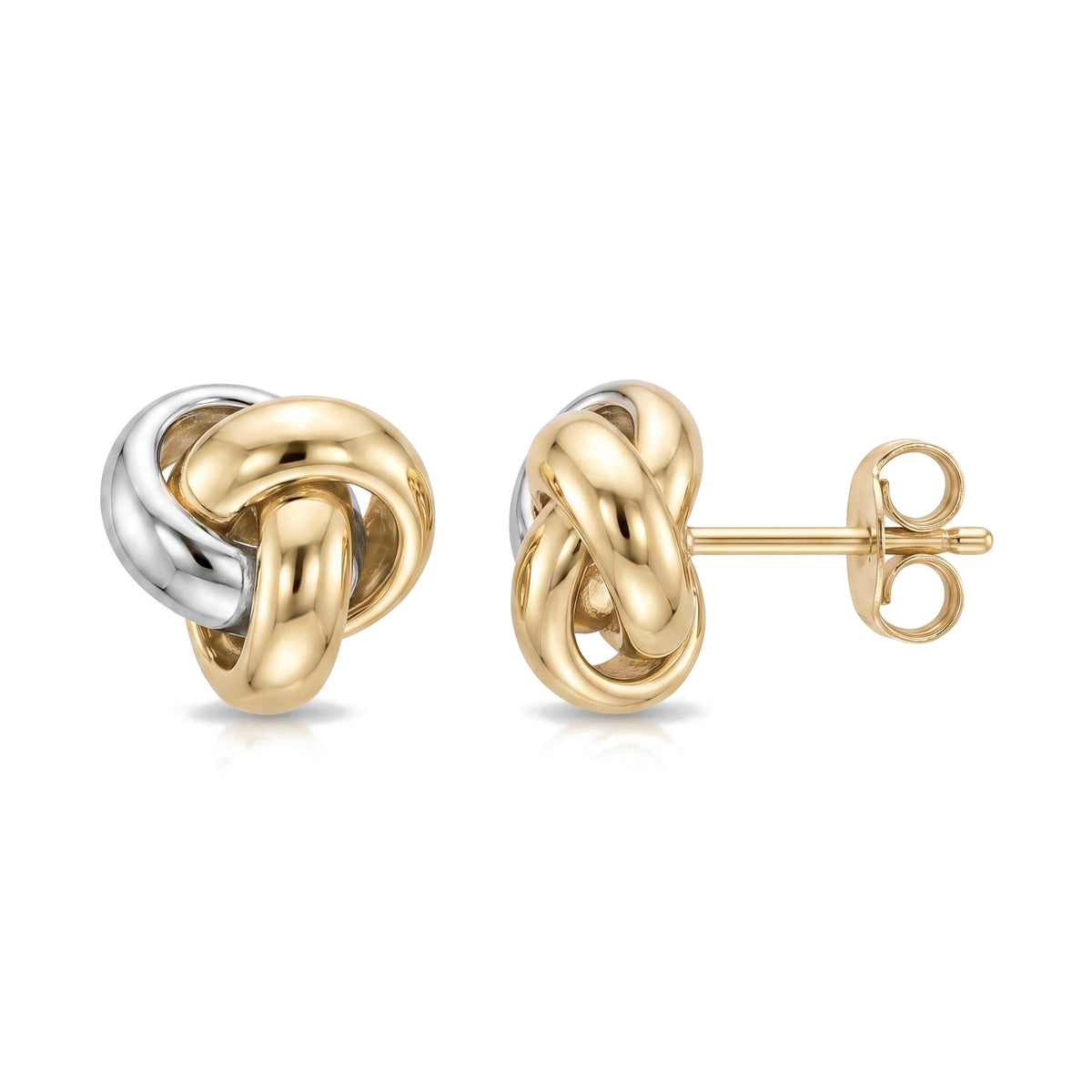
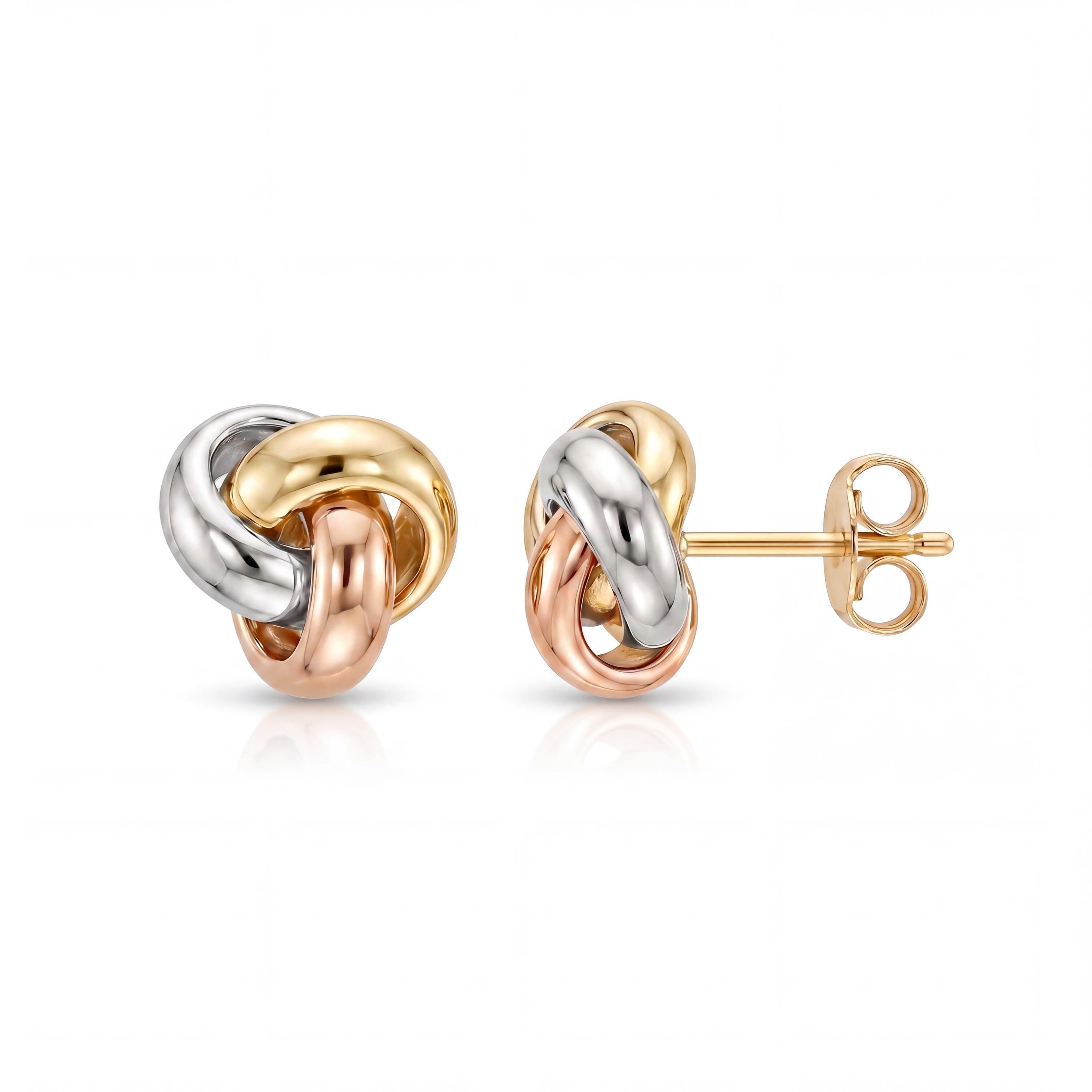
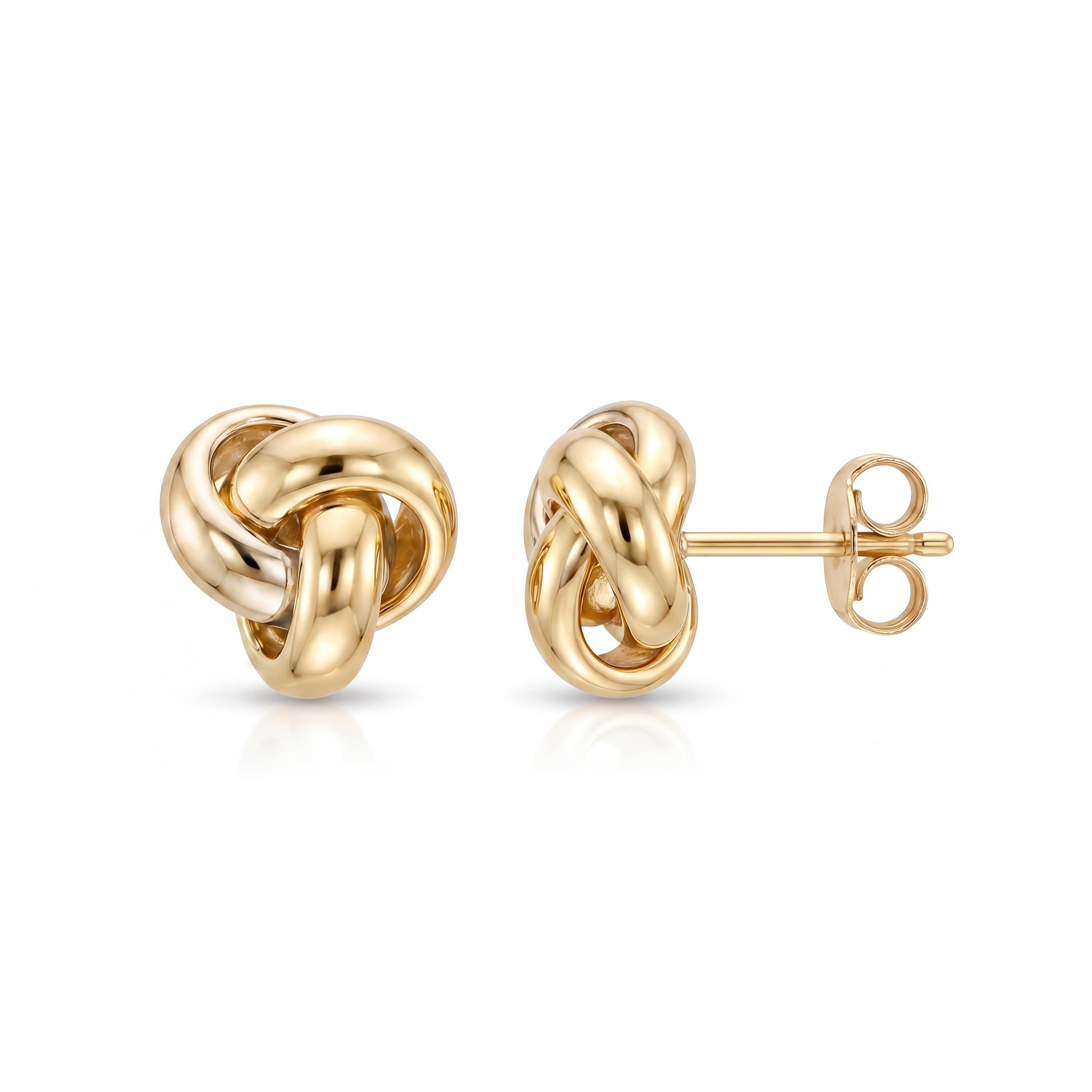
Our gold earrings are made to order in solid 14K gold, and shipped from New York for US orders, or from Istanbul, Turkey for all others. Stones are always cubic zirconia or other simulated stones. Learn the basics in our guide on how to tell real gold from fake.

Planning your ear
The best ears look chosen, not accidental. People call this a curated ear. It is simply a plan you build one piercing at a time.
Start with the lobe. Add one cartilage spot, then wait until it is fully settled before the next. Let your piercer guide the timing, since every ear heals differently.
Next, think about balance. Pair one small piece with one bolder piece. A tiny helix stud looks great next to a chunky lobe hoop. Too many large pieces in one area can feel crowded.
Finally, match your metals. A set of gold pieces in one tone looks calm and intentional. Mixing tones can work too, as long as you repeat each tone at least twice.
Also check how the ear works with your daily life. Hair, headphones and sleep position all press on the ear. A tragus or flat piercing may bother you more if you wear earbuds all day. Think about this before you choose.
Frequently Asked Questions
What is the rarest ear piercing?
No one tracks this exactly, but the orbital, industrial and rook are less common than the lobe or helix. They need careful placement, so fewer people choose them.
What is the anxiety piercing called?
People use that nickname for the daith, the inner fold above the tragus. It is a name used online, not a proven effect. Choose it for how it looks.
What are the signs of an infected piercing?
Jewelers are not doctors. If a piercing is very red, hot, swollen or painful, or has unusual discharge, see your piercer or a healthcare provider promptly. Do not remove the jewelry on your own without advice.
What is a forward helix piercing?
It is a cartilage piercing on the front of the upper ear rim, close to the face and just above the tragus. A tiny stud suits it best.
Which ear piercing should I get first?
A standard lobe piercing is the simplest start. It takes most earring styles, and you can add more holes later once you know what you like.
The Bottom Line
Every ear is different, so the best plan starts with where you want to wear jewelry and what you like to see in the mirror. Begin with the lobe, add cartilage spots slowly, and use a trained piercer each time.
When you are ready to choose your pieces, browse our Gold Earrings collection.





Share:
Earring Backs Types: How to Choose the Right One