

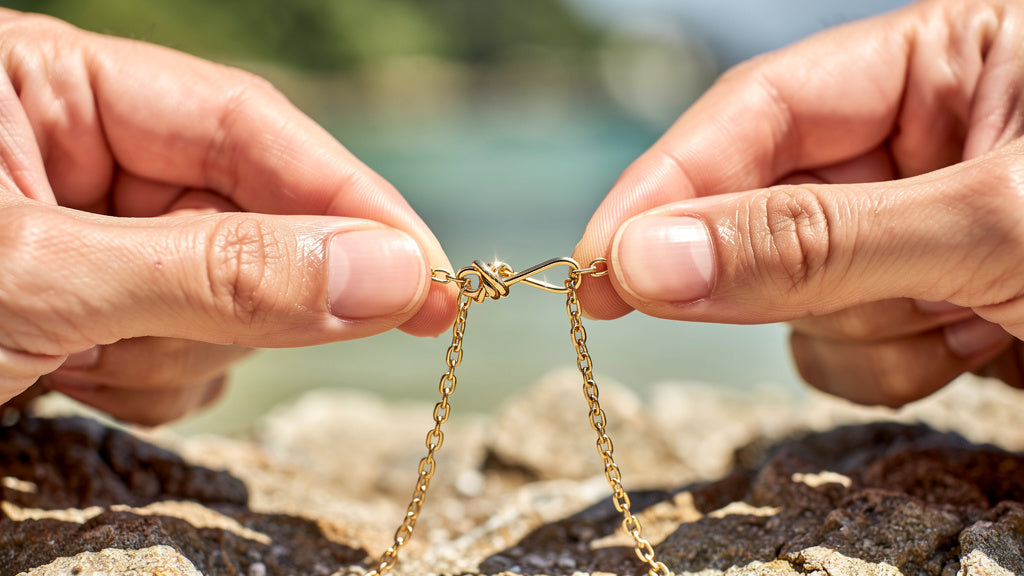
A necklace knot comes in handy more often than you'd think. Maybe the clasp broke, or you're layering a cord necklace and need it to sit at the right length. Learning how to tie a necklace knot means you can fix, adjust, or finish a piece in under a minute, no jeweler required.
There are really just two knots worth knowing. A sliding knot lets you adjust the length. A fixed knot locks a cord or pendant in place for good. Both use the same basic moves, so once you learn them, you're set for almost any necklace repair.
- A sliding knot makes a necklace adjustable; a fixed knot locks the length for good.
- You only need a cord, scissors, and a small drop of clear nail polish or glue to finish the job.
- Test every knot by tugging both ends before you wear the piece.
What You Need Before You Start
Most necklace knots only need three things. First, the cord, chain, or stretchy string your necklace already uses. Second, a small pair of scissors for trimming loose ends. Third, a tiny drop of clear nail polish or jewelry glue to keep the knot from working itself loose.
Working on a flat surface helps too. A table or tray keeps the cord from sliding around while your hands are busy. If your necklace uses a delicate chain rather than cord, skip the knot and take it to a jeweler for a proper clasp repair instead.
Cord type matters more than people expect. Waxed cotton and nylon cord grip well and hold a knot tight. Silk cord is soft and pretty, but it's slippery, so knots need an extra wrap. Leather cord sits between the two: it holds a knot fine, but it stretches slightly with wear, so check the fit again after a few weeks.
How to Tie a Sliding Knot
A sliding knot necklace is the easiest way to make one piece fit different necklines, and it's the same trick behind most adjustable cord bracelets. Here's how to tie one on a necklace cord.
- Lay both ends of the cord parallel, overlapping by about three inches.
- Take the left cord and loop it around the right cord three or four times, then thread the end back through the loops.
- Pull that loop snug, but not fully tight yet.
- Repeat the same wrap with the right cord around the left cord, in the opposite direction.
- Tighten both knots, then slide them toward or away from each other to shorten or lengthen the necklace.
Once both knots are tied, test the slide a few times. It should glide smoothly but stay put when you let go. Not sure how long to make it? Check our Necklace Length Chart guide before you tie off the final position.
If a sliding knot feels too loose, undo it and add one more wrap before threading the end back through. If it feels too stiff to move, the wraps are likely pulled too tight. Loosen them slightly and try the slide again.

How to Tie a Fixed Necklace Knot
If you don't need length adjustment, a fixed knot is faster and holds up better over years of wear. The two reliable options are an overhand knot and a square knot.
For an overhand knot, cross one end of the cord over the other, tuck it through the loop, and pull both ends tight. It's simple, but on a single cord it can slip loose over time.
A square knot holds better on smooth cord or leather. Cross the left end over the right and tuck it under, then cross the new right end over the left and tuck it under again. Pull evenly on both sides.
How to Knot a Pendant Onto a Cord
Tying a pendant to a necklace with string follows the same square knot, just done on each side of the bead or charm. This is also the go-to method for leather cord necklace knots on pendants with a center hole.
- Thread the cord through the pendant's hole until it sits at the center.
- Tie a snug overhand knot right against the pendant on one side.
- Tie a matching knot on the other side, leaving equal cord length on both ends.
- Finish the ends with a sliding or fixed knot, following the steps above.
If the pendant's hole is wide, tie the knot twice on each side so the bead can't slide over it.

Which Necklace Knot Should You Use
Different necklace knots suit different jobs. Use this table to pick the right one before you start.
| Knot | Best For | Adjustable? | Difficulty |
|---|---|---|---|
| Sliding knot | Cord necklaces, chokers, layering pieces | Yes | Easy |
| Overhand knot | Quick, fixed-length repairs | No | Very easy |
| Square knot | Leather cord, pendant knots | No | Easy |
| Double knot | Stretchy string, beaded necklaces | No | Easy |
How to tie a necklace knot with stretchy string is its own case. Tie a double overhand knot, since the stretch in the string makes a single knot prone to slipping loose.
Common Mistakes That Loosen a Knot
Pulling only one end tight is the most common mistake. Always pull both cord ends at the same time so the knot tightens evenly.
Skipping the seal is another one. A knot with no glue or nail polish will loosen with normal wear, especially on a piece you take on and off daily. While you're at it, our guide to cleaning 14K gold jewelry at home covers how to keep the rest of the piece looking new.
Trimming the ends too short causes trouble too. Leave at least a quarter inch of cord past the knot in case it needs a small adjustment later.
Using cord that's too thin for the pendant's hole is a quieter problem. If the cord can wiggle inside the hole, the knot will wear against the edge and loosen faster. Switch to a slightly thicker cord if this happens.
Finally, know how to tie off a necklace with a clasp separately from a knot repair. If your necklace has a metal clasp that failed, a jeweler can replace the clasp rather than knotting around the problem.
Frequently Asked Questions
What is the best knot to tie for a necklace?
For most cord necklaces, a sliding knot is the best choice since it lets you adjust the length. If you don't need adjustment, a square knot holds just as well and looks neater.
What is the best way to tie a necklace cord knot?
Lay the cord flat, tie the knot slowly, and pull both ends evenly so it tightens straight. Seal it with a small drop of clear nail polish once you're happy with the placement.
How to tie off the end of a necklace?
Tie a simple overhand or square knot close to the last bead or clasp component, then trim the leftover cord to about a quarter inch. Add glue or clear nail polish to keep it from fraying or slipping.
How to tie a knot to adjust a necklace?
Use a sliding knot on each end of the cord. Wrap one cord around the other three or four times, thread it back through, then repeat in the opposite direction on the other side.
Will a necklace knot loosen over time?
It can, especially without a sealant. A drop of clear nail polish or jewelry glue on the knot keeps it tight through normal daily wear.
The Bottom Line
Once you know a sliding knot and a fixed knot, you can adjust, repair, or finish nearly any cord necklace yourself. Practice on a scrap piece of cord first, then move to the real thing once the motion feels natural.
Looking for a necklace that's ready to wear without any knot work at all? Browse our 14K Gold Necklaces collection for pieces finished and ready to go.
Share:
Average Bracelet Size for a Woman: Size Chart & Fit Guide
January Birthstone: Garnet Meaning, Colors & Jewelry Guide