
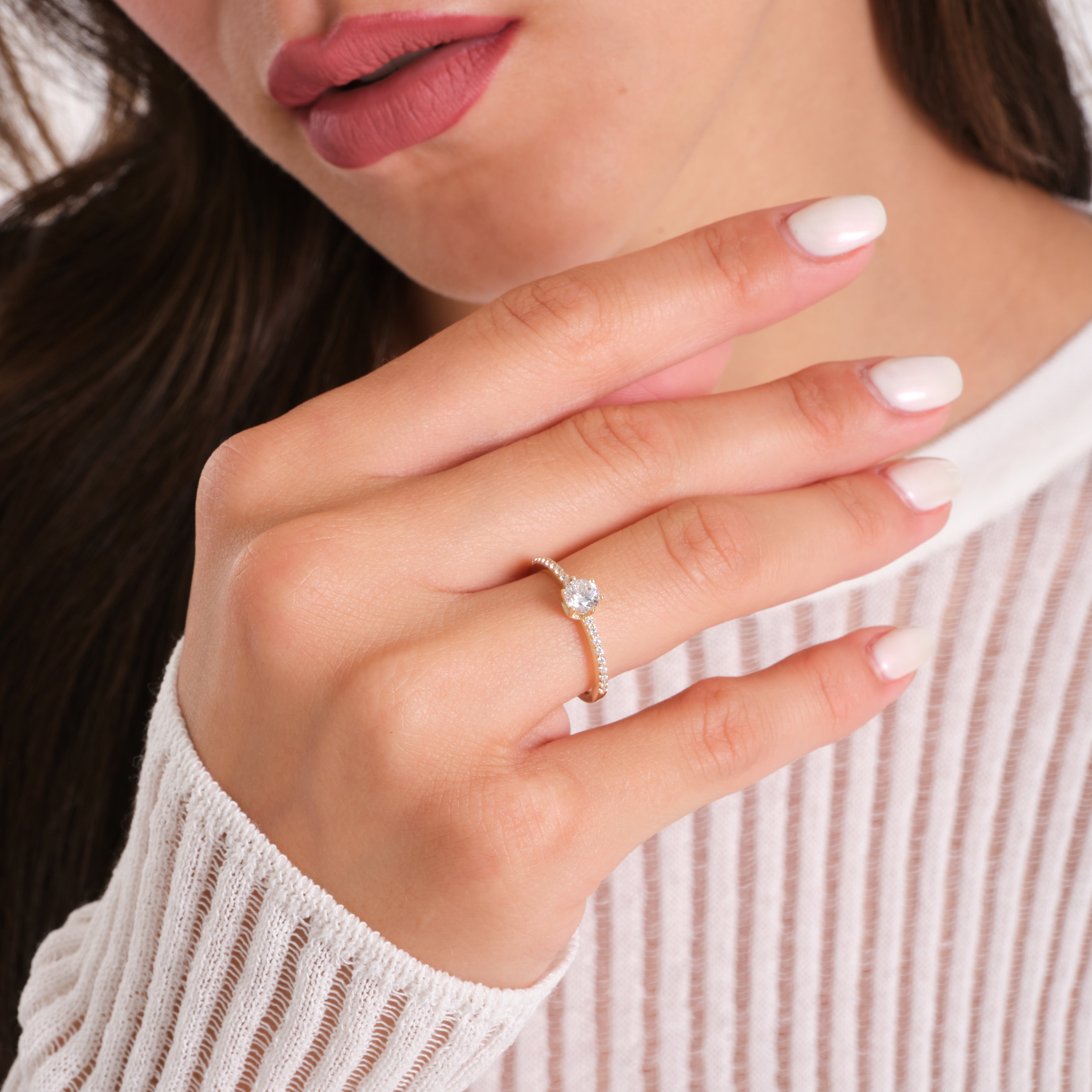
Diamonds vs. Lab-Grown vs. Moissanite: The Ultimate Comparison Guide
Introduction: A World of Brilliant Choices
When choosing a centerpiece for your 14K gold jewelry, the options can be overwhelming. Do you go with the tradition of a natural diamond, the modern innovation of lab-grown, or the incredible value of moissanite?
At Golden Planet Jewelry, we believe the best choice is an informed one. While all three stones offer breathtaking sparkle, they differ significantly in origin, price, and technical properties. This guide will break down everything you need to know to find the stone that perfectly matches your style, ethics, and budget.
I. Natural Diamonds: The Timeless Classic
Natural diamonds are the result of billions of years of intense heat and pressure deep within the earth. They are the ultimate symbol of endurance and rarity.
-
Pros: Holds a unique resale value, a finite natural resource, and carries a deep sense of tradition.
-
Cons: The most expensive option per carat; concerns over mining ethics (though we prioritize conflict-free sourcing).
-
Investment Perspective: As we discussed in our Guide to Gold as an Investment, natural diamonds are often viewed as "heirloom" pieces that retain value over generations.
II. Lab-Grown Diamonds: Science Meets Luxury
Lab-grown diamonds are real diamonds. They are chemically, physically, and optically identical to natural diamonds, created in high-tech laboratories that replicate the earth's natural process.
-
The Difference: The only difference is their origin. Even a professional jeweler cannot tell them apart without specialized equipment.
-
Why Choose Lab-Grown? You can get a 30-50% larger stone for the same price as a natural one. It’s a modern, sustainable, and budget-friendly way to own a genuine diamond.
III. Moissanite: The Space-Born Sparkle
Moissanite was originally discovered in a meteor crater. Today, it is lab-created to offer a level of brilliance that even surpasses a diamond.
-
The "Fire" Factor: Moissanite has a higher refractive index than diamonds, meaning it reflects more "rainbow" light (fire). If you love maximum sparkle, moissanite is for you.
-
Value: It is the most affordable of the three, allowing for large, high-quality stones at a fraction of the cost of any diamond.

IV. The Comparison: Hardness, Brilliance, and Cost
To help you decide, here is how they stack up side-by-side:
| Feature | Natural Diamond | Lab-Grown Diamond | Moissanite |
| Hardness (Mohs Scale) | 10 (Hardest) | 10 (Hardest) | 9.25 (Very Durable) |
| Brilliance (Refractive Index) | 2.42 | 2.42 | 2.65 - 2.69 (Highest) |
| Chemical Composition | Pure Carbon | Pure Carbon | Silicon Carbide |
| Price Point | $$$$ | $$ | $ |
For a deeper technical dive into gemstone durability and the Mohs scale, check out the GIA’s Gem Encyclopedia.
Harika, bu konu özellikle "hangisini almalıyım?" diye tereddüt eden müşterileri ikna etmek için altın değerindedir. İşte Hafta 7 için doğrudan kopyalayıp yapıştırabileceğiniz SEO uyumlu İngilizce blog metni:
👑 HAFTA 7: B2C Blog Paketi (Taş Karşılaştırma Rehberi)
1. SEO ve Meta Alanlar
| Alan Adı | İçerik (İngilizce) | Açıklama |
| Meta Title | Diamonds vs. Lab-Grown vs. Moissanite: Which Sparkle is Right for You? | SEO uyumlu, merak uyandırıcı başlık. |
| URL Slug | /diamond-vs-lab-grown-vs-moissanite-comparison |
Net ve arama motoru dostu. |
| Meta Description / Excerpt | Compare natural diamonds, lab-grown diamonds, and moissanite. Learn about brilliance, durability, and value to choose the perfect stone for your 14K gold jewelry. | Üç ana seçeneği karşılaştıran özet. |
2. Blog İçeriği (H1 ve Gövde Metni)
(H1 Başlık)
Diamonds vs. Lab-Grown vs. Moissanite: The Ultimate Comparison Guide
Introduction: A World of Brilliant Choices
When choosing a centerpiece for your 14K gold jewelry, the options can be overwhelming. Do you go with the tradition of a natural diamond, the modern innovation of lab-grown, or the incredible value of moissanite?
At Golden Planet Jewelry, we believe the best choice is an informed one. While all three stones offer breathtaking sparkle, they differ significantly in origin, price, and technical properties. This guide will break down everything you need to know to find the stone that perfectly matches your style, ethics, and budget.
I. Natural Diamonds: The Timeless Classic
Natural diamonds are the result of billions of years of intense heat and pressure deep within the earth. They are the ultimate symbol of endurance and rarity.
-
Pros: Holds a unique resale value, a finite natural resource, and carries a deep sense of tradition.
-
Cons: The most expensive option per carat; concerns over mining ethics (though we prioritize conflict-free sourcing).
-
Investment Perspective: As we discussed in our Guide to Gold as an Investment, natural diamonds are often viewed as "heirloom" pieces that retain value over generations.
II. Lab-Grown Diamonds: Science Meets Luxury
Lab-grown diamonds are real diamonds. They are chemically, physically, and optically identical to natural diamonds, created in high-tech laboratories that replicate the earth's natural process.
-
The Difference: The only difference is their origin. Even a professional jeweler cannot tell them apart without specialized equipment.
-
Why Choose Lab-Grown? You can get a 30-50% larger stone for the same price as a natural one. It’s a modern, sustainable, and budget-friendly way to own a genuine diamond.
III. Moissanite: The Space-Born Sparkle
Moissanite was originally discovered in a meteor crater. Today, it is lab-created to offer a level of brilliance that even surpasses a diamond.
-
The "Fire" Factor: Moissanite has a higher refractive index than diamonds, meaning it reflects more "rainbow" light (fire). If you love maximum sparkle, moissanite is for you.
-
Value: It is the most affordable of the three, allowing for large, high-quality stones at a fraction of the cost of any diamond.
IV. The Comparison: Hardness, Brilliance, and Cost
To help you decide, here is how they stack up side-by-side:
| Feature | Natural Diamond | Lab-Grown Diamond | Moissanite |
| Hardness (Mohs Scale) | 10 (Hardest) | 10 (Hardest) | 9.25 (Very Durable) |
| Brilliance (Refractive Index) | 2.42 | 2.42 | 2.65 - 2.69 (Highest) |
| Chemical Composition | Pure Carbon | Pure Carbon | Silicon Carbide |
| Price Point | $$$$ | $$ | $ |
Outbound Link Fırsatı: For a deeper technical dive into gemstone durability and the Mohs scale, check out the GIA’s Gem Encyclopedia. (Buraya çalışan bir GIA linki ekleyebilirsiniz.)
V. Which One Should You Choose?
-
Choose a Natural Diamond if: You value tradition, rarity, and want a stone that holds historical investment value.
-
Choose a Lab-Grown Diamond if: You want a real diamond with high clarity and size but prefer a more accessible price point and a modern origin story.
-
Choose Moissanite if: You prioritize ethical sourcing, want the most "sparkle" for your money, and need a durable stone for everyday wear.
Ready to find your perfect match? Explore our 14K Gold Diamond and Moissanite Collection and find the piece that speaks to you.
Conclusion: Brilliance Defined by You
Whether it’s the billion-year journey of a natural diamond or the cosmic brilliance of moissanite, your choice should reflect your personal values and lifestyle. At Golden Planet Jewelry, we wrap each of these stunning stones in the finest 14K gold, ensuring your choice shines for a lifetime.
Which stone caught your eye? Natural, Lab-grown, or Moissanite? Let us know in the comments below!
Share:
How to Stack Rings: The Ultimate Guide to Layering and Styling Gold Rings
Jewelry Hallmarks Explained: What 14K, 585, and Other Stamps Mean